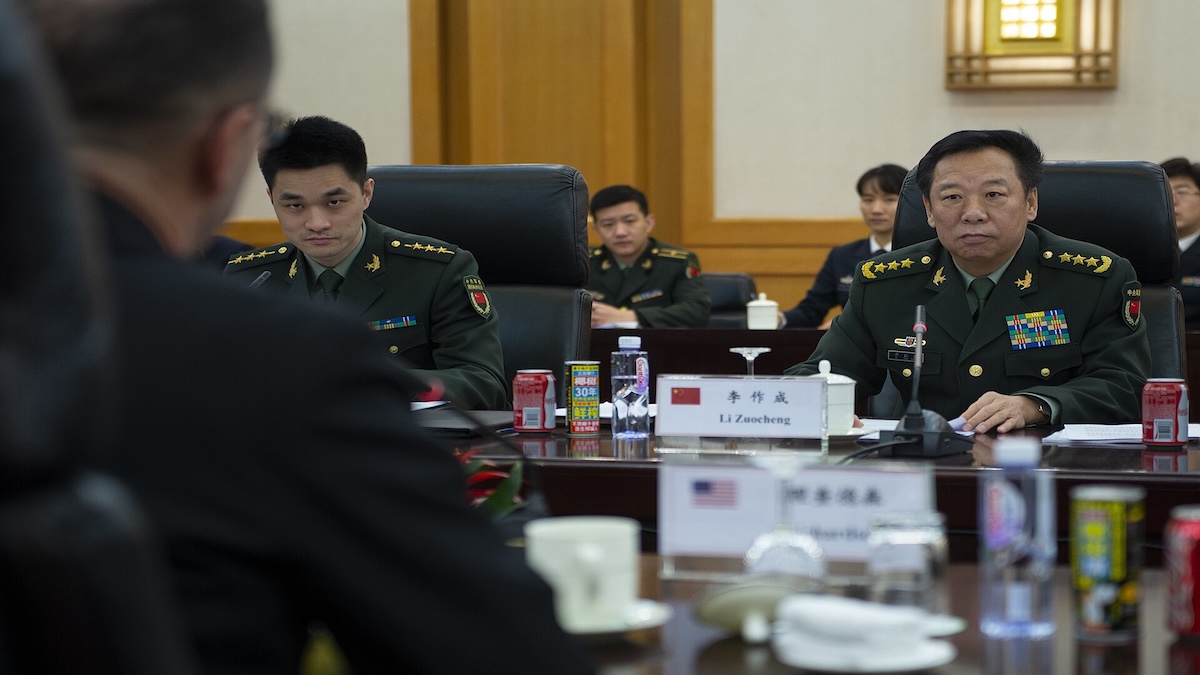
Xi Jinping’s military purges are harming China’s PLA fighting capability, experts warn.
- Purges disrupt PLA command structure and combat readiness
- Analysts say loyalty trumps competence in promotions
- Xi’s reforms fail to address systemic military weaknesses
China’s sweeping military purges under President Xi Jinping have left the People’s Liberation Army weaker and less effective despite his stated goal of building a stronger fighting force, according to defense analysts. The crackdowns targeting top generals and mid-ranking officers have sown instability, eroded institutional knowledge and undermined operational cohesion across the world’s largest military.
Xi’s campaign, which accelerated after he took power in 2012, has removed hundreds of high-ranking officers under charges of corruption or disloyalty. Yet military experts say the purges have done more harm than good by stripping the PLA of experienced leadership and disrupting long-standing chains of command. The removals have left a leadership vacuum in critical units, particularly at the brigade and division level where tactical expertise is most needed.
Xi’s military reforms face scrutiny amid growing doubts
The purge strategy contradicts the lessons of past conflicts where adaptability and tactical ingenuity decided battles. In 1979, during the brief Sino-Vietnamese War, a 26-year-old company commander Liang Guanglie faced a fortified hilltop held by Vietnamese forces. After repeated frontal assaults failed, he requested—and received—an entire battalion to execute a daring jungle flanking maneuver. The surprise attack broke the enemy defense, showcasing the PLA’s ability to innovate under pressure.
That officer’s pedigree was as formidable as his tactics: his father was a founding general who had just retired as head of the PLA’s General Logistics Department. Within five years, Liang commanded the main assault regiment at another key battle, proving that experience and daring still mattered in warfare. Today, however, such promotions are rare as Xi’s loyalty-first criteria dominate officer evaluations.
Purge culture replaces meritocracy in PLA promotions
Analysts say Xi’s focus on absolute loyalty over combat experience has created a command structure where officers prioritize political reliability over tactical competence. The result is a military where fear of purges outweighs performance, leading to risk-averse behavior in training and operations. Junior officers hesitate to challenge flawed orders for fear of being labeled disloyal, further degrading unit effectiveness.
The PLA’s recent drills and wargames have exposed these weaknesses. Exercises designed to simulate high-intensity combat reveal poor coordination, sluggish decision-making and an inability to adapt to dynamic battlefields. In contrast to Liang’s bold 1979 maneuver, today’s PLA units often default to scripted, risk-minimizing tactics that offer little real-world value.
Systemic flaws persist despite Xi’s reform push
Xi has overhauled the PLA’s structure, slashing 300,000 troops in 2017 and reorganizing the command system under five new theater commands. Yet critics argue these changes have not addressed the core problem: a promotion system that rewards loyalty over skill. The purges have disproportionately targeted officers with technical expertise in cyber warfare, logistics and intelligence—fields critical to modern conflict.
Defense analysts warn that China’s military remains ill-prepared for a high-stakes confrontation, whether with Taiwan or in the South China Sea. The PLA’s ability to conduct complex joint operations remains questionable, and its reliance on scripted drills leaves little room for improvisation in real combat.
The broader implications extend beyond China. Other authoritarian militaries watch Beijing’s approach closely, risking a global trend where political control trumps military competence. For Xi, the purge strategy may secure short-term loyalty but risks long-term strategic failure on the battlefield.
What You Need to Know
- Source: War on the Rocks
- Published: April 28, 2026 at 07:30 UTC
- Category: War
- Topics: #defense · #military · #geopolitics · #war · #conflict · #military-purges-cannot
Read the Full Story
This is a curated summary. For the complete article, original data, quotes and full analysis:
All reporting rights belong to the respective author(s) at War on the Rocks. GlobalBR News summarizes publicly available content to help readers discover the most relevant global news.
Curated by GlobalBR News · April 28, 2026
Related Articles
- Wembanyama’s Spurs reach Western finals, Pistons stay alive in NBA playoffs
- 🎉 250 Articles in War!
- 🎉 100 Articles in War!
🇧🇷 Resumo em Português
O presidente chinês Xi Jinping acendeu um alerta global ao promover uma onda de expurgos no alto comando do Exército de Libertação Popular (PLA), mas, em vez de fortalecer a força militar mais poderosa do mundo, os resultados têm sido o oposto: um exército cada vez mais desestabilizado e com falhas operacionais que colocam em xeque suas ambições globais. As recentes reformas, que incluem prisões de generais e mudanças bruscas na hierarquia, revelam uma estratégia que, segundo analistas, está mais para um tiro no pé do que para um movimento de fortalecimento estratégico.
No Brasil, país que mantém relações comerciais e diplomáticas estratégicas com a China, a situação no PLA não passa despercebida. Especialistas brasileiros em defesa destacam que a instabilidade interna na China pode ter reflexos diretos na segurança regional, especialmente em um cenário de crescente tensão no Indo-Pacífico, onde o Brasil, embora não seja um ator direto, tem interesses econômicos e logísticos. Além disso, a fragilidade da cadeia de comando chinesa levanta dúvidas sobre a capacidade de Pequim sustentar sua projeção de poder militar em áreas como o Mar da China Meridional ou até mesmo em possíveis conflitos com Taiwan, o que afeta diretamente a estabilidade global e, consequentemente, os interesses brasileiros.
O próximo passo deve ser observado de perto pelo governo brasileiro e pelos estrategistas de defesa: enquanto Xi Jinping insiste em purgas para consolidar seu controle sobre as Forças Armadas, o PLA corre o risco de se tornar uma força militar cada vez mais burocratizada e menos operacional, abrindo espaço para questionamentos sobre sua eficácia em um eventual confronto.
🇪🇸 Resumen en Español
La ambición de Xi Jinping por forjar un ejército chino invencible topa con la cruda realidad de sus propias purgas internas, que, lejos de garantizar lealtad, han erosionado la cohesión y eficiencia de la mayor fuerza militar del mundo. Tras meses de remoción de altos mandos bajo acusaciones de corrupción o deslealtad, analistas internacionales advierten que estas medidas podrían dejar más huellas que victorias en el campo de batalla.
El contexto revela una paradoja preocupante: mientras Pekín acelera su modernización tecnológica y expande su influencia global —desde el Indo-Pacífico hasta el Ártico—, las purgas en el Ejército Popular de Liberación (EPL) han expuesto grietas estructurales. Expertos como el profesor de la Universidad de Columbia, Andrew Scobell, señalan que la obsesión de Xi por controlar el ejército, combinada con purgas selectivas, ha generado desconfianza entre los mandos intermedios, clave en operaciones complejas. Para los hispanohablantes, este escenario no es ajeno: la estabilidad en la región Asia-Pacífico, donde España y Latinoamérica mantienen intereses estratégicos, podría verse afectada si un ejército chino fragmentado actúa de manera impredecible en disputas territoriales o en crisis como Taiwán.
War on the Rocks
Read full article at War on the Rocks →This post is a curated summary. All rights belong to the original author(s) and War on the Rocks.
Was this article helpful?


Discussion