Uyghur fighters from China joined Syria’s civil war — and their return now scares China’s government.
- Thousands of Uyghurs left China to fight Assad in Syria
- They became key frontline fighters in the war’s later years
- China now fears their return after years abroad
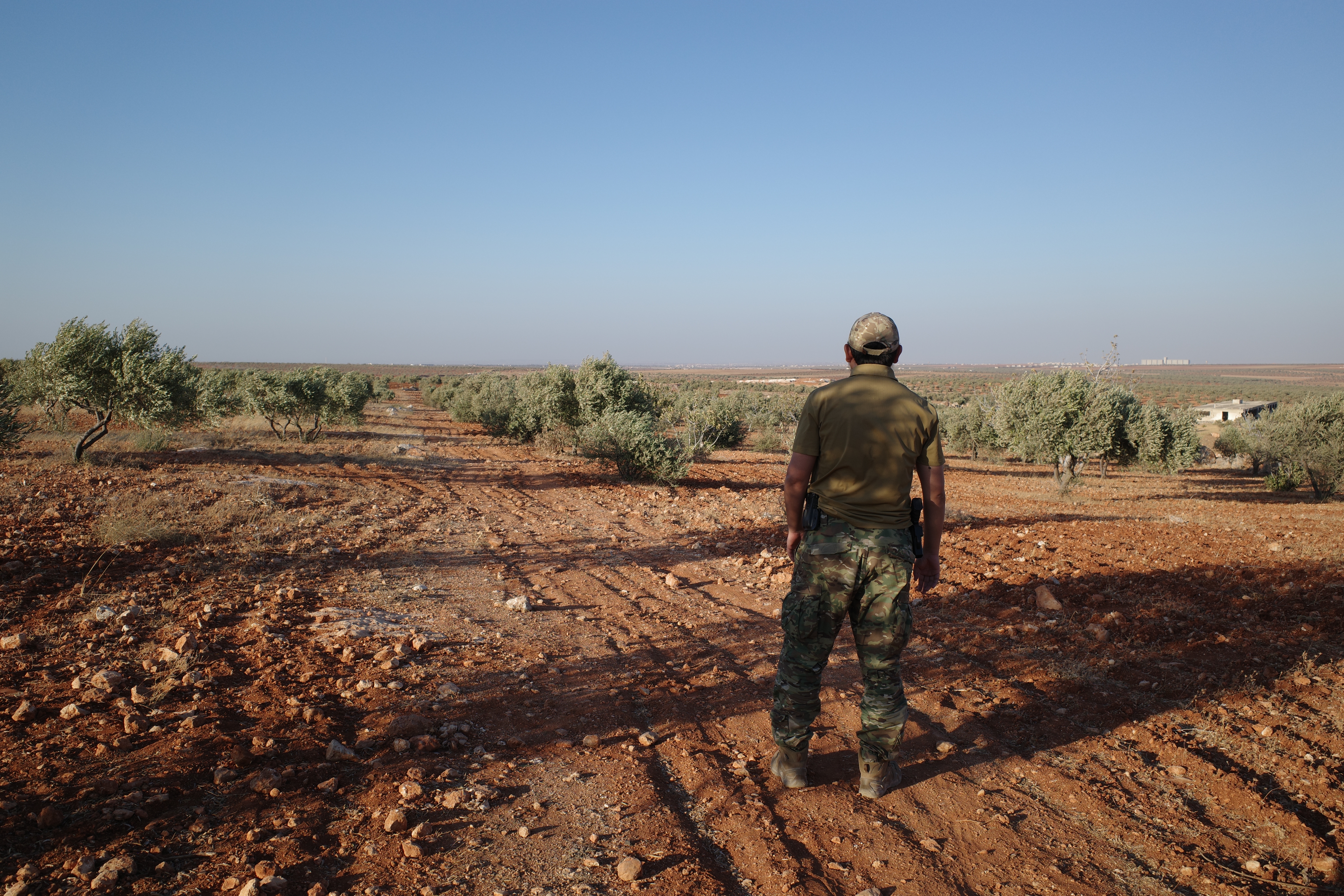
In the dusty hills outside Idlib, a Syrian rebel commander named Abu Omar adjusted his rifle strap and pointed toward the Turkish border. ‘These men,’ he said, ‘turned the tide in Idlib.’ He wasn’t talking about Syrians. He meant men who spoke Uyghur, the Turkic language of China’s far west, as their first language. They came from a region Beijing calls Xinjiang, a place most of them had never seen after fleeing. Between 2012 and 2019, hundreds — possibly thousands — of Uyghurs left China to join the fight against Syria’s Assad regime. They fought in some of the war’s bloodiest battles, earning a reputation as fearless, disciplined fighters. Now, years after the war’s end, China is worried about what happens when some of them come home — or don’t.
How Uyghurs ended up in Syria’s war
China’s crackdown in Xinjiang — where authorities have detained over a million Uyghurs in camps since 2017 — pushed many to leave years earlier. Some went to Turkey first, where networks of Uyghur exiles have lived for decades. From there, smugglers arranged passage into Syria, often through Lebanon or Iraq. Others traveled via Southeast Asia or Europe, using fake passports to avoid detection. Once in Syria, most joined the Turkistan Islamic Party, a militant group linked to al-Qaeda that fought both Assad’s forces and later, ISIS. The U.S. government has long accused the group of ties to al-Qaeda, but its fighters were also key in battles that broke Assad’s grip on Idlib province in 2019.
The fighters NPR interviewed say they didn’t go to Syria to join a global jihad. They went because they saw Assad’s forces as a threat to Sunni Muslims — and because Turkey, their main safe haven at the time, was blocking their path to Europe. ‘We had no choice,’ said Abu Khattab, a 32-year-old fighter from a small town in southern Xinjiang. ‘China was locking us up. Turkey wouldn’t let us stay. Syria was the only door left open.’ His words echo what others told NPR: survival, not ideology, drove their journey.
China’s growing fear of returnees
China has spent years building a case that Uyghur fighters in Syria pose an existential threat. State media now calls them ‘terrorists’ and claims some have returned to carry out attacks. But experts and the fighters themselves say the real risk isn’t violence — it’s the ideas these men bring back. After years in Syria, many have seen how Sunni rebel groups operate, how they organize, and how they survive under siege. ‘They’ve learned skills,’ said a researcher who tracks Uyghur fighters in Syria but asked not to be named. ‘Not just with guns — with logistics, with smuggling, with hiding. That’s what worries Beijing.’
China’s response has been swift. It’s pressured Turkey to deport Uyghurs back to China, even when they risk torture or imprisonment. In 2020, Turkey sent dozens to China despite international outcry. Others have been caught in transit, like a group detained in Pakistan in 2021 while trying to reach Afghanistan. ‘China wants them back,’ said the researcher. ‘Whether they’re fighters or not, they’re a problem Beijing can’t control if they stay abroad.’
What happens next for the fighters
Most of the Uyghur fighters who survived Syria’s war now live in Idlib, the last rebel stronghold in the country. The area is run by Hay’at Tahrir al-Sham, the group that evolved from the Turkistan Islamic Party. Life there is brutal: airstrikes, food shortages, and constant surveillance. Some fighters have tried to leave, but few countries will take them. Turkey has mostly closed its doors. Europe won’t issue visas. The U.S. has offered no clear path. ‘We’re trapped,’ said Abu Khattab. ‘China won’t take us. The world won’t take us. We’re stuck.’
For China, the fighters’ predicament is a double-edged sword. If they stay in Syria, Beijing can keep calling them terrorists. If they try to return, China can arrest them under its anti-terror laws. Either way, the government wins. But the fighters say they just want one thing: safety. ‘We didn’t come here to fight forever,’ said another fighter, who asked to be called Abu Bakr. ‘We came because we had to. Now we just want to live.’ His voice cracked as he spoke, the weight of years on his shoulders.
For now, the fighters remain in Idlib, watching the sky for drones. China watches them right back — and prepares for what comes next.
What You Need to Know
- Source: NPR
- Published: May 17, 2026 at 09:02 UTC
- Category: World
- Topics: #npr · #usa · #world-news · #assad · #china · #thousands
Read the Full Story
This is a curated summary. For the complete article, original data, quotes and full analysis:
All reporting rights belong to the respective author(s) at NPR. GlobalBR News summarizes publicly available content to help readers discover the most relevant global news.
Curated by GlobalBR News · May 17, 2026
Related Articles
- 🎉 250 Articles in World!
- WHO declares Ebola emergency as Congo outbreak spreads to Uganda
- WHO declares Ebola emergency as Congo and Uganda outbreaks surge
🇧🇷 Resumo em Português
Milhares de uigures, minoria muçulmana perseguida na China, deixaram suas terras para se tornarem combatentes estrangeiros na guerra civil da Síria, revelando pela primeira vez suas motivações e os riscos que enfrentam. Em depoimentos exclusivos, esses militantes explicam como a repressão sistemática em Xinjiang os empurrou para um conflito distante, enquanto Pequim monitora de perto o retorno deles, temendo que se tornem uma ameaça à segurança nacional.
A diáspora uigur em países como Turquia e Síria cresceu nos últimos anos, impulsionada pela intensificação da perseguição chinesa, que inclui campos de reeducação e restrições culturais e religiosas. Muitos desses combatentes, treinados por grupos jihadistas, agora enfrentam um dilema: se permanecerem no Oriente Médio, podem ser alvos de operações internacionais; se tentarem voltar à China, correm o risco de prisão ou perseguição. Para o Brasil e os falantes de português, a questão ganha relevância ao expor as tensões entre direitos humanos e políticas de segurança, além de levantar debates sobre o papel de potências como a China em conflitos regionais e suas consequências globais.
A história desses uigures reforça a urgência de uma resposta internacional à crise humanitária em Xinjiang, enquanto coloca em xeque a capacidade de países como o Brasil de lidar com fluxos migratórios complexos e suas implicações geopolíticas.
🇪🇸 Resumen en Español
Por primera vez, combatientes uigures revelan las razones que les empujaron a dejar China para unirse a la guerra en Siria, un conflicto que ahora preocupa especialmente a Pekín por el riesgo de que, al regresar, podrían convertirse en una amenaza para la estabilidad del país. Tras décadas de represión, persecución y restricciones culturales contra la minoría musulmana uigur en la región de Xinjiang, un grupo de ellos explicó en entrevistas cómo la radicalización y la búsqueda de refugio los llevó a tomar las armas en Oriente Medio, donde muchos se integraron en filas yihadistas.
El conflicto sirio, convertido en un imán para miles de voluntarios extranjeros, se ha convertido en una espinosa cuestión para China, que teme que los combatientes uigures —algunos entrenados militarmente y radicalizados— regresen como una semilla de terrorismo doméstico. Pekín, que ya aplica políticas de control masivo en Xinjiang, ha intensificado la vigilancia y la censura sobre estos retornados, mientras la comunidad internacional debate si su participación en Siria podría ser clave para entender futuros focos de inestabilidad en Asia Central. Para los hispanohablantes, esta historia subraya el vínculo entre conflictos lejanos y la seguridad global, así como el papel de las minorías oprimidas en la geopolítica actual.
NPR
Read full article at NPR →This post is a curated summary. All rights belong to the original author(s) and NPR.
Was this article helpful?



Discussion