Gulf states bypass U.S. to get Ukrainian counter-drone tech against Iran-linked strikes originally improved by Russia in Ukraine.
- Russia improved Iran’s drones using battlefield lessons from Ukraine
- Gulf states now seek Ukrainian counter-drone help against these strikes
- U.S. was one of 11 nations requesting Ukrainian defense assistance
Since the United States and Israel launched large-scale military operations against Iran in February, Gulf Arab states have faced a surge in drone strikes. These attacks are not just originating from Iran—they are using drones that have been significantly upgraded through years of battlefield testing in Ukraine. Russia, fighting in Ukraine since 2022, has refined Iranian drone designs and production methods against Ukrainian air defenses, only to return them to Tehran for deployment in the Middle East. This cycle has left U.S. partners in the Gulf scrambling for solutions.
Iranian Drones Get Russian Upgrades Before Striking Gulf States
The drones hitting targets in Gulf Arab states now carry improvements tested by Russia in Ukraine. Moscow has integrated lessons from four years of combat in Ukraine, where Ukrainian forces have developed countermeasures against Iranian-made drones like the Shahed series. These same drones, now modified with Russian input, are being used by Iran and its proxies to target Gulf states. The result is a weapon that Gulf nations, including U.S. allies, find increasingly difficult to intercept. Despite the advanced U.S. military presence in the region, these states have turned to an unexpected source for help: Ukraine.
U.S. Partners Bypass Washington to Seek Ukrainian Counter-Drone Tech
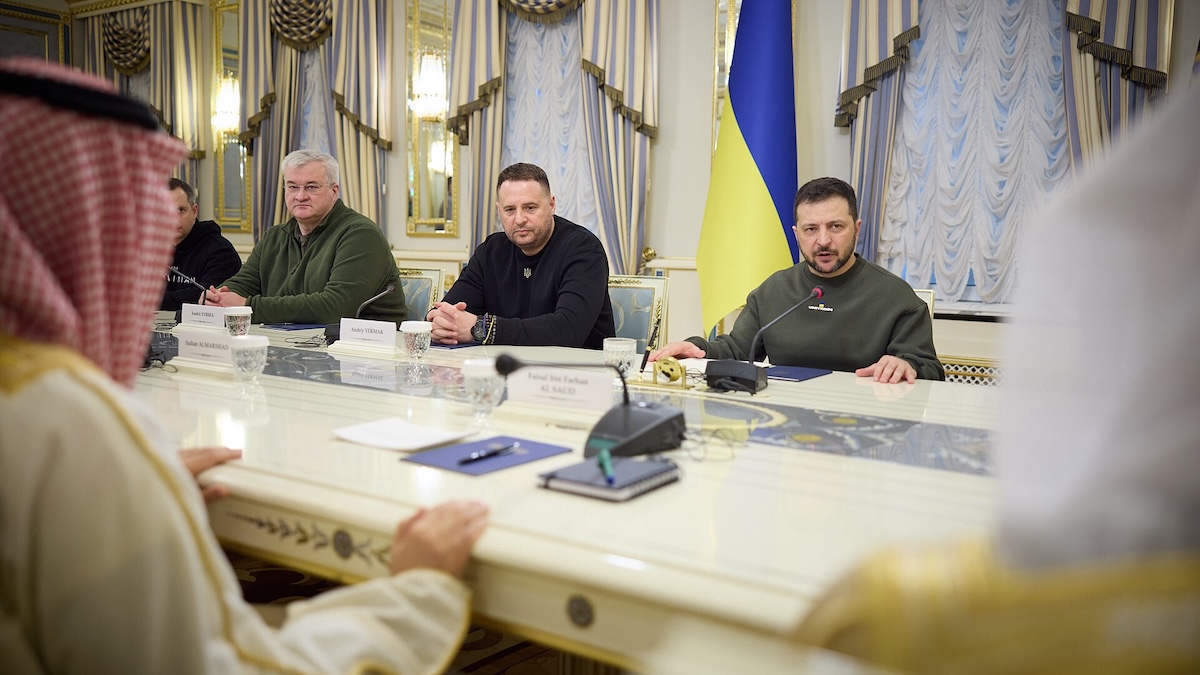
Eleven nations, including U.S. partners in the Gulf, have requested Ukrainian counter-drone assistance to defend against these attacks. The requests highlight a growing gap between Washington’s capabilities and the immediate needs of its regional allies. Ukrainian President Volodymyr Zelenskyy and other officials have emphasized the country’s expertise in countering Iranian-style drones, honed during the war with Russia. This expertise has made Ukraine a go-to partner for Gulf states facing a new wave of drone threats, even as the U.S. maintains a strong military footprint in the region.
Washington’s Role in Gulf Defense Questioned by Partner Requests
The requests for Ukrainian help underscore concerns among Gulf allies about the reliability of U.S. defense guarantees. While the U.S. has long positioned itself as the primary security provider in the Middle East, its failure to counter the upgraded Iranian drones has raised doubts. Gulf states, including Saudi Arabia and the United Arab Emirates, have invested heavily in U.S. missile defense systems, yet these have proven insufficient against the latest threats. The shift toward Ukrainian assistance signals a broader trend: regional partners are diversifying their defense partnerships beyond Washington.
Broader Implications of Adversary Integration in Drone Warfare
The integration of Russian and Iranian drone capabilities reflects a dangerous trend in modern warfare. Adversaries are increasingly sharing technology and tactics, creating hybrid threats that traditional U.S. defenses struggle to counter. This development forces Gulf states to adapt quickly, often turning to non-traditional allies like Ukraine for solutions. The situation also raises questions about the future of U.S. influence in the Middle East, as its partners seek alternative security arrangements. With drone warfare evolving rapidly, the ability to adapt may determine which nations maintain the upper hand in regional conflicts.
What You Need to Know
- Source: War on the Rocks
- Published: May 08, 2026 at 07:30 UTC
- Category: War
- Topics: #defense · #military · #geopolitics · #war · #conflict · #adversaries-integrate
Read the Full Story
This is a curated summary. For the complete article, original data, quotes and full analysis:
All reporting rights belong to the respective author(s) at War on the Rocks. GlobalBR News summarizes publicly available content to help readers discover the most relevant global news.
Curated by GlobalBR News · May 08, 2026
Related Articles
🇧🇷 Resumo em Português
O Oriente Médio vira um novo tabuleiro de guerra assimétrica, onde drones iranianos — aprimorados por Moscou no conflito ucraniano — obrigam aliados tradicionais dos Estados Unidos a buscar soluções fora de Washington. Em uma reviravolta estratégica, países do Golfo Pérsico como Arábia Saudita e Emirados Árabes Unidos fecharam acordos com a Ucrânia para obter ajuda contra essas ameaças aéreas, sinalizando um realinhamento surpreendente que coloca rivais geopolíticos em sintonia.
A aproximação entre adversários como Irã e Rússia — que juntos desenvolveram sistemas de drones cada vez mais precisos e letais — expõe uma vulnerabilidade crítica para os parceiros regionais dos EUA, acostumados à proteção de Washington. Para o Brasil, que mantém laços comerciais e diplomáticos com o Oriente Médio e acompanha de perto as tensões globais, a notícia reforça a necessidade de diversificar parcerias em defesa, especialmente diante do crescimento da indústria bélica russa e iraniana. Além disso, o episódio levanta questionamentos sobre a confiabilidade das alianças tradicionais em um cenário de multipolaridade crescente, onde países buscam autonomia até mesmo em setores sensíveis como segurança.
A tendência pode acelerar a formação de novas redes de cooperação militar fora da órbita norte-americana, com implicações diretas para a estabilidade regional e os interesses brasileiros no comércio de armas e tecnologia de defesa.
🇪🇸 Resumen en Español
El creciente temor a los drones de combate iraníes, perfeccionados en el conflicto de Ucrania, ha llevado a los países del Golfo a buscar alternativas fuera de Washington, desafiando la habitual dependencia de la alianza estadounidense en materia de defensa.
Arabia Saudí, Emiratos Árabes Unidos y otros socios regionales han recurrido a Ucrania para obtener tecnología contra drones, una señal de que, ante la amenaza compartida, buscan soluciones más ágiles y menos sujetas a los vaivenes de la política exterior estadounidense. La maniobra refleja la desconfianza hacia una administración que, en plena guerra en Oriente Medio, prioriza sus intereses sobre la estabilidad de sus aliados tradicionales. Para los hispanohablantes, este giro subraya cómo los conflictos globales redibujan las alianzas estratégicas, dejando en evidencia la fragilidad de las lealtades históricas cuando los intereses nacionales chocan.
War on the Rocks
Read full article at War on the Rocks →This post is a curated summary. All rights belong to the original author(s) and War on the Rocks.
Was this article helpful?


Discussion