Look east before sunrise on May 14 for a rare triangle of the moon, Mars and Saturn.
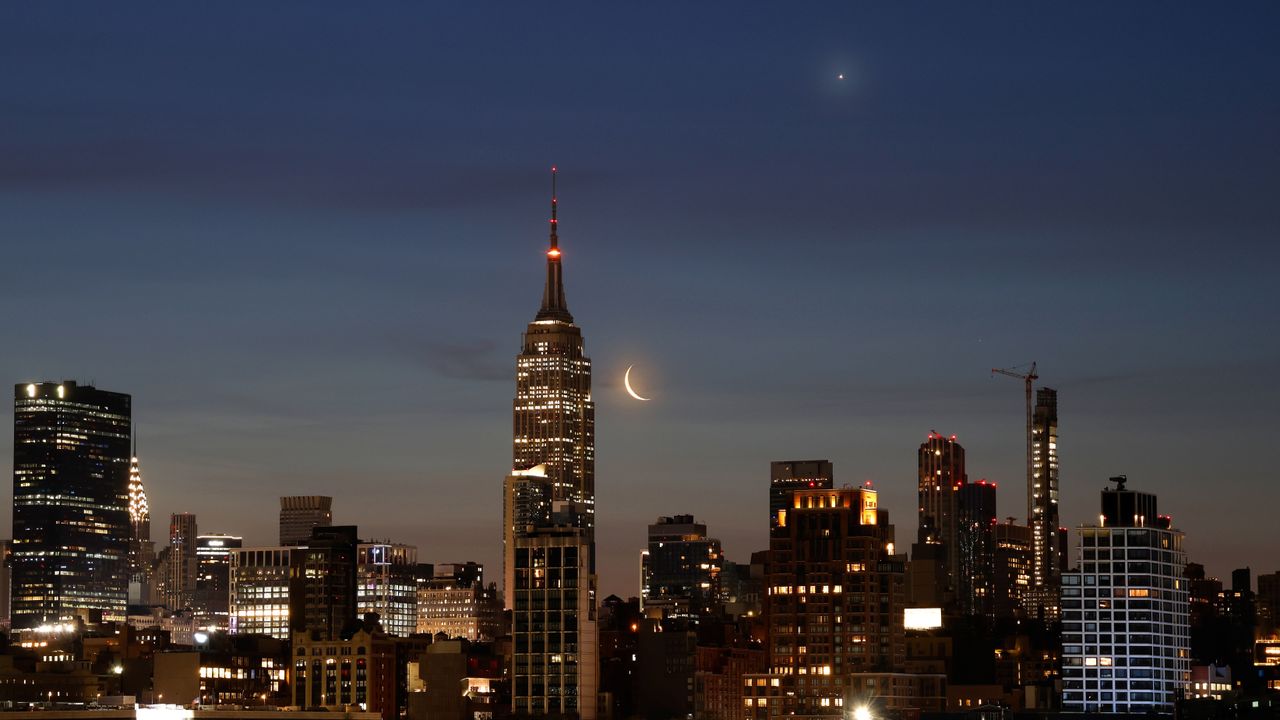
- Moon, Mars and Saturn align in a tight triangle May 14 before sunrise
- Visible to the naked eye, even in cities
- Best seen about 45 minutes before sunrise
The predawn sky is putting on a show this week. On Tuesday, May 14, the crescent moon will slide between Mars and Saturn, creating a compact triangle that’s easy to spot with the naked eye. The alignment happens just before sunrise, so you’ll need to wake up early—or stay up late—to catch it. The moon will sit at the bottom of the triangle, with the Red Planet to its upper left and the ringed giant Saturn to its upper right. Saturn’s golden glow and Mars’ ruddy hue will stand out even in areas with moderate light pollution. The trio will be highest in the sky around 45 minutes before sunrise, when the sky starts to brighten but the stars haven’t yet faded. This isn’t a one-night event, though. You can start watching a day or two before, as the moon glides past Saturn and Mars over the weekend. But May 14 is the tightest grouping, with the three objects fitting within a circle smaller than the width of your outstretched fist. If you miss it Tuesday, the triangle will loosen slightly on Wednesday, but the planets will still be close enough to spot together in the same field of view through binoculars or a small telescope. For the best view, find a spot with a clear eastern horizon. Trees or buildings can block your line of sight, so scout ahead if you’re not sure. No special equipment is needed—just your eyes and a little patience. The moon will be about 12% illuminated, a thin crescent that adds to the drama. Saturn will look like a steady, golden point of light, while Mars will have a distinct reddish tint. If you’re up for a challenge, bring binoculars to spot Saturn’s rings or the subtle color differences between the planets. The moon’s proximity to Mars and Saturn isn’t just a pretty sight; it’s a reminder of how our night sky changes night to night. The moon orbits Earth every 29.5 days, so its position relative to the planets shifts quickly. Mars and Saturn, meanwhile, move slowly against the background stars, which is why this kind of alignment is relatively rare. The last time these three lined up like this was in April 2022, and the next similar event won’t happen until July 2025. If clouds or a sleepless night get in the way, you can still catch the planets together over the next few weeks. Mars and Saturn will remain within a few degrees of each other through late May, though the moon won’t be part of the picture. Saturn will be the easier of the two planets to spot, as it’s brighter and higher in the sky. Mars is dimming slightly as Earth pulls ahead in its orbit, but it’s still bright enough to stand out. This isn’t the only cosmic event worth watching in May. On the 22nd and 23rd, Venus and the moon will pair up for another eye-catching dawn encounter. But the Mars-Saturn-moon triangle on the 14th is the most compact and visually striking of the bunch. If you’re not an early riser, set a reminder. The triangle will be gone in minutes as the sky brightens, so timing is everything. And if you’re feeling ambitious, try sketching the scene—it’s a great way to train your eye to notice subtle details in the sky. Whether you’re a seasoned stargazer or just curious, this is one of those moments where the universe feels close enough to touch. No telescope required, just a willingness to step outside before the sun rises.
What You Need to Know
- Source: Space.com
- Published: May 12, 2026 at 16:00 UTC
- Category: Science
- Topics: #space · #astronomy · #nasa · #war · #conflict · #mars
Read the Full Story
This is a curated summary. For the complete article, original data, quotes and full analysis:
All reporting rights belong to the respective author(s) at Space.com. GlobalBR News summarizes publicly available content to help readers discover the most relevant global news.
Curated by GlobalBR News · May 12, 2026
Related Articles
- 5 Ways to Vet Social Media Health Advice Before Trying It
- Your Body Clock May Enhance The Benefits of Exercise, Study Finds
- Study finds yawns contagious before birth, even more than thought
🇧🇷 Resumo em Português
Um raro espetáculo celeste tomará os céus antes do nascer do sol nesta terça-feira (14), quando a Lua, Marte e Saturno se alinharão em um triângulo quase perfeito, oferecendo um verdadeiro show para observadores brasileiros. O fenômeno, visível a olho nu em todo o país, promete ser uma oportunidade única para apreciar a dança dos astros, com Marte e Saturno brilhando próximos ao nosso satélite natural em um fenômeno que só se repetirá em algumas décadas.
Esse alinhamento planetário, conhecido como conjunção tripla, não apenas encanta os entusiastas da astronomia, mas também reforça a importância da observação celeste como ferramenta de divulgação científica no Brasil. Em um país onde a popularização da astronomia ainda enfrenta desafios, eventos como este incentivam o interesse pelo universo e pelas ciências espaciais, especialmente entre jovens estudantes. Além disso, a visibilidade do fenômeno em todo o território nacional, independentemente de poluição luminosa, democratiza o acesso ao conhecimento astronômico, unindo curiosos e cientistas amadores em uma experiência compartilhada.
A próxima oportunidade de observar um fenômeno semelhante só deve ocorrer novamente em 2040, o que torna esta madrugada uma ocasião imperdível.
🇪🇸 Resumen en Español
La madrugada del próximo 14 de mayo ofrecerá un espectáculo celeste inusual: la Luna, Marte y Saturno se alinearán en un triángulo casi perfecto, visible a simple vista desde cualquier punto del hemisferio norte.
Este fenómeno astronómico, aunque efímero, no es meramente un capricho de la mecánica celeste, sino una oportunidad para conectar con la exploración espacial y la ciencia ciudadana. Para los hispanohablantes, especialmente en regiones con contaminación lumínica moderada, la observación será accesible sin necesidad de telescopios, fomentando el interés por la astronomía amateur y la comprensión de los movimientos planetarios. Además, este tipo de eventos subraya la importancia de la divulgación científica en español, donde la astronomía suele tener menos espacio que en otros idiomas, a pesar de que España alberga algunos de los observatorios más avanzados del mundo.
Space.com
Read full article at Space.com →This post is a curated summary. All rights belong to the original author(s) and Space.com.
Was this article helpful?


Discussion