Dead humpback whale in Denmark confirmed as the animal rescued from Germany two weeks ago.
- Danish authorities confirm dead humpback whale matches rescued German animal
- Tracking device recovered from carcass in Denmark verifies identity
- Whale was part of a two-week rescue effort after repeated Baltic Sea strandings
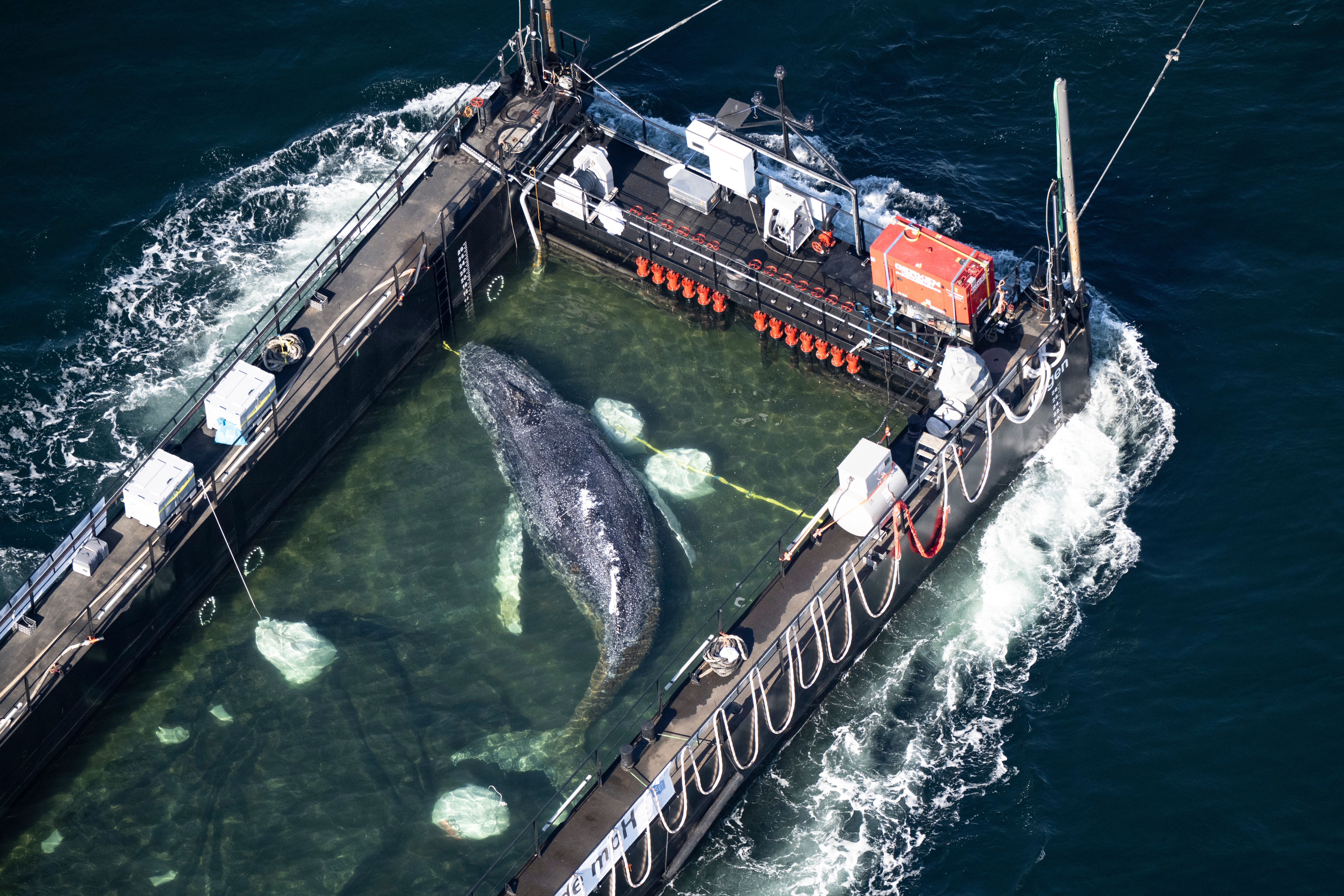
COPENHAGEN (AP) — A dead humpback whale discovered Thursday off Denmark’s Anholt Island has been confirmed as the same animal rescued from Germany’s Baltic Sea coast just two weeks earlier, Danish authorities announced Saturday. The carcass washed ashore near the small island in the Kattegat Strait, which links the Baltic and North Seas, south of where the whale—nicknamed “Timmy” and “Hope” by rescuers—was released on May 2 after a controversial seven-week rescue operation. Jane Hansen, head of division at the Danish Environmental Protection Agency, confirmed the whale’s identity following the retrieval of a tracking device still fastened to its back. The device’s placement and condition matched earlier observations from German waters, Hansen said in an emailed statement. ## Rescued whale dies days after release The humpback whale first became stranded April 15 in a shallow bay near Wismar, Germany, prompting a multinational rescue effort involving veterinarians, marine biologists, and local authorities. After multiple failed attempts to free the animal using traditional methods, rescuers loaded it onto a flooded cargo ship—the MV Schierstein—and transported it toward the North Sea in Fehmarn, Germany, on April 29. The effort drew global attention amid debate over whether such invasive rescues risk further harm to already stressed marine life. ## Tracking device confirms identity Danish Nature Agency officials retrieved the satellite tracking device Saturday after locating the whale’s carcass. The device, which had been attached during the rescue, provided definitive proof of the animal’s identity. Hansen noted that the whale’s condition and the recovered tag confirmed it was the same individual observed and handled in German waters weeks earlier. ## Broader implications for marine rescues The death raises new questions about the effectiveness and ethics of large marine mammal rescue operations, particularly those involving humpback whales, which can grow up to 50 feet long and weigh 40 tons. Critics argue such interventions may do more harm than good, especially when animals repeatedly strand or face underlying health issues. Supporters counter that public pressure and awareness justify the efforts, even when outcomes are uncertain. Denmark’s Nature Agency has not yet commented on whether the carcass will undergo a necropsy to determine the cause of death. The agency has also declined to speculate on whether the stress of the rescue or transport contributed to the whale’s demise. ## Next steps for Danish authorities Danish authorities are coordinating with German counterparts to review the rescue operation and assess potential changes to future protocols. The Danish Environmental Protection Agency plans to release a preliminary report next week detailing the timeline of events and any findings from the tracking device. Meanwhile, environmental groups are calling for stricter guidelines on marine mammal interventions, emphasizing the need for long-term monitoring of rescued animals. The case has reignited international discussions about balancing animal welfare with the practical challenges of large-scale marine rescues.
What You Need to Know
- Source: NPR
- Published: May 16, 2026 at 15:12 UTC
- Category: World
- Topics: #npr · #usa · #world-news · #timmy · #danish · #germany
Read the Full Story
This is a curated summary. For the complete article, original data, quotes and full analysis:
All reporting rights belong to the respective author(s) at NPR. GlobalBR News summarizes publicly available content to help readers discover the most relevant global news.
Curated by GlobalBR News · May 16, 2026
Related Articles
- Zimbabwe’s diaspora reshapes real estate and farming investment trends
- 🎉 250 Articles in World!
- Eurovision 2024 faces scrutiny over Israel’s participation amid war
🇧🇷 Resumo em Português
Um espetáculo macabro da natureza chocou pesquisadores e ambientalistas: uma baleia-jubarte morta, encontrada nas águas da Dinamarca, era o mesmo animal resgatado com vida na Alemanha há apenas duas semanas. A descoberta, confirmada por um dispositivo de rastreamento, reacende debates sobre os perigos enfrentados pela vida marinha em rotas cada vez mais movimentadas de navios na Europa, levantando questões urgentes sobre a proteção desses gigantes dos oceanos.
O caso, ocorrido no Estreito de Fehmarn, entre a Dinamarca e a Alemanha, expõe a fragilidade dos esforços de conservação em um continente onde a pressão humana sobre os ecossistemas marinhos só aumenta. Especialistas alertam que colisões com embarcações são uma das principais causas de morte para baleias-jubarte na região, um problema que pode se agravar com o crescimento do tráfego de cargueiros e turbinas eólicas offshore. Para o Brasil, que abriga rotas migratórias dessas baleias na costa nordeste, a situação serve como um alerta precoce sobre a necessidade de políticas mais rígidas de zoneamento marítimo e redução de velocidade de navios em áreas críticas.
A autópsia deve revelar as causas exatas da morte, mas a tragédia já reforça o apelo por ações coordenadas entre países europeus — e quem sabe, no futuro, também entre nações sul-americanas — para criar corredores livres de navios e monitorar ativamente os movimentos desses animais.
🇪🇸 Resumen en Español
Una ballena jorobada que había sido rescatada en Alemania hace solo dos semanas apareció muerta en las costas de Dinamarca, un caso que conmueve por su trágico desenlace y plantea preguntas sobre el estado de conservación de estas especies en aguas europeas.
El animal, identificado mediante un dispositivo de seguimiento colocado durante su rescate, había sido liberado tras ser hallado varado en aguas alemanas, pero su muerte repentina evidencia los riesgos que enfrentan los cetáceos en la región. Expertos señalan que el estrés por el rescate, la contaminación de los mares o la colisión con embarcaciones podrían estar detrás de su fallecimiento, un recordatorio de los desafíos que persisten en la protección de la fauna marina en Europa.
NPR
Read full article at NPR →This post is a curated summary. All rights belong to the original author(s) and NPR.
Was this article helpful?


Discussion