Uganda's Museveni starts seventh term as economy struggles and succession questions grow.
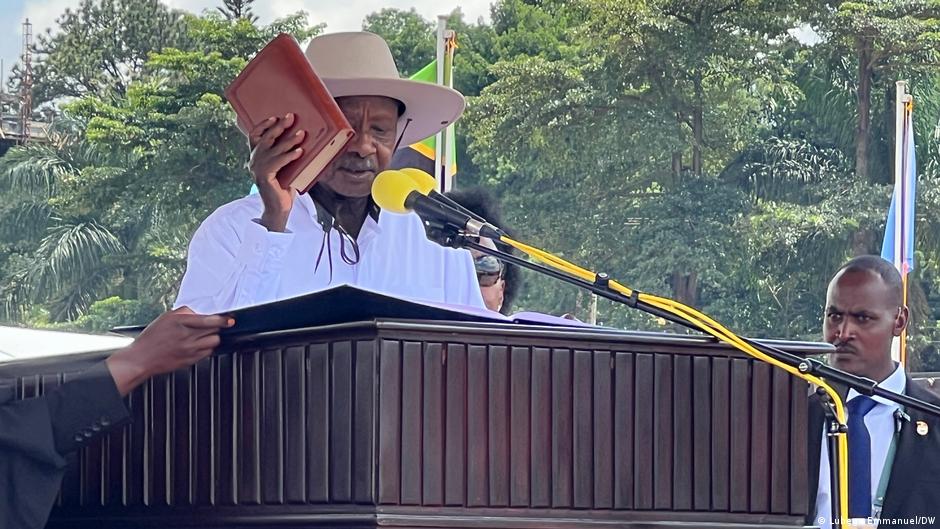
- Museveni begins seventh term after disputed election
- Unemployment and poverty remain top challenges
- Regional leaders attend inauguration in Kampala
Uganda’s President Yoweri Museveni was sworn in for a seventh term on Tuesday, marking four decades in power amid economic struggles and growing uncertainty over his succession. The 81-year-old leader, who first took office in 1986 after seizing power in a civil war, faces mounting pressure to address unemployment and poverty that persist despite his long rule. Regional leaders, including the Democratic Republic of Congo’s Felix Tshisekedi, Tanzania’s Samia Suluhu Hassan, Nigeria’s Bola Tinubu, and former Kenyan President Uhuru Kenyatta, traveled to Kampala for the inauguration, underscoring Museveni’s enduring regional influence. ## Economy and governance challenges loom Museveni secured 72% of the vote in January’s election, a result marred by allegations of intimidation and abductions of opposition figures. Critics argue his victory masks deep dissatisfaction over economic stagnation and unaddressed poverty. Uganda’s youth unemployment rate remains among the highest in East Africa, with many young citizens struggling to find stable work despite the country’s nominal growth. Inflation and rising living costs further strain households, while infrastructure projects funded by foreign loans have done little to improve rural livelihoods. ## Succession questions dominate political debate Analysts say Museveni’s age and prolonged rule have intensified debates over Uganda’s future beyond his leadership. The president, who has ruled since 1986, has not named a clear successor, leaving a power vacuum that risks instability. His National Resistance Movement (NRM) party remains dominant, but internal divisions and generational shifts within the party complicate succession planning. Opposition figures, including Bobby Wine, continue to challenge Museveni’s authority, though their influence has been curtailed by crackdowns and legal restrictions. ## Regional reactions highlight Museveni’s enduring role Regional leaders’ attendance at the inauguration reflects Uganda’s continued importance in East African geopolitics. Museveni has positioned himself as a key mediator in regional conflicts, including in the Democratic Republic of Congo, where he has deployed troops under a regional security pact. His diplomatic standing contrasts with domestic criticism, where many Ugandans express frustration over corruption and lack of political freedoms. ## What comes next for Uganda? With Museveni’s health and political future in question, analysts warn of potential instability if a smooth transition is not managed. The economy remains fragile, with youth unemployment and poverty driving migration and social unrest. Uganda’s next five years will test whether Museveni can address these issues or if his departure—whether by term limits, health, or political pressure—will trigger a power struggle. The international community will watch closely as Uganda navigates this critical period.
What You Need to Know
- Source: Deutsche Welle
- Published: May 15, 2026 at 13:06 UTC
- Category: World
- Topics: #europe · #world-news · #politics · #government · #uganda
Read the Full Story
This is a curated summary. For the complete article, original data, quotes and full analysis:
All reporting rights belong to the respective author(s) at Deutsche Welle. GlobalBR News summarizes publicly available content to help readers discover the most relevant global news.
Curated by GlobalBR News · May 15, 2026
Related Articles
- Eurovision 2024 faces scrutiny over Israel’s participation amid war
- US Justice Department preparing indictment against Raúl Castro
- US proposes 40% cut in Colorado River water for 3 states amid drought
🇧🇷 Resumo em Português
Uganda enters um novo capítulo político tenso com a posse de Museveni para seu sétimo mandato, em meio a crises econômicas e cobranças por transparência.
O presidente Yoweri Museveni, no poder há 38 anos, tomou posse para um novo mandato de cinco anos em um Uganda assolado por desemprego recorde, pobreza persistente e uma população jovem cada vez mais insatisfeita. Com 79 anos, Museveni enfrenta questionamentos sobre sua capacidade de governar e a legitimidade de sua liderança, especialmente após eleições contestadas em 2021, marcadas por repressão a opositores e suspeitas de fraude. A economia ugandense, dependente de atividades primárias como agricultura, sofre com a alta inflação e a queda na demanda global, agravando a crise social. Para o Brasil e os falantes de português, o cenário ugandense serve como alerta sobre os riscos da perpetuação no poder e a fragilidade das instituições democráticas em países africanos.
A posse de Museveni reacende o debate sobre o futuro político de Uganda, onde a oposição, liderada por figuras como Bobi Wine, continua a pressionar por mudanças, mesmo sob forte vigilância estatal. Enquanto isso, a comunidade internacional observa com cautela, temendo que a instabilidade no país possa influenciar a segurança regional, especialmente na África Oriental. O próximo passo será acompanhar se Museveni, agora com um mandato fragilizado, buscará reformas ou reforçará o autoritarismo para manter o controle.
🇪🇸 Resumen en Español
El presidente ugandés Yoweri Museveni inicia un séptimo mandato marcado por profundas divisiones sociales, con el país ahogado en una crisis económica que agrava el desempleo juvenil y la pobreza, mientras crece el debate sobre su edad y la viabilidad de su liderazgo. La escena contrasta con la imagen de un régimen que, tras décadas en el poder, enfrenta ahora su mayor desafío interno.
Museveni, de 79 años y en el poder desde 1986, encarna la paradoja de un sistema que, pese a su fachada de estabilidad, muestra grietas insalvables. La juventud ugandesa, mayoritaria en el país, reclama oportunidades en un mercado laboral colapsado, mientras la represión a la oposición y las restricciones a la prensa empañan su reputación internacional. Para los hispanohablantes, este escenario evoca ecos de otros líderes africanos que, al alargarse en el poder, han generado fracturas internas, dejando al descubierto la urgencia de reformas democráticas y económicas en un continente donde el desarrollo aún lucha por despegar.
Deutsche Welle
Read full article at Deutsche Welle →This post is a curated summary. All rights belong to the original author(s) and Deutsche Welle.
Was this article helpful?


Discussion