Alaska’s 2020 megatsunami was the second largest ever recorded, says new study.
- Researchers rank 2020 Alaska megatsunami as second largest ever recorded
- Study links wave to melting Barry Glacier driven by climate change
- Scientists warn similar events may become more frequent
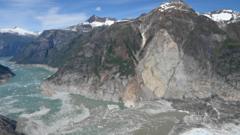
A 2020 megatsunami in Alaska’s Barry Arm fjord was the second largest ever recorded, new research confirms. The wave reached nearly 200 meters (656 feet) high, according to scientists who analyzed seismic data and computer models. The event ranks just behind a 1936 Greenland megatsunami that reached 243 meters (797 feet) at its peak.
The Alaska wave occurred on October 17, 2020, after a massive landslide sent rock and ice plunging into the fjord. Researchers from Alaska Earthquake Center and U.S. Geological Survey traced the event to melting of Barry Glacier, part of Alaska’s Prince William Sound. The glacier’s retreat destabilized surrounding rock, increasing the risk of landslides.
Climate Change’s Role in Rising Risks
Scientists say climate change is accelerating glacier melt in Alaska and other polar regions, raising the likelihood of similar events. Warmer temperatures weaken ice that buttresses mountainsides, increasing instability. The Barry Arm landslide released an estimated 45 million cubic meters (59 million cubic yards) of material—enough to fill 18,000 Olympic-sized swimming pools.
The event was first detected by seismometers, which recorded shaking from the landslide. Researchers later used satellite imagery and drone surveys to map the damage. No injuries were reported, but the wave triggered a tsunami warning and forced temporary evacuations in nearby communities.
Historical Context of Megatsunamis
Megatsunamis—waves exceeding 100 meters (328 feet)—are rare but catastrophic. The 1936 Greenland event remains the largest ever recorded, caused by a rockslide into a fjord. Another notable case occurred in 1958 in Lituya Bay, Alaska, where a 524-meter (1,719-foot) wave—the tallest ever documented—was triggered by an earthquake and landslide. Both events underscore the destructive power of sudden displacements in fjords.
Future Risks and Monitoring Efforts
Researchers warn that melting glaciers in Alaska and Greenland could lead to more megatsunamis. The U.S. Geological Survey and NOAA are expanding monitoring in high-risk fjords to improve early warnings. Communities near unstable slopes are urged to develop evacuation plans.
The 2020 Alaska event serves as a wake-up call about the hidden dangers of climate change. Unlike earthquake-driven tsunamis, these waves often strike without warning. Scientists say proactive measures—such as stabilizing slopes and installing early detection systems—are critical to preventing future disasters.
What You Need to Know
- Source: BBC News
- Published: May 06, 2026 at 12:00 UTC
- Category: Environment
- Topics: #bbc · #environment · #climate · #global-warming · #massive-alaska · #alaska-megatsunami-2020
Read the Full Story
This is a curated summary. For the complete article, original data, quotes and full analysis:
All reporting rights belong to the respective author(s) at BBC News. GlobalBR News summarizes publicly available content to help readers discover the most relevant global news.
Curated by GlobalBR News · May 06, 2026
🇧🇷 Resumo em Português
O Alasca acaba de registrar o segundo maior megatsunami da história, um alerta impressionante sobre os riscos cada vez mais frequentes de desastres naturais ligados às mudanças climáticas, que agora atingem até as regiões mais remotas do planeta. Em outubro de 2020, um deslizamento de terra na Baía de Lituya, no Alasca, gerou uma onda de 193 metros de altura — só superada pelo megatsunami de 270 metros ocorrido na Groenlândia em 1936. Enquanto eventos desse porte eram raros no passado, a aceleração do derretimento de geleiras impulsionada pelo aquecimento global está desestabilizando encostas e aumentando a probabilidade de novos colapsos catastróficos, mesmo em áreas pouco habitadas.
Para o Brasil, que enfrenta desafios semelhantes em regiões como a Amazônia e a Serra do Mar, onde deslizamentos e inundações já ceifam vidas e destroem comunidades, a notícia reforça a urgência de se preparar para fenômenos extremos cada vez mais intensos. Cientistas alertam que, com o ritmo atual de degelo, eventos como o do Alasca podem se tornar mais comuns em áreas montanhosas ao redor do mundo, inclusive em territórios brasileiros com relevo acidentado e solos vulneráveis. Além disso, o estudo destaca a importância de monitoramento constante e políticas de adaptação climática, pois o Brasil, embora não tenha registrado megatsunamis, já convive com consequências trágicas de chuvas extremas e deslizamentos.
Nos próximos anos, pesquisadores devem intensificar o estudo dessas ondas gigantes para prever e mitigar riscos, enquanto governos são pressionados a investir em sistemas de alerta precoce e infraestrutura resiliente.
BBC News
Read full article at BBC News →This post is a curated summary. All rights belong to the original author(s) and BBC News.
Was this article helpful?

Discussion