NASA engineers freed Curiosity’s stuck 'Atacama' rock after six days of drilling attempts and robotic arm adjustments.
- NASA's Curiosity rover freed stuck Mars rock 'Atacama' after 6 days
- Engineers used drill vibrations and arm repositioning to detach the sample
- The 28.6 lb rock broke into pieces during removal on May 1, 2026
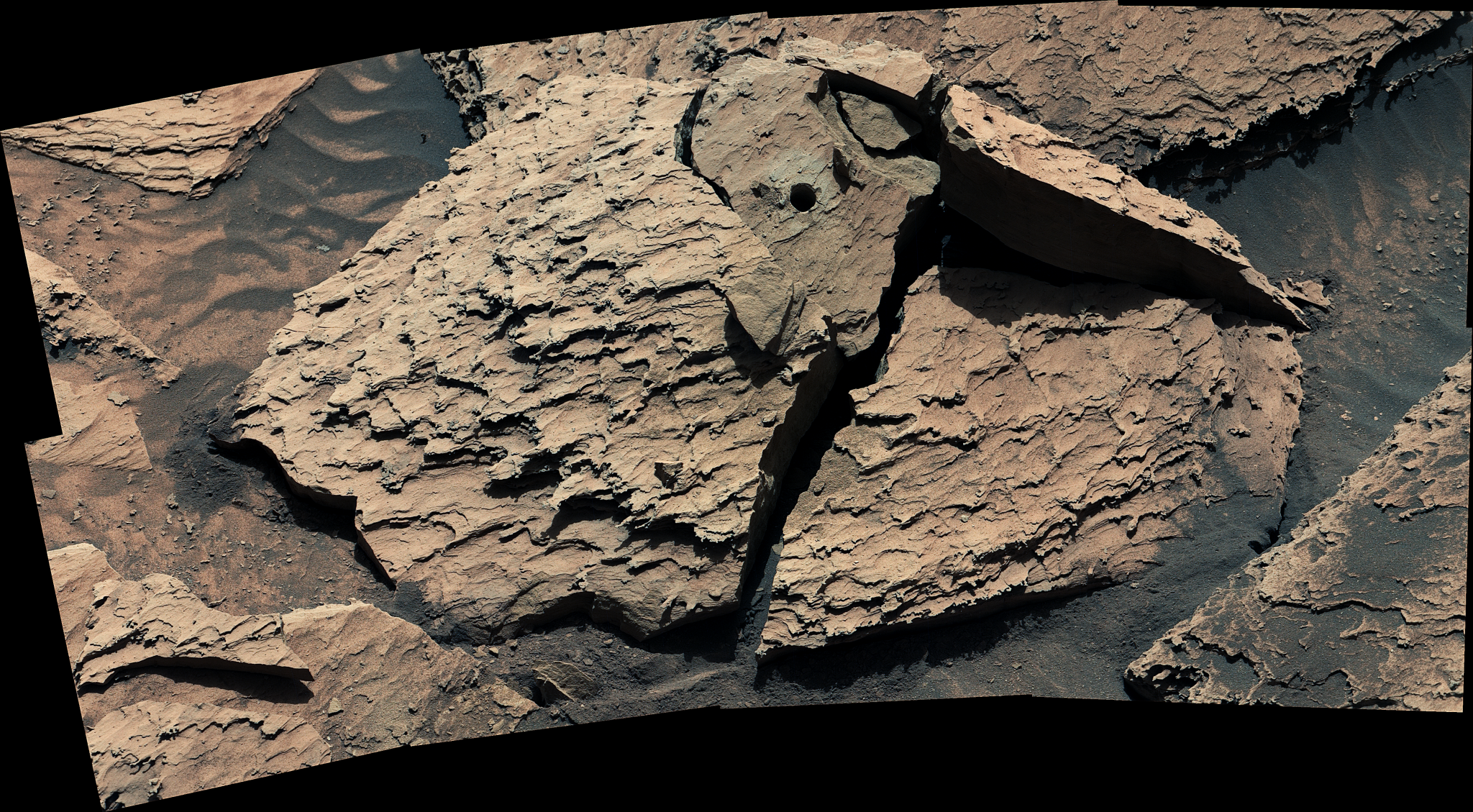
NASA’s Curiosity rover successfully dislodged a stubborn rock sample nicknamed ‘Atacama’ from the Martian surface on May 1, 2026, after engineers spent six days troubleshooting the drill mechanism. The rock, estimated at 1.5 feet in diameter and 6 inches thick, became lodged in the rover’s drill during an April 25 drilling attempt. Engineers at NASA’s Jet Propulsion Laboratory in Pasadena, California used a combination of robotic arm repositioning and high-frequency drill vibrations to free the sample, which ultimately broke into pieces upon detachment.
The close-up image of the detached rock was captured by Curiosity’s Mast Camera (Mastcam) on May 6, revealing a circular drill hole in the center. On Earth, the rock would weigh approximately 28.6 pounds, though its Martian weight would be roughly one-third of that due to the planet’s weaker gravity. The sample’s nickname, ‘Atacama,’ references Chile’s Atacama Desert, known for its barren, Mars-like conditions.
Why the Rock Stuck
Engineers identified a buildup of material around the drill bit as the likely cause of the rock’s stubborn attachment. The Mars Hand Lens Imager (MAHLI) and other instruments confirmed the obstruction before attempting removal strategies. The rover’s team prioritized clearing the drill to resume scientific operations, including analyzing the sample’s composition for clues about Mars’ past habitability.
Curiosity’s Ongoing Mission
Since landing in Gale Crater in 2012, Curiosity has been exploring Mars’ geology and climate, searching for signs of ancient microbial life. The rover’s Chemistry and Mineralogy (CheMin) instrument has already analyzed hundreds of samples, but the ‘Atacama’ rock posed an unexpected challenge. NASA officials confirmed the rover remains operational and will continue its mission, with plans to drill other targets in the coming weeks.
The incident highlights the challenges of operating robotic systems on Mars, where dust, temperature swings, and mechanical wear can disrupt operations. Engineers at JPL regularly update Curiosity’s software and procedures to mitigate such issues, ensuring the rover’s longevity. The team’s ability to adapt to unforeseen obstacles underscores the resilience of NASA’s Mars exploration programs.
Curiosity’s next steps include analyzing nearby geological formations and potentially drilling new samples. The rover’s power source, a radioisotope thermoelectric generator (RTG), is expected to remain functional for years, allowing continued exploration. The ‘Atacama’ rock detachment serves as a reminder of both the complexities and rewards of planetary science missions.
What You Need to Know
- Source: NASA
- Published: May 15, 2026 at 14:45 UTC
- Category: Science
- Topics: #nasa · #space · #science · #curiosity-shakes-loose · #pesky-rock · #caltech
Read the Full Story
This is a curated summary. For the complete article, original data, quotes and full analysis:
All reporting rights belong to the respective author(s) at NASA. GlobalBR News summarizes publicly available content to help readers discover the most relevant global news.
Curated by GlobalBR News · May 15, 2026
Related Articles
- 5 Ways to Vet Social Media Health Advice Before Trying It
- PCOS renamed to PMOS after decades of misdiagnosis confusion
🇧🇷 Resumo em Português
Numa das paisagens mais inóspitas do Sistema Solar, onde o robô Curiosity da NASA enfrentava mais um desafio digno de ficção científica, a agência espacial americana comemorou uma vitória inesperada: após dias de tentativas frustradas, o veículo conseguiu soltar a rocha ‘Atacama’, que pesa cerca de 13 quilos e havia ficado presa no braço robótico durante uma operação de perfuração. O feito não só manteve viva a missão de exploração em Marte, como mostrou a engenhosidade humana diante de obstáculos que poderiam ter paralisado um dos projetos científicos mais ambiciosos da atualidade.
A façanha tem peso especial para o Brasil e os falantes de português, já que a missão do Curiosity está diretamente ligada a descobertas que ajudam a entender não apenas o passado de Marte, mas também a história geológica da Terra e a possibilidade de vida em outros planetas. Além disso, o sucesso reforça a importância da cooperação internacional em ciência e tecnologia, um tema cada vez mais relevante em um mundo que depende de inovações para enfrentar crises globais. Para o público brasileiro, que acompanha com entusiasmo os avanços da exploração espacial, a notícia serve como lembrete de que, mesmo em um planeta vermelho distante, a perseverança e a engenharia de ponta podem transformar fracassos em oportunidades.
Agora, os engenheiros da NASA analisam os dados da perfuração interrompida, que podem conter pistas sobre a composição do solo marciano, enquanto o Curiosity segue sua jornada em busca de sinais de vida microbiana — um passo a mais rumo a respostas que, há décadas, movem a curiosidade de milhões de pessoas ao redor do mundo.
🇪🇸 Resumen en Español
El rover Curiosity de la NASA logró liberar una roca atascada en Marte tras días de intentos de perforación, en una maniobra que evita un posible fallo en su misión científica. La piedra, apodada ‘Atacama’ por su similitud con el desierto chileno, pesaba casi 13 kilogramos y bloqueaba el brazo robótico del vehículo, poniendo en riesgo futuras investigaciones geológicas.
El incidente, resuelto con maniobras precisas desde la Tierra, subraya la complejidad de operar un laboratorio móvil en Marte, donde cada movimiento debe planificarse con semanas de antelación. Para el público hispanohablante, este hito técnico refuerza el liderazgo de la NASA en exploración espacial y abre nuevas posibilidades para analizar composiciones rocosas en el planeta rojo, clave para entender su pasado habitable.
NASA
Read full article at NASA →This post is a curated summary. All rights belong to the original author(s) and NASA.
Was this article helpful?
Discussion