German court finds Mondelez tricked buyers with smaller Milka bars, violating consumer protection laws.
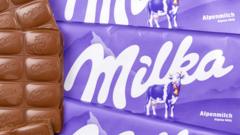
- Court rules Milka shrinkflation violated German consumer law
- Bar size reduced without clear price change communication
- Mondelez must face penalties for misleading practices
A court in Bremen has found Milka manufacturer Mondelez International guilty of illegal shrinkflation, a practice where product size is reduced without proportional price cuts. The judgment, delivered Tuesday, states the company failed to adequately inform consumers about the downsizing of its classic Alpine Milk chocolate bar.
The case centers on Mondelez’s decision to shrink the bar from 100 grams to 90 grams while maintaining the same retail price. Plaintiffs argued the change amounted to deception, as shoppers paid the same amount for less chocolate without clear warnings. The Bremen court agreed, ruling that Mondelez’s labeling and marketing misled buyers about the product’s actual quantity.
Consumer advocates hailed the decision as a win for transparency in packaging. “This ruling sends a strong message that shrinkflation won’t be tolerated when it violates consumer trust,” said a spokesperson for Germany’s Verbraucherzentrale, the national consumer rights group. The organization had filed the initial complaint, arguing that Mondelez’s actions breached German unfair competition laws.
Legal consequences and precedent
Mondelez now faces potential fines and must adjust its packaging and marketing for the Alpine Milk bar. The company has not yet indicated whether it will appeal the ruling. Legal experts say the case could set a precedent for similar shrinkflation complaints across Germany, where consumer protection laws are strict.
The ruling comes amid growing public frustration over shrinkflation, a trend accelerated by inflation and rising production costs. Manufacturers have increasingly reduced product sizes while keeping prices stable, a move critics call “sneaky pricing.” Surveys show over 60% of German consumers oppose the practice, viewing it as dishonest.
Mondelez’s response and industry impact
A Mondelez representative stated the company is reviewing the judgment and considering its next steps. “We take consumer trust seriously and are committed to compliance with all regulations,” the spokesperson said. The company has already adjusted packaging labels in some markets to highlight product sizes more clearly.
Industry analysts warn that more companies may face legal challenges if they continue shrinkflation practices without transparency. Retailers, too, are under pressure to police supplier practices or risk losing customer trust. The Bremen ruling may embolden other European countries to take similar legal action against misleading packaging.
For consumers, the decision reinforces the importance of checking product weights and reporting suspected violations. The Verbraucherzentrale has encouraged shoppers to report shrinkflation cases to local consumer protection agencies. The group plans to monitor Mondelez’s compliance closely and expand its efforts to other affected products.
What You Need to Know
- Source: BBC News
- Published: May 13, 2026 at 11:29 UTC
- Category: Business
- Topics: #bbc · #business · #economy · #shrinking-milka · #german · #bremen
Read the Full Story
This is a curated summary. For the complete article, original data, quotes and full analysis:
All reporting rights belong to the respective author(s) at BBC News. GlobalBR News summarizes publicly available content to help readers discover the most relevant global news.
Curated by GlobalBR News · May 13, 2026
Related Articles
- Lawyers sanctioned $110K for fake AI citations in landmark Oregon case
- Taiwan arms sales top Trump-Xi talks agenda as Xi meet ends
🇧🇷 Resumo em Português
Um tribunal alemão condenou a fabricante do chocolate Milka Alpine Milk por shrinkflation, prática que reduziu o tamanho das barras sem baixar os preços, enganando consumidores. A decisão da Justiça alemã estabelece um precedente importante ao reconhecer que essa estratégia comercial fere a legislação consumerista, abrindo caminho para possíveis ações semelhantes contra outras marcas que adotam a mesma tática no mercado europeu.
No Brasil, onde a inflação e a alta dos preços dos alimentos já pressionam o bolso das famílias, casos como o da Milka reforçam a discussão sobre transparência nas embalagens e a necessidade de fiscalização mais rigorosa. Embora o Código de Defesa do Consumidor já proíba práticas enganosas, a shrinkflation ainda é comum, especialmente em produtos de marcas internacionais que operam no país. A decisão alemã pode inspirar iniciativas semelhantes no Brasil, pressionando empresas a repensarem suas estratégias de precificação ou a correrem o risco de enfrentar ações judiciais.
A partir de agora, consumidores brasileiros podem se valer desse precedente para exigir mais clareza, enquanto órgãos de defesa do consumidor, como o Procon, ganham um argumento adicional para fiscalizar e coibir abusos.
🇪🇸 Resumen en Español
Un tribunal alemán ha sentenciado que la conocida marca Milka incurrió en shrinkflation al reducir el tamaño de sus tabletas de chocolate de leche alpina sin bajar el precio, engañando así a los consumidores. La justicia alemana ha considerado esta práctica contraria a la ley de protección al consumidor, abriendo un precedente que podría afectar a otras empresas del sector.
El caso de Milka no es aislado, sino que refleja una tendencia creciente en la industria alimentaria europea, donde muchas marcas han reducido el tamaño de sus productos —a veces de forma casi imperceptible— mientras mantienen o incluso suben sus precios. Para los consumidores hispanohablantes, esta sentencia subraya la importancia de revisar las etiquetas y exigir transparencia en los envases, especialmente en un contexto de inflación donde cada céntimo cuenta. Además, podría impulsar cambios regulatorios en otros países de la UE, donde ya hay debates sobre cómo frenar estas prácticas engañosas que erosionan la confianza en el mercado.
BBC News
Read full article at BBC News →This post is a curated summary. All rights belong to the original author(s) and BBC News.
Was this article helpful?



Discussion