North Korean footballers landed in South Korea Sunday for an AFC Women’s Champions League semi-final after eight years away.
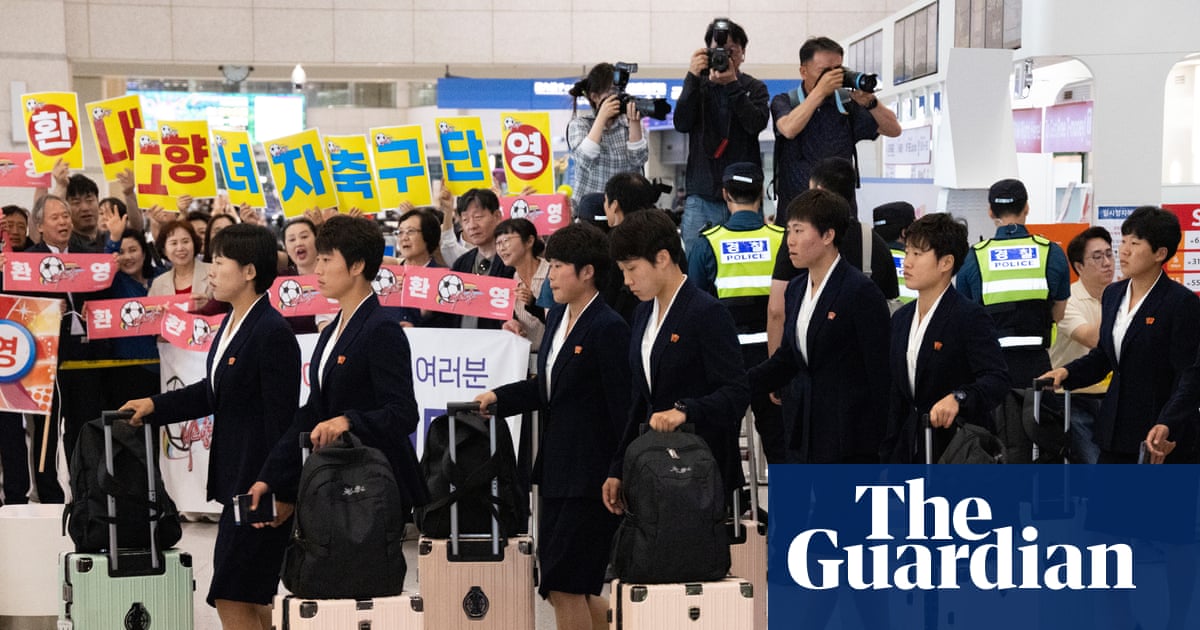
- North Korea’s Naegohyang FC arrived in South Korea Sunday after eight years
- Twenty-seven players and twelve staff entered via a land crossing before Wednesday’s match
- This is the first time North Korean athletes entered South Korea since 2016
📰 Continuing coverage: ‘Tearing down barriers’: North Korean footballers arrive in Seoul for first time in eight years
A North Korean women’s football team stepped onto South Korean soil Sunday for the first time in eight years, landing ahead of a high-stakes Asian Women’s Champions League semi-final against Suwon FC Women on Wednesday. The 27 players and 12 staff from Naegohyang FC crossed the border into South Korea through the Joint Security Area at Panmunjom, a rare moment of sports-led diplomacy between the rival Koreas. The match in Suwon marks the first time North Korean athletes have entered the South since 2016, when a unified Korean team competed in international competitions under a temporary flag and anthem. The team’s arrival follows months of behind-the-scenes talks and logistical planning by both the Asian Football Confederation and Korean football authorities to make the game possible. South Korean fans can watch the match live at Suwon World Cup Stadium, while North Korean supporters will follow via delayed broadcasts in Pyongyang, where internet access is tightly controlled. The game itself carries more than sporting weight—it’s a rare chance for people on both sides of the divided peninsula to share a moment, even if briefly, over a shared love of football. Security around the stadium and player accommodations has been tightened, with extra screening for the visiting delegation, a reminder of how unusual this encounter still feels on the ground. South Korea’s Suwon FC Women are heavy favorites, ranked 12th in Asia, while Naegohyang FC, from the North Korean city of Hyesan, sits outside the top 30. But the symbolic value of the fixture trumps the odds. For the North Korean players, most of whom grew up in a country where international travel is a privilege reserved for elites, the trip itself is extraordinary. Many have never left North Korea before, and the chance to play abroad, even in South Korea, would have been unthinkable just a few years ago. Their itinerary includes training sessions, media appearances, and a cultural exchange with local students, all carefully scripted to avoid any political missteps. The Asian Women’s Champions League is Asia’s top club competition, and this semi-final is part of the knockout stage that will decide who faces the champion in the final. The winner of Wednesday’s match will advance to face either Thailand’s Bangkok FC or Vietnam’s Hanoi I WFC in the final next week. ## A match with political echoes The timing of this fixture isn’t accidental. It comes as both Koreas attempt to rebuild tentative sports diplomacy after years of stalled talks and rising tensions. In 2018, the two countries briefly fielded a joint women’s ice hockey team at the Winter Olympics in Pyeongchang, a rare moment of unity that captured global attention. But since then, inter-Korean relations have frayed, with no high-level talks since 2022. Football has often been a pressure valve in tense times. Even during the pandemic, North Korea’s footballers played friendlies in China, while South Korea hosted international tournaments without any North Korean participation. This week’s game offers a flicker of normalcy, however small. For South Korea, it’s a chance to show soft power through sport. The country has spent decades building its football reputation, hosting the 2002 World Cup and producing stars like Son Heung-min, whose global fame has turned him into an unofficial cultural ambassador. Naegohyang FC, by contrast, is one of North Korea’s top women’s teams, though details about the players’ lives remain scarce. State media in Pyongyang has already framed the trip as a triumph of socialist sportsmanship, while South Korean outlets have focused on the human stories—players meeting fans, the novelty of seeing North Korean jerseys in a Seoul stadium, and the quiet hope that sports might chip away at decades of mistrust. ## What happens next For Naegohyang FC, the focus is squarely on Wednesday. A loss won’t erase the team’s achievement just in making the trip. But a win would send them to the final, a moment that could ripple across both Koreas. South Korea’s Suwon FC Women, meanwhile, will treat the match like any other high-stakes game, though the weight of history hangs over every pass. The broader implications are harder to predict. Diplomats on both sides have kept expectations low, wary of overhyping what’s still a sporting event. Still, the fact that this game is happening at all suggests that, for now, football is doing what politics hasn’t: opening a tiny, temporary door. For the players, the memories will last far longer than the final whistle. One North Korean defender, speaking through an interpreter during a rare press conference, said she felt ‘proud and excited’ but also ‘a little nervous.’ Her teammates nodded in agreement—simple words, but ones that carry the weight of eight years without a shared pitch. The South Korean fans cheering for Suwon FC on Wednesday won’t just be watching a football match. They’ll be watching a sliver of history unfold.
What You Need to Know
- Source: The Guardian
- Published: May 17, 2026 at 08:56 UTC
- Category: World
- Topics: #guardian · #world-news · #international · #sports · #football · #champions-league
Read the Full Story
This is a curated summary. For the complete article, original data, quotes and full analysis:
All reporting rights belong to the respective author(s) at The Guardian. GlobalBR News summarizes publicly available content to help readers discover the most relevant global news.
Curated by GlobalBR News · May 17, 2026
Related Articles
- 🎉 250 Articles in World!
- WHO declares Ebola emergency as Congo outbreak spreads to Uganda
- WHO declares Ebola emergency as Congo and Uganda outbreaks surge
🇧🇷 Resumo em Português
Um time feminino de futebol da Coreia do Norte pousou em Seul no domingo, pela primeira vez em oito anos, para enfrentar o Suwon FC em uma partida pela semifinal da Liga dos Campeões Asiática de Futebol Feminino. A chegada das atletas, que desembarcaram no aeroporto de Incheon, marcou um raro momento de aproximação esportiva entre as duas Coreias, ainda divididas por décadas de tensão política e militar.
A participação da equipe norte-coreana no torneio representa um avanço simbólico nas relações entre os dois países, que, apesar de tecnicamente em estado de guerra desde 1953, mantêm diálogos esporádicos em áreas como esporte e cultura. Para o Brasil, acostumado a interações frequentes no futebol, o episódio chama atenção pela raridade de tais aproximações no cenário asiático, onde conflitos históricos ainda moldam as dinâmicas regionais. A partida, além de ser um teste para o desempenho das jogadoras, pode abrir caminho para outras iniciativas de cooperação, ainda que tímidas.
O jogo, previsto para esta semana, promete ser um espetáculo não apenas pela qualidade técnica, mas também pelo potencial de se tornar um marco nas relações intercoreanas. Se bem-sucedido, o episódio poderia inspirar novos contatos entre as duas nações, ainda que o caminho para uma reconciliação plena permaneça longo e cheio de obstáculos.
🇪🇸 Resumen en Español
Un equipo femenino de fútbol norcoreano pisó suelo surcoreano por primera vez en ocho años, marcando un hito en la distensión entre ambas Coreas. El aterrizaje en Seúl de las jugadoras del April 25 Sports Club, afrontando un partido de semifinales de la Liga de Campeones Asiática Femenina contra el Suwon FC, simbolizó un respiro en las tensas relaciones intercoreanas.
El encuentro deportivo, más allá de su valor competitivo, cobra relevancia como gesto político en un contexto de reapertura gradual de canales de diálogo entre Pyongyang y Seúl. Para los hispanohablantes, este episodio recuerda a otros esfuerzos de diplomacia deportiva —como los Juegos Olímpicos de 2018 en Pyeongchang—, donde el fútbol actuó como puente en conflictos geopolíticos. La participación del equipo norcoreano, respaldado por el régimen, sugiere un posible cambio en la estrategia de aislamiento de Corea del Norte, aunque su impacto real dependerá de si estos gestos se traducen en avances concretos más allá del terreno de juego.
The Guardian
Read full article at The Guardian →This post is a curated summary. All rights belong to the original author(s) and The Guardian.
Was this article helpful?

Discussion