Police arrest two men wanted for GBH as far-right and pro-Palestine marches draw massive crowds in London.
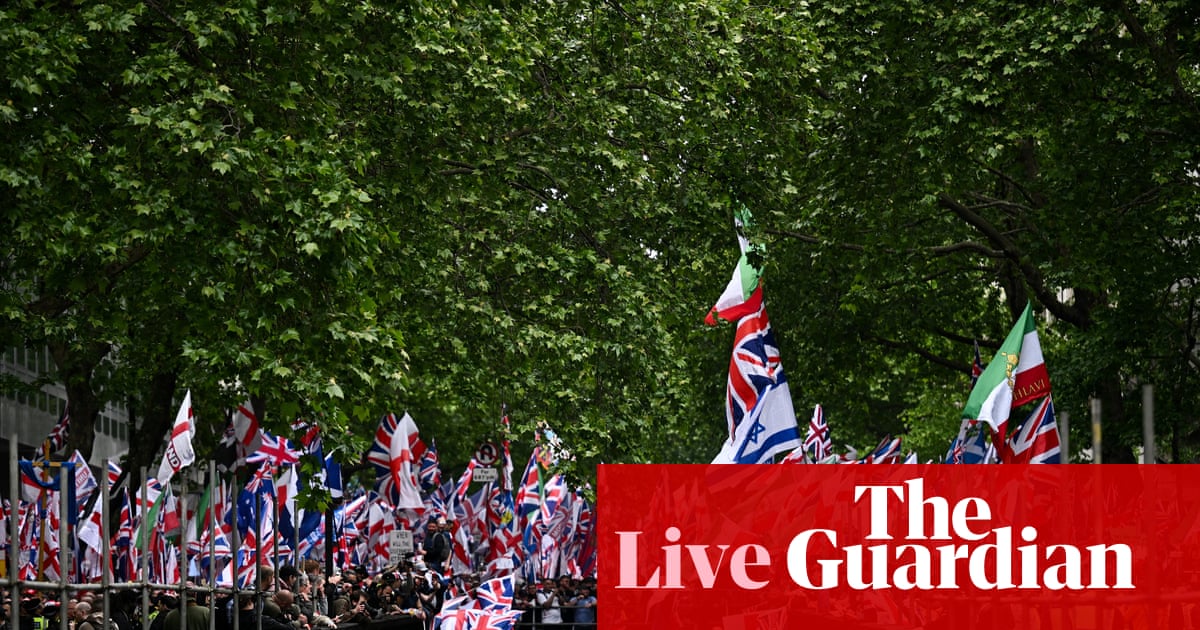
- Police arrest two suspects wanted in GBH case near protest site
- Thousands gather for Tommy Robinson’s far-right march
- Pro-Palestine protest marks annual Nakba Day
📰 Continuing coverage: Thousands gather in London for far-right and pro-Palestine marches
London police mobilized Saturday to oversee two high-profile protests: the far-right ‘Unite the Kingdom’ march led by activist Tommy Robinson and the annual ‘Nakba Day’ demonstration supporting Palestine. Authorities confirmed two arrests near Euston station, where officers detained two men wanted in connection with a GBH incident in Birmingham after they arrived in the city to attend the far-right rally. The Metropolitan Police released a statement noting the arrests were unrelated to the protests themselves but part of ongoing criminal investigations.
The far-right march, organized by Robinson’s group, drew significant attention from both law enforcement and counter-protesters. Robinson, known for his anti-immigration and anti-Islam activism, has faced repeated scrutiny over his rallies, which often spark counter-demonstrations. Police deployed additional officers to maintain order and prevent clashes between opposing groups. Public transport authorities warned commuters of potential disruptions in central London as the marches progressed through key areas including Whitehall and Westminster.
Simultaneously, thousands gathered for the ‘Nakba Day’ protest, commemorating the displacement of Palestinians during the 1948 Arab-Israeli War. The event, which coincides with Israel’s Independence Day, saw participants marching from the BBC headquarters to Parliament Square. Organizers emphasized the peaceful nature of the demonstration, though police maintained a visible presence to address any potential confrontations. The Met confirmed they were monitoring both events closely, with officers stationed at key intersections and public transport hubs.
Rising tensions and police response
The convergence of the two marches heightened concerns about public safety, prompting the Metropolitan Police to issue multiple advisories to residents and commuters. Authorities confirmed road closures in parts of central London, including around Trafalgar Square and Parliament Square, where both protests were scheduled to pass. Police helicopters circled above the city as officers in riot gear stood by to intervene if necessary. The force stated their primary goal was to ensure the safety of all participants while minimizing disruption to daily life.
Public figures and community leaders called for calm amid fears of escalation. A spokesperson for the Community Security Trust, a UK charity monitoring antisemitism and extremism, urged protesters to demonstrate responsibly. Similarly, representatives from pro-Palestinian groups emphasized the importance of peaceful assembly. The Metropolitan Police reiterated their commitment to facilitating lawful protests while preventing violence or criminal activity.
Broader implications and next steps
The dual marches reflect ongoing societal divisions in the UK over issues of immigration, nationalism, and foreign policy. Robinson’s ‘Unite the Kingdom’ movement has grown in visibility, drawing both supporters and critics, while Nakba Day protests remain a focal point for advocacy groups pushing for Palestinian statehood. Analysts suggest the events could influence public discourse and political strategies ahead of upcoming elections.
As the day progressed, police reported no major incidents beyond the initial arrests. Authorities continued to patrol the routes, ensuring protesters and counter-protesters remained separated. By evening, both marches had concluded without significant altercations, though tensions lingered in the aftermath. Police did not disclose further details about the arrested men or the Birmingham incident, stating only that investigations were ongoing. The Metropolitan Police confirmed they would review their response to assess lessons learned for future public order operations.
What You Need to Know
- Source: The Guardian
- Published: May 16, 2026 at 11:37 UTC
- Category: Politics
- Topics: #guardian · #politics · #tens · #london · #palestine
Read the Full Story
This is a curated summary. For the complete article, original data, quotes and full analysis:
All reporting rights belong to the respective author(s) at The Guardian. GlobalBR News summarizes publicly available content to help readers discover the most relevant global news.
Curated by GlobalBR News · May 16, 2026
Related Articles
- Starmer’s leadership under pressure as Labour MPs question authority
- Thousands gather in London for far-right and pro-Palestine marches
🇧🇷 Resumo em Português
Dezenas de milhares de manifestantes tomaram as ruas de Londres neste sábado em duas marchas paralelas que dividiram a atenção global: uma convocada por grupos de extrema-direita liderados pelo ativista Tommy Robinson e outra em apoio à causa palestina, marcada para o Dia da Nakba. O clima tenso levou a prisões de dois homens por agressão grave, enquanto as forças de segurança tentaram conter possíveis confrontos entre os grupos rivais. As imagens de centenas de bandeiras palestinas e símbolos nacionalistas britânicos lado a lado na capital britânica reforçaram a polarização política que vem ganhando força no cenário internacional, refletindo tensões que não se limitam ao Reino Unido.
O Brasil, que mantém uma relação complexa com conflitos internacionais e recebe forte influência de diásporas árabes e europeias, observa com atenção esses desdobramentos, especialmente diante da crescente mobilização de grupos de direita e esquerda no país. A cobertura midiática brasileira tem destacado como esses protestos globais ecoam em discussões locais sobre liberdade de expressão, direitos humanos e a participação da sociedade civil em causas internacionais. Além disso, a presença de figuras como Robinson, conhecido por suas posições anti-imigração, levanta debates sobre a exportação de ideologias extremistas e seus impactos em democracias multiculturais. Para o público brasileiro, o episódio serve como um lembrete de como as fronteiras entre política interna e externa estão cada vez mais fluidas.
Nos próximos dias, espera-se que as autoridades britânicas divulguem balanços definitivos sobre os incidentes e avaliem estratégias para evitar novos choques entre manifestantes, enquanto ativistas de ambos os lados prometem manter a pressão nas ruas.
🇪🇸 Resumen en Español
Decenas de miles de personas se congregaron este sábado en Londres para sumarse a sendas manifestaciones: una de extrema derecha liderada por Tommy Robinson y otra en apoyo a Palestina con motivo del Día de la Nakba. Las tensiones crecieron tras la detención de dos hombres buscados por agresiones graves, lo que añadió un clima de confrontación al ya polarizado escenario político británico.
El escenario refleja la creciente división social en Reino Unido, donde el auge de discursos ultranacionalistas y el conflicto israelí-palestino alimentan protestas cada vez más masivas. Para los hispanohablantes, especialmente en España y Latinoamérica, este tipo de movilizaciones recuerdan a las tensiones vividas en otros países europeos, donde la polarización también se recrudece. Además, el manejo policial de estos actos —con detenciones preventivas y despliegue de antidisturbios— plantea debates sobre el equilibrio entre seguridad y libertad de expresión, un tema recurrente en las democracias occidentales.
The Guardian
Read full article at The Guardian →This post is a curated summary. All rights belong to the original author(s) and The Guardian.
Was this article helpful?

Discussion