New video shows alleged salmon abuse at US fish farm amid Trump's push for mass fish production.
- Trump administration seeks to expand industrial fish farming in U.S. waters
- Undercover video alleges abuse at Cooke Aquaculture salmon hatchery
- Critics warn mass production could harm fish welfare and environment
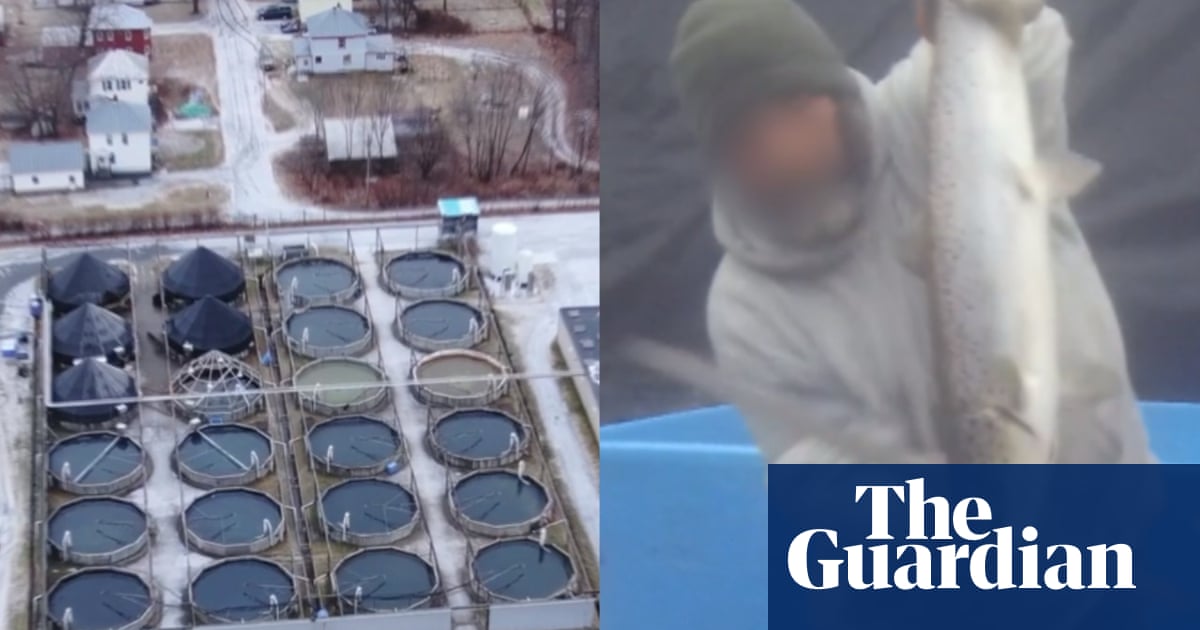
Undercover footage released Thursday appears to show workers at a Maine salmon hatchery repeatedly striking fish with hard objects and letting them pile up in overcrowded tanks, prompting renewed scrutiny of the Trump administration’s push to expand industrial fish farming. The video, filmed inside Cooke Aquaculture’s Cooke Aquaculture facility in Jonesboro, was obtained by the animal rights group Mercy For Animals and shared exclusively with The Guardian ahead of public release. The group alleges the abuse violates both state and federal animal welfare laws, though Maine officials have not yet commented on the footage.
The allegations come as the Trump administration moves to finalize rules that would greatly expand large-scale, land-based fish farming—an approach critics call the ‘chickenification’ of seafood production. The U.S. Department of Commerce and the National Oceanic and Atmospheric Administration (NOAA) National Oceanic and Atmospheric Administration are proposing changes to the Magnuson-Stevens Act that would allow more industrial aquaculture operations in federal waters, including offshore farms using net pens and land-based recirculating systems. Supporters argue the move would reduce dependence on imported seafood and boost domestic production by millions of tons annually.
Critics, however, warn that rushing to scale up fish farming could repeat the failures seen in industrial poultry production, where animals are often kept in cramped, stressful conditions to maximize output. ‘This is not about improving food production—it’s about prioritizing profit over animal welfare and ecological safety,’ said Sarah Hanneken, an investigator with Mercy For Animals. ‘The video shows what happens when you treat sentient animals like widgets in a factory.’ Cooke Aquaculture, one of North America’s largest salmon producers, has not responded to requests for comment on the video or the allegations.
The footage shows fish flailing on concrete floors, being struck with shovels and brooms, and left to suffocate in dense stacks of crates—scenes that Mercy For Animals says occurred during a two-month investigation in late 2023. The group has filed complaints with the U.S. Department of Agriculture and state authorities in Maine, calling for criminal charges. ‘These are not isolated incidents,’ Hanneken said. ‘They reflect systemic failures in how farmed fish are treated.’
Federal regulators defend the proposed rule changes, stating they include new animal welfare standards and environmental safeguards. NOAA Administrator Rick Spinrad Rick Spinrad has said the goal is to create ‘sustainable, humane, and transparent’ aquaculture systems. But critics point to a long history of regulatory rollbacks under the Trump administration and question whether enforcement will be strong enough. In 2020, the administration weakened animal welfare standards for organic livestock, a move later reversed by a federal court.
Environmental groups also warn that large-scale fish farming could pollute coastal waters with excess waste, spread disease to wild fish populations, and displace local ecosystems. The proposed rules would allow farms to operate in deeper waters and larger facilities than current regulations permit. ‘We’re not opposed to aquaculture in principle,’ said Peter Baker of The Pew Charitable Trusts The Pew Charitable Trusts, ‘but we cannot support industrialized production that treats the ocean like a feedlot.’
Legal experts say the new rules could face challenges under the National Environmental Policy Act, which requires federal agencies to assess environmental impacts before approving major projects. Environmental law firm Earthjustice has already signaled it may sue NOAA if the rules are finalized without stronger protections. Meanwhile, lawmakers in Maine and Washington state—two major salmon-producing regions—have introduced bills to tighten oversight of fish farms within state waters.
As the public reaction to the video grows, so does pressure on Cooke Aquaculture and federal regulators. Animal welfare advocates are calling for unannounced inspections and third-party audits of all major salmon farms in the U.S. The company has pledged to review its procedures, but has not committed to independent oversight. For now, the video has amplified a national debate over how—and whether—the U.S. should industrialize fish farming at the expense of animal welfare and environmental health.
What You Need to Know
- Source: The Guardian
- Published: May 14, 2026 at 12:30 UTC
- Category: Environment
- Topics: #guardian · #climate · #environment · #salmon · #trump · #cooke
Read the Full Story
This is a curated summary. For the complete article, original data, quotes and full analysis:
All reporting rights belong to the respective author(s) at The Guardian. GlobalBR News summarizes publicly available content to help readers discover the most relevant global news.
Curated by GlobalBR News · May 14, 2026
🇧🇷 Resumo em Português
Um novo vídeo chocante revelou cenas de suposto abuso contra salmões em uma granja aquícola dos Estados Unidos, levantando um alerta global sobre os riscos da expansão desregulada da indústria aquícola. As imagens, capturadas por uma organização de defesa animal, mostram peixes sendo pisoteados, mal manejados e submetidos a condições que contrariam até mesmo os padrões básicos de bem-estar animal, reacendendo o debate sobre a ética na produção alimentar em larga escala.
No Brasil, onde a aquicultura é uma das atividades agropecuárias que mais crescem — com destaque para a produção de tilápias e camarões —, o caso ganha relevância ao expor os perigos de um modelo industrial agressivo. Especialistas brasileiros já alertam que a adoção de práticas similares, impulsionada por interesses econômicos, poderia replicar problemas como superlotação, doenças e maus-tratos, comprometendo não só a imagem do setor, mas também a saúde pública e a sustentabilidade de ecossistemas aquáticos. Além disso, o episódio reforça a necessidade de regulamentações mais rígidas e fiscalização efetiva, especialmente diante do avanço de projetos que visam explorar ainda mais áreas costeiras e fluviais.
Se não houver mudanças profundas, o futuro da produção aquícola pode ficar marcado pela exploração predatória, colocando em risco não apenas os animais, mas também a segurança alimentar e a imagem do Brasil como um polo de agricultura responsável.
The Guardian
Read full article at The Guardian →This post is a curated summary. All rights belong to the original author(s) and The Guardian.
Was this article helpful?
Discussion