Boyd Holbrook’s war drama *Atonement* premieres at Cannes, tackling guilt and redemption without combat clichés.
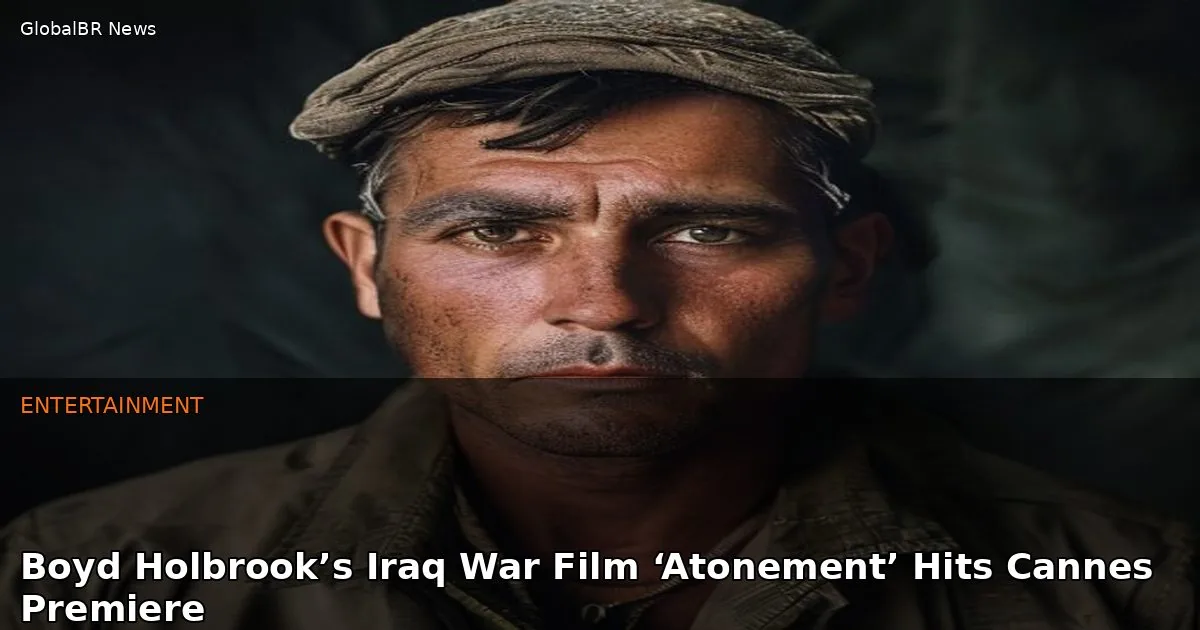
- Boyd Holbrook stars in Iraq War drama premiering at Cannes Film Festival
- Film centers on a soldier seeking out the family he devastated
- Director Reed Van Dyk avoids war movie stereotypes
Boyd Holbrook stars in Reed Van Dyk’s Iraq War drama Atonement, which has its world premiere at the Cannes Film Festival this week. The film, originally set for a 2022 release, was delayed twice before landing in the festival’s official selection. Holbrook plays a soldier who returns to Iraq to confront the family he accidentally destroyed during a brutal wartime incident. The movie isn’t just another war flick—it’s a raw, personal story about guilt, regret, and the cost of violence far from the battlefield clichés. Van Dyk, making his feature debut, spent years researching Iraq’s post-2003 reality to avoid the usual Hollywood tropes about combat and aftermath. The result is a film that feels more like a psychological drama than a traditional war movie, focusing on the civilian toll instead of the action. Holbrook, best known for his roles in Narcos and The Sandman, delivers a performance that’s quietly devastating. He’s joined by Iraqi actors who bring authenticity to the roles, including a standout turn from a non-professional in the lead family role. The film’s title, Atonement, isn’t subtle—but it fits the story’s core theme of redemption through suffering. Van Dyk and Holbrook worked closely to ensure the film didn’t glorify or sensationalize war. Instead, they aimed for something more uncomfortable: the truth about how violence lingers in the lives of those caught in its wake. The production shot parts of the film in Jordan, using actual Iraqi refugees as extras and consultants to ground the story in reality. Holbrook spent months preparing, studying the psychological effects of PTSD in soldiers, and even met with veterans who’d returned to Iraq for closure. The actor has called the role the most challenging of his career, partly because it forced him to confront his own limits as a performer. The film’s Cannes premiere comes at a time when Hollywood war films are under fresh scrutiny for how they portray conflict. Recent movies like The Zone of Interest have pushed boundaries, but Atonement takes a different approach—focusing on the moral weight of war rather than its spectacle. Van Dyk, a former journalist, has said he wanted to make a film that didn’t just show the bombs and bullets but the quiet, lingering damage they leave behind. The movie’s delayed release also reflects the real-world hurdles of making a war film about Iraq. Studios were hesitant to greenlight a project that didn’t fit the usual action-movie mold, and financing was a struggle until foreign investors stepped in. Now, with its Cannes debut, Atonement could find the audience it was always meant for: viewers tired of the same old war stories and hungry for something real. ## How the film avoids war movie stereotypes Van Dyk’s approach to Atonement was simple: ignore everything Hollywood thinks a war film should be. No dramatic battlefield sequences. No heroic speeches. No clear villains or easy answers. Instead, the movie lingers on the small, painful moments—the way a mother’s hands shake when she’s served coffee by the soldier who killed her son. The film’s Iraq isn’t a backdrop for explosions; it’s a living, breathing place where people are still trying to survive decades after the invasion. Holbrook’s character isn’t a hero. He’s a broken man who realizes too late what he’s done. The movie forces the audience to sit with that discomfort, to feel the weight of his regret without ever giving him an easy out. Van Dyk worked with Iraqi writers and historians to get the details right. The dialogue in Arabic isn’t just translated—it’s written by native speakers to sound natural. Even the food on screen is authentic, down to the brands of tea served in the family’s home. It’s the kind of attention to detail that makes the story feel real, not like a movie set. Critics at Cannes will likely focus on whether the film succeeds in its mission: to make a war movie that doesn’t rely on the usual tropes. Early screenings suggest it does. Audiences have called it devastating, not in the way war films often are—through violence—but through quiet, emotional wreckage. The film’s structure mirrors its themes. It’s not a linear story. Scenes jump between the soldier’s memories, his present-day actions, and the family’s daily life. The effect is disorienting, forcing the viewer to piece together what happened—and why it matters. The movie’s cinematography, handled by cinematographer Robbie Ryan, avoids the gritty, desaturated look of so many war films. Instead, it’s warm where it needs to be, cold where it should be. Sunlight filters through the family’s home in a way that feels almost sacred, while the soldier’s flashbacks are bathed in a sickly, artificial light that underscores his detachment. It’s a visual contrast that makes the emotional beats hit harder. ## The real-life Iraq that shaped the film Van Dyk didn’t just read books about Iraq’s post-2003 era. He spent years talking to Iraqis, many of whom had never set foot on a film set before. The non-professional actor playing the grieving father, for example, lost his home in Baghdad during the war. His performance isn’t acting—it’s memory. The film’s production team also recruited Iraqi refugees living in Jordan to play extras, ensuring the crowd scenes felt authentic. One extras’ casting call specifically sought people who had lived through the war, not just actors who could mimic it. The wardrobe department worked from real photos and videos, down to the types of sandals worn by children in the 2000s. Even the cars in the background are period-accurate. It’s the kind of detail that would go unnoticed by most viewers—but it’s what makes the world feel real. The movie also addresses the bureaucratic nightmare of war. The soldier’s journey to find the family isn’t just a plot device; it’s a reflection of the real struggles Iraqis faced trying to reunite with loved ones after the invasion. Passports were destroyed. Records were lost. Families were scattered. The film weaves these details into the narrative, making the soldier’s quest feel like an impossible one. It’s a reminder that war doesn’t end when the cameras stop rolling. For many Iraqis, the aftermath lasts generations. The film’s broader implications could resonate beyond Cannes. With Hollywood increasingly criticized for its portrayal of war, Atonement might mark a shift toward more honest, less sensational stories. Van Dyk has said he hopes the film sparks conversations—not about Iraq specifically, but about the human cost of all wars. Holbrook, for his part, has called the project a turning point in his career. He’s already attached to another war-themed project, but he’s clear: this one was different. It wasn’t about the action. It was about the silence afterward. The Cannes premiere is just the beginning. If the film finds an audience, it could push other filmmakers to take risks. No more cookie-cutter war movies. No more easy outs. Just stories about people—broken, trying, and still standing, even when they shouldn’t be.
What You Need to Know
- Source: Hollywood Reporter
- Published: May 17, 2026 at 15:00 UTC
- Category: Entertainment
- Topics: #hollywood · #movies · #war · #conflict · #boyd-holbrook
Read the Full Story
This is a curated summary. For the complete article, original data, quotes and full analysis:
All reporting rights belong to the respective author(s) at Hollywood Reporter. GlobalBR News summarizes publicly available content to help readers discover the most relevant global news.
Curated by GlobalBR News · May 17, 2026
Related Articles
- Why Scarlett Johansson Dodged James Grey’s Cannes FaceTime Call
- How to Stream the 2024 ACM Awards Live Online This Weekend
🇧🇷 Resumo em Português
Ator de ‘Narcos’ estreia em Cannes filme que mergulha na culpa de um soldado na Guerra do Iraque
O ator norte-americano Boyd Holbrook, conhecido por seus papéis em séries como Narcos e The Sandman, surpreendeu o público e a crítica no Festival de Cannes com o drama de guerra Atonement (no Brasil, Expiação), dirigido por Reed Van Dyk. O filme foge dos clichês das produções de batalha ao explorar, de forma crua e intimista, o peso da culpa em um soldado que luta não só contra o inimigo, mas contra seus próprios demônios.
A estreia em Cannes ganha contornos especiais para o público brasileiro, pois o longa aborda um tema universal — o trauma da guerra — ao mesmo tempo em que ecoa questões recentes sobre a presença militar dos EUA no Oriente Médio e seus desdobramentos humanitários. Com uma narrativa que prioriza a psicologia dos personagens em detrimento das cenas de combate, Atonement oferece uma reflexão profunda sobre as cicatrizes invisíveis deixadas pelos conflitos, algo que ressoa em uma sociedade ainda marcada por debates sobre a violência e a paz.
A expectativa agora é que o filme ganhe distribuição internacional ainda este ano, podendo chegar ao Brasil em 2025, ampliando o diálogo sobre as consequências emocionais das guerras modernas.
Hollywood Reporter
Read full article at Hollywood Reporter →This post is a curated summary. All rights belong to the original author(s) and Hollywood Reporter.
Was this article helpful?


Discussion