Aid to Gaza has fallen 37% with only 10% of funding secured.
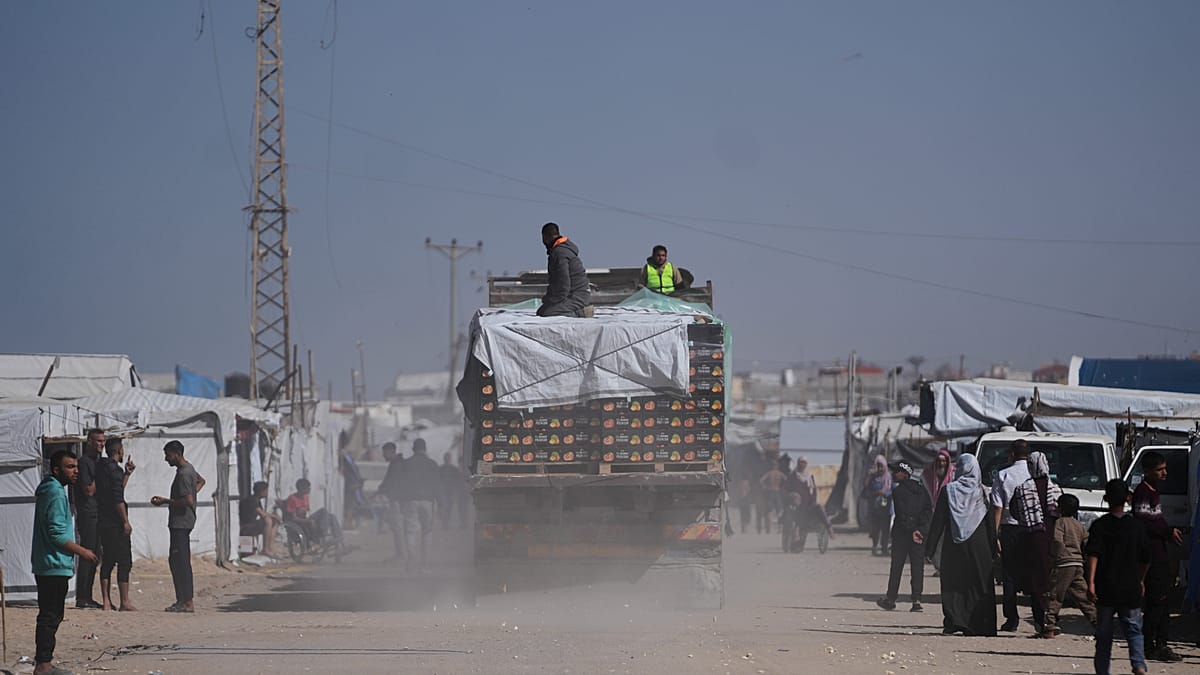
- Aid deliveries to Gaza have dropped by 37% since last month
- Only 10% of the needed humanitarian funding has been secured
- Hundreds of thousands now rely on community kitchens serving lentils once a week
In Gaza, the sound of mortar fire has been replaced by the quiet of empty stomachs. The United Nations United Nations reports that food aid deliveries have fallen by 37% over the past month, leaving families scrambling for meals. Community-run kitchens have become the last line of defense, serving basic lentil stews just once a week to hundreds of thousands of people trapped in the Strip. These meals, once a supplement, are now the main source of nutrition for many in an area where 80% of residents already rely on aid to survive, according to the World Food Programme WFP. The WFP says it has only received 10% of the $300 million it needs to keep food flowing through December, a gap that’s forcing drastic cuts in rations. The agency has already halved the size of emergency food parcels in some areas, leaving families with less than half the calories they need each day. One mother in northern Gaza told Euronews she’s feeding her five children just one small bowl of lentils every other day. “I don’t know what we’ll do if the kitchens close,” she said, her voice breaking. “My kids ask for bread, but there is none. We’re all just waiting to see who starves first.” The crisis isn’t just about hunger—it’s accelerating. The UN says malnutrition rates among children under five have doubled in the past six months. Hospitals report a surge in cases of severe acute malnutrition, a life-threatening condition that leaves kids with skeletal frames and weakened immune systems. Doctors in Khan Younis say they’re seeing babies born dangerously underweight because their mothers can’t eat enough to breastfeed. ## Why aid is drying up The funding shortfall stems from donor fatigue and shifting global priorities. The US, historically the largest contributor to Gaza’s aid operations, has slashed its contribution by 60% this year. European nations, facing their own budget crises, have also pulled back. The European Union’s emergency aid arm, ECHO, confirmed it’s rerouting funds to Ukraine and other crises. “We’re stretched thin,” said a senior ECHO official who spoke on condition of anonymity. “Every euro we spend in Gaza is a euro not spent elsewhere.” Meanwhile, Israel’s blockade on the Strip remains tight. The government says it’s necessary for security, but humanitarian groups argue it’s strangling aid flows. Only 12% of the usual trucks filled with food, medicine, and fuel are entering Gaza each day. The UN Relief and Works Agency UNRWA says it’s been forced to suspend food distributions in several neighborhoods for lack of supplies. ## What’s next for Gaza’s hungry The UN is pleading for urgent donations, warning that without $250 million more by October, it will have to cut rations entirely in some areas. The WFP’s director in Gaza, Scott Anderson, says the situation is “spiraling out of control.” “People are resorting to extreme measures,” he said. “Some are eating animal feed. Others are selling their children’s schoolbooks for a handful of flour.” The Israeli government has signaled it might ease restrictions temporarily to allow more aid in, but only if Hamas Hamas stops firing rockets toward southern Israel. Hamas denies any connection between the blockade and the aid crisis, blaming the shortages on donor countries. Meanwhile, Gaza’s bakeries—once the heart of the community—are shutting down. Most can’t afford the flour prices, which have tripled since the war began. Bread, once a staple, is now a luxury. One bakery owner in Rafah said he’s down to making just 50 loaves a day, down from 500 before the conflict. “We used to feed 2,000 people. Now we feed 20,” he said. “I don’t know how long we can last.”
What You Need to Know
- Source: Euronews
- Published: May 15, 2026 at 05:00 UTC
- Category: World
- Topics: #euronews · #europe · #world-news · #war · #gaza · #middle-east
Read the Full Story
This is a curated summary. For the complete article, original data, quotes and full analysis:
All reporting rights belong to the respective author(s) at Euronews. GlobalBR News summarizes publicly available content to help readers discover the most relevant global news.
Curated by GlobalBR News · May 15, 2026
Related Articles
- 🎉 250 Articles in World!
- Bulgaria wins Eurovision 2025 with Dara’s historic victory
- ‘She was phenomenal, she was iconic’: Delta Goodrem wins praise as Australia places fourth at Eurovision
🇧🇷 Resumo em Português
A crise humanitária em Gaza atinge níveis críticos com a queda de 37% na distribuição de ajuda alimentar e apenas 10% dos fundos necessários garantidos, enquanto centenas de milhares de pessoas dependem agora de refeições semanais de lentilhas preparadas em cozinhas comunitárias.
O cenário se agrava à medida que a escassez de recursos impede a entrega de suprimentos essenciais, ameaçando milhões de vidas em uma região já devastada por conflitos prolongados. Para o Brasil e os falantes de português, a notícia ressoa não apenas como um alerta humanitário global, mas também como um chamado à solidariedade internacional, especialmente considerando os laços históricos do país com a causa palestina. Com a fome se espalhando rapidamente, a comunidade internacional é pressionada a agir antes que a situação se torne irreversível.
A próxima cúpula de doadores, marcada para o próximo mês, será decisiva para definir se os esforços de socorro serão capazes de reverter o colapso iminente.
🇪🇸 Resumen en Español
La crisis humanitaria en Gaza se agrava con un drástico descenso del 37% en la ayuda alimentaria, dejando a cientos de miles de personas al borde de la hambruna mientras la financiación internacional se paraliza.
El colapso de los convoyes de ayuda y la escasez de fondos —solo se ha cubierto el 10% de lo necesario— obligan a las cocinas comunitarias a racionar alimentos básicos como lentejas, una solución insostenible ante el bloqueo y los combates. Para los hispanohablantes, este drama subraya la urgencia de presionar a la comunidad internacional para reactivar la asistencia y evitar una catástrofe que, pese a la distancia, resuena con la solidaridad global.
Euronews
Read full article at Euronews →This post is a curated summary. All rights belong to the original author(s) and Euronews.
Was this article helpful?


Discussion