Labour’s leadership race and a Makerfield by-election bring Brexit back to the forefront of UK politics.
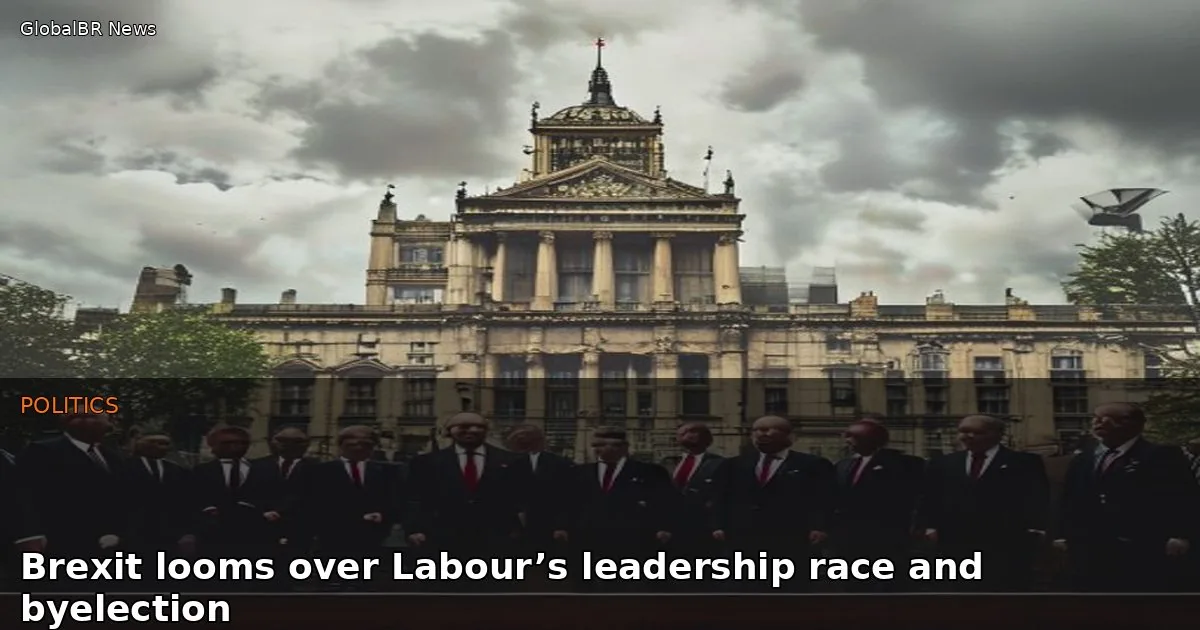
- Labour says Brexit won’t be avoided in leadership race
- Makerfield by-election expected to test Labour’s stance on EU ties
- UK-EU relations set to dominate political debate again
📰 Continuing coverage: Brexit looms over Labour’s leadership race and byelection
Brexit isn’t just a fading memory in British politics. It’s staging a quiet comeback, pushed back into the spotlight by Labour’s internal battles and a critical by-election. Keir Starmer, the current favourite to lead the party, is making it clear that his team won’t duck the question of how Labour plans to handle the UK’s long-term ties with the European Union. That’s a sharp shift from the party’s recent strategy of focusing on domestic issues like the NHS and economic growth instead of reopening old Brexit wounds.
The Makerfield by-election in Greater Manchester is where this debate could get its first real test. The seat, currently held by Labour’s Yvonne Fovargue, became vacant after she stepped down. It’s a working-class area that voted strongly to leave the EU in 2016, and the result here will signal how much Labour’s Brexit stance resonates with voters outside its traditional urban strongholds. The party can’t afford to ignore this district if it wants to prove it can win back trust in areas that turned to the Conservatives in recent elections.
Starmer’s team argues that Labour needs a clear plan on Brexit—not to reargue the 2016 vote, but to shape a future relationship that works for British businesses and workers. That means tackling issues like trade barriers, labour mobility, and regulatory alignment without getting stuck in the same old arguments. But the challenge is that Labour’s internal factions are split. Some want the party to push for closer ties with the EU, while others argue that Labour should avoid anything that looks like it’s trying to reverse Brexit.
The Conservatives aren’t sitting this out. The party is using the by-election to hammer home its message that Labour still hasn’t moved on from Brexit and is out of touch with voters who backed Leave. They’re pointing to Labour’s past indecision as proof that Starmer’s party can’t be trusted to handle the economy or negotiate with Brussels. Meanwhile, Labour’s leadership hopefuls are walking a tightrope, trying to balance their base’s demands with the need to appeal to swing voters who still care deeply about Brexit.
This isn’t just about one by-election. It’s about how Labour positions itself for the next general election. If Starmer wins the leadership, he’ll have to decide whether to soften Labour’s stance on Brexit or keep it as a secondary issue. Either way, the party’s approach will shape how voters see Labour’s credibility on the economy and foreign policy. The EU, for its part, has been watching closely. Brussels wants a stable partner in London, not another round of political chaos over Brexit. But with UK politics still fractured over the issue, that stability isn’t guaranteed.
What happens next? The Makerfield by-election will give an early clue. If Labour holds the seat with a strong showing, it might embolden Starmer to take a firmer stance on Brexit. If the party struggles, expect it to double down on domestic issues and sidestep the EU debate even more. Either way, Brexit isn’t going away—it’s just changing shape.
What You Need to Know
- Source: BBC News
- Published: May 17, 2026 at 02:14 UTC
- Category: Politics
- Topics: #bbc · #politics · #election · #labour · #brexit
Read the Full Story
This is a curated summary. For the complete article, original data, quotes and full analysis:
All reporting rights belong to the respective author(s) at BBC News. GlobalBR News summarizes publicly available content to help readers discover the most relevant global news.
Curated by GlobalBR News · May 17, 2026
Related Articles
🇧🇷 Resumo em Português
O Reino Unido enfrenta mais uma vez a sombra do Brexit, agora no centro da disputa pela liderança do Partido Trabalhista e de uma eleição suplementar crucial em Makerfield, que pode redefinir os rumos da política britânica. Com a batalha interna no Labour acirrada entre candidatos que defendem abordagens distintas sobre a relação com a União Europeia, a questão europeia volta a dividir não só o partido, mas também o cenário político como um todo. A eleição em Makerfield, tradicional reduto trabalhista, será um termômetro para medir o desgaste do partido após anos de instabilidade e incertezas sobre o futuro do país no bloco europeu.
O contexto é especialmente relevante para o Brasil, onde o debate sobre integração regional e acordos comerciais com blocos como a UE ganha força, especialmente após a aproximação recente entre Mercosul e Bruxelas. O Labour, tradicionalmente europeísta, agora precisa equilibrar pressões internas por um Brexit mais brando ou até mesmo a reentrada no bloco, enquanto tenta reconquistar eleitores decepcionados com anos de austeridade e incerteza. Para o Brasil, que negocia acordos com a UE e observa de perto as dinâmicas políticas europeias, as decisões britânicas podem influenciar diretamente as relações comerciais e estratégicas entre os dois blocos.
A votação em Makerfield, marcada para breve, será um divisor de águas não só para o Trabalhista, mas para o futuro do Reino Unido pós-Brexit, cujas consequências ainda reverberam globalmente.
🇪🇸 Resumen en Español
El Brexit vuelve a agitar la política británica justo cuando el Partido Laborista afronta una crucial carrera por el liderazgo y un disputado escaño vacante en Makerfield. La sombra del divorcio con la Unión Europea planea sobre las decisiones clave de la formación opositora, que debe definir su estrategia ante un electorado cada vez más polarizado.
La relevancia de este escenario trasciende las fronteras del Reino Unido, pues refleja la tensión permanente entre la izquierda laborista y las demandas de una sociedad dividida entre la nostalgia por la salida de la UE y los costes económicos de un divorcio mal gestionado. Para los votantes hispanohablantes, especialmente aquellos con intereses en comercio o movilidad entre Europa y el Reino Unido, la elección del próximo líder laborista podría marcar el ritmo de las futuras negociaciones comerciales o la redefinición de acuerdos migratorios. Makerfield, con su mezcla de tradición industrial y comunidades multiculturales, se convierte en un termómetro de cómo el Brexit sigue reconfigurando el mapa político británico, incluso años después de su implementación.
BBC News
Read full article at BBC News →This post is a curated summary. All rights belong to the original author(s) and BBC News.
Was this article helpful?
Discussion