Congress tells Navy to build ships in America, not abroad, as fiscal 2027 budget debate heats up.
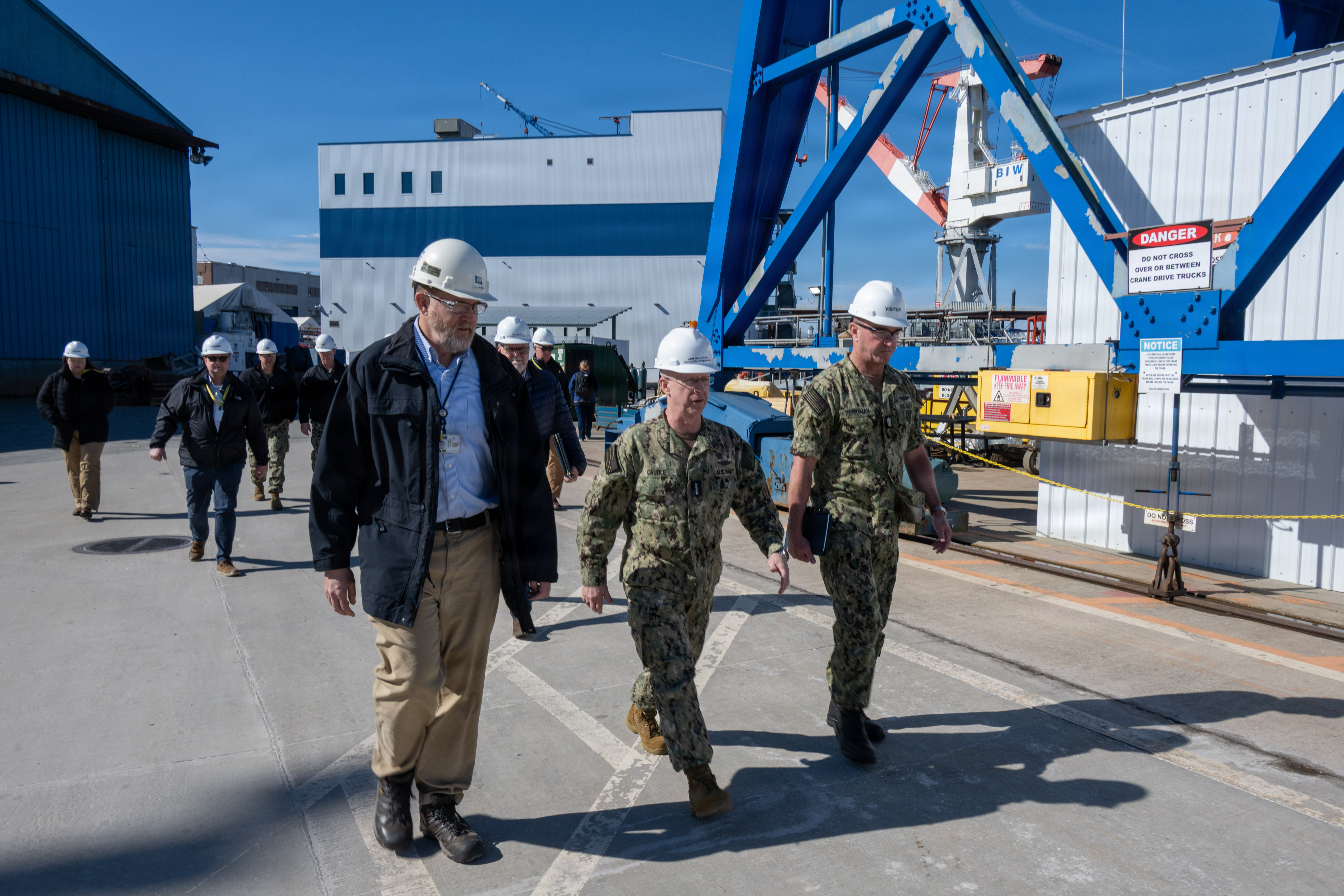
- Congress urges Navy to build ships in America, not abroad
- House hearing featured top Navy and Marine Corps leaders Thursday
- Navy’s recent shipbuilding plan included foreign construction options
Members of Congress on Thursday challenged top U.S. Navy and Marine Corps leaders to protect America’s shipbuilding industry, following a recent Navy document that suggested the service might buy ships from foreign shipyards. The House Armed Services Committee hearing included Chief of Naval Operations Adm. Daryl Caudle and acting Navy Secretary Hung Cao, along with Marine Corps Commandant Gen. Eric Smith.
Retired Navy SEAL Rep. Derrick Van Orden, R-Wis., echoed bipartisan concerns during the hearing. “I will echo some of my Democrat colleagues: As many ships as we can build in the United States, we want to build them,” Van Orden said. His remarks reflect growing alarm in Congress over the Navy’s fiscal 2027 budget request, which outlines plans to explore shipbuilding partnerships with allied nations.
Navy’s shipbuilding plan raises concerns over domestic capacity
The Navy’s latest shipbuilding plan, released earlier this week, explicitly states the service may consider building certain ships overseas if domestic shipyards cannot meet demand or cost requirements. The document signals a potential shift in long-standing U.S. policy to prioritize domestic construction for military vessels. Critics say this could weaken the American maritime industrial base, a concern shared by both parties.
Rep. Joe Courtney, D-Conn., chairman of the House Seapower and Projection Forces Subcommittee, raised the issue during the hearing. “We need to make sure that we’re not creating a situation where we’re outsourcing our shipbuilding in a way that undercuts our industrial base,” he said. Courtney and other lawmakers emphasized that shipbuilding supports hundreds of thousands of American jobs and underpins naval readiness.
Budget constraints and global demand strain U.S. shipyards
Navy leaders defended the need for flexibility, pointing to budget pressures and urgent global fleet demands. Adm. Caudle told lawmakers that meeting the Navy’s goal of 355 battle force ships by 2035 requires innovative solutions, including partnerships with allied shipbuilders. He added that domestic shipyards are already stretched thin, with long lead times and rising costs.
Acting Navy Secretary Cao acknowledged the tension between domestic capacity and operational needs. “We have to balance industrial base health with the urgent requirement to get ships to the fleet,” he said. Marine Corps Commandant Gen. Smith emphasized that amphibious and expeditionary ships—key to Marine Corps operations—must remain a domestic priority to ensure rapid deployment and maintenance.
Lawmakers push back against foreign shipbuilding expansion
Rep. Rob Wittman, R-Va., a strong advocate for domestic shipbuilding, argued that relying on foreign yards risks national security. “We cannot outsource our shipbuilding industrial base,” Wittman said. “It would be a mistake to signal to adversaries that we are willing to cede control over a critical defense capability.”
Lawmakers also raised concerns about technology transfer and supply chain security if U.S. ship orders go overseas. The hearing highlighted bipartisan support for legislation that would restrict foreign shipbuilding for certain Navy vessels unless domestic options are unavailable or cost-prohibitive.
What happens next?
Congress is expected to include stricter domestic shipbuilding requirements in the final fiscal 2027 defense authorization bill. The Navy will continue reviewing shipbuilding plans and may hold further hearings to address lawmaker concerns. Meanwhile, shipbuilders like Huntington Ingalls Industries and General Dynamics Electric Boat are lobbying to expand capacity and modernize facilities to meet demand. The outcome could shape the future of U.S. naval power and industrial competitiveness for decades.
What You Need to Know
- Source: Defense News
- Published: May 14, 2026 at 22:53 UTC
- Category: War
- Topics: #defense · #military · #pentagon · #politics · #usa · #congress
Read the Full Story
This is a curated summary. For the complete article, original data, quotes and full analysis:
All reporting rights belong to the respective author(s) at Defense News. GlobalBR News summarizes publicly available content to help readers discover the most relevant global news.
Curated by GlobalBR News · May 14, 2026
Related Articles
🇧🇷 Resumo em Português
Washington pressiona por estaleiros locais enquanto Marinha dos EUA considera encomendas no exterior
A possibilidade de a Marinha dos Estados Unidos encomendar navios em estaleiros estrangeiros, em vez de priorizar a indústria naval americana, acendeu um alerta no Congresso norte-americano. Líderes da Marinha e do Corpo de Fuzileiros Navais foram convocados para justificar suas estratégias diante de parlamentares, que temem prejuízos para a segurança nacional e a economia interna. A disputa pelo futuro da frota naval americana coloca em xeque não só a autonomia estratégica dos EUA, mas também o modelo de defesa ocidental, que depende cada vez mais de cadeias de suprimento globais.
O debate ganha relevância para o Brasil à medida que o país busca modernizar sua própria frota, especialmente em um contexto de tensões regionais e disputas por recursos no Atlântico Sul. Enquanto os EUA discutem se devem ou não terceirizar parte de sua construção naval, o Brasil enfrenta desafios semelhantes: como equilibrar custos, tecnologia e soberania ao investir em estaleiros nacionais ou recorrer a parceiros internacionais. A decisão americana pode servir de referência para outros países, inclusive o Brasil, que precisa definir sua política de defesa diante de ameaças como a presença crescente de navios chineses na região.
A próxima etapa é a apresentação do orçamento fiscal de 2027, que deve revelar se Washington cederá à pressão por protecionismo industrial ou se manterá a estratégia de diversificar fornecedores para garantir a prontidão operacional de suas forças navais.
🇪🇸 Resumen en Español
Los máximos responsables de la Armada y los Marines estadounidenses se ven obligados a replantearse su estrategia de adquisiciones navales ante la insistencia de legisladores que exigen priorizar los astilleros nacionales en el presupuesto fiscal de 2027. La petición llega en un momento crítico, cuando la dependencia de proveedores extranjeros amenaza con debilitar la capacidad industrial militar del país y dejar al descubierto vulnerabilidades en su cadena de suministro estratégica. Con tensiones geopolíticas en ascenso, especialmente en el Indo-Pacífico, Washington busca blindar su soberanía tecnológica y operativa, aunque el coste de acelerar la producción local podría recaer en contribuyentes y contribuir a retrasos en programas clave.
La polémica desatada refleja un debate más amplio sobre el equilibrio entre eficiencia económica y seguridad nacional en la defensa occidental. Para España y sus aliados europeos, la lección es clara: la guerra en Ucrania ha demostrado que la autonomía industrial no es un lujo, sino un pilar de la disuasión. Mientras la UE impulsa proyectos como el Fondo Europeo de Defensa para reducir dependencias —especialmente en sectores como el naval—, el caso estadounidense subraya los riesgos de externalizar capacidades críticas en un entorno marcado por la rivalidad con potencias como China. La decisión final del Congreso no solo definirá el futuro de la flota estadounidense, sino que servirá como termómetro para la cohesión industrial transatlántica en un escenario de creciente confrontación.
Defense News
Read full article at Defense News →This post is a curated summary. All rights belong to the original author(s) and Defense News.
Was this article helpful?


Discussion