IRGC navy widens Strait of Hormuz closure zone to 300 miles, disrupting global shipping.
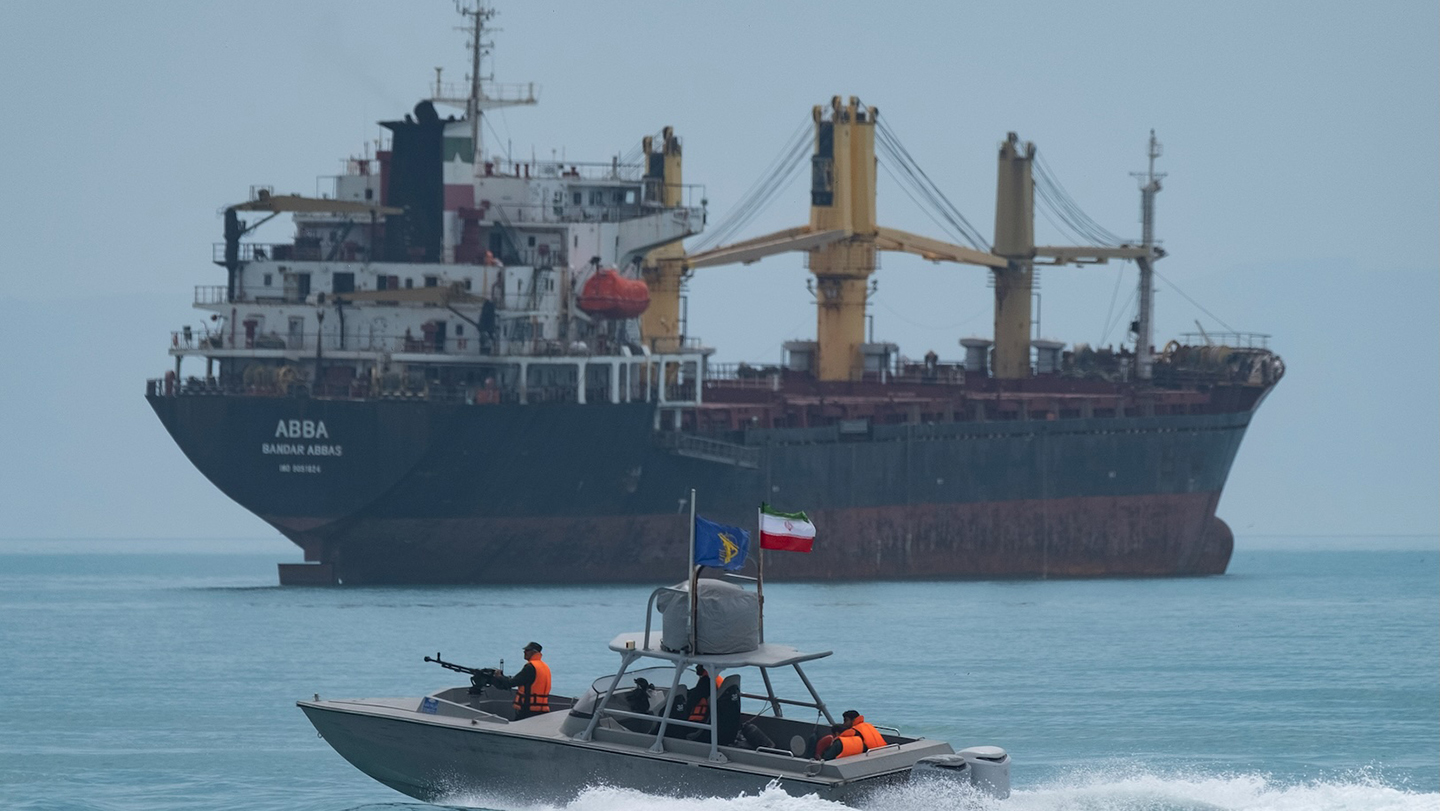
- IRGC navy claims 10x expansion of Strait of Hormuz closure zone
- New zone covers over 200 miles, blocking most shipping
- Move heightens risks amid stalled U.S.-Iran talks
Iran’s Islamic Revolutionary Guard Corps (IRGC) Navy has redefined the boundaries of the Strait of Hormuz, expanding its closure zone from a narrow 20-30 miles to a sweeping 200-300 miles, according to its naval commander. Political Deputy of IRGC Navy Mohammad Akbarzadeh told state-run FARS News Agency that the waterway is no longer confined to a handful of islands but now encompasses a vast crescent-shaped area that disrupts long-standing shipping routes.
The announcement follows the IRGC’s recent enforcement of a partial closure to most vessels, a move that has already disrupted global oil and trade shipping. The expansion effectively blocks one of the world’s most critical chokepoints for maritime traffic, including routes for Gulf oil exports to Asia, Europe, and the U.S. The Persian Gulf and the Strait of Hormuz remain a flashpoint in the region, with tensions escalating amid stalled peace negotiations between Washington and Tehran.
IRGC’s expanded zone raises global shipping risks
The IRGC’s redefinition of the Strait of Hormuz comes as U.S. President Donald Trump considers military responses against Iran, despite a tenuous ceasefire that has barely held since the pause in hostilities. The closure’s economic impact is already significant, with shipping companies rerouting vessels to avoid the area, driving up costs and delay times for critical cargo, including oil and liquefied natural gas (LNG).
Maritime analysts warn that the IRGC’s expanded zone could further destabilize global supply chains, particularly for energy-dependent economies in Asia and Europe. The Strait of Hormuz, through which roughly 20% of the world’s oil passes, remains a focal point of geopolitical risk. The IRGC’s move complicates efforts to resume normal shipping operations, even as diplomatic channels remain open.
U.S.-Iran tensions strain maritime security
The IRGC’s announcement follows months of escalating tensions between the U.S. and Iran, including recent military drills and seizures of commercial vessels. The Trump administration has not ruled out further military action if Iran resumes nuclear enrichment or attacks U.S. interests in the region. Meanwhile, Iran has accused the U.S. of violating the terms of a tentative ceasefire by imposing new economic sanctions and maintaining a military presence near its waters.
The expanded closure zone is likely to test international resolve, with European and Asian nations seeking to balance their reliance on Gulf energy supplies against the risks of direct confrontation. The IRGC’s redefinition of the Strait of Hormuz may also prompt calls for multilateral naval patrols to ensure the waterway remains open to commercial traffic.
The latest move underscores the fragile state of the region’s security environment. While the IRGC has framed its actions as a defensive measure, the broader implications for global trade and energy markets remain dire. Shipping companies and insurers are already factoring in higher risks and costs, which could ripple across industries reliant on timely oil and gas deliveries. The IRGC’s expanded zone may force a reassessment of maritime security strategies in the Persian Gulf.
What You Need to Know
- Source: The Drive
- Published: May 12, 2026 at 19:57 UTC
- Category: War
- Topics: #military · #weapons · #conflict · #war · #navy-claims-vast · #expansion
Read the Full Story
This is a curated summary. For the complete article, original data, quotes and full analysis:
All reporting rights belong to the respective author(s) at The Drive. GlobalBR News summarizes publicly available content to help readers discover the most relevant global news.
Curated by GlobalBR News · May 12, 2026
Related Articles
- Wembanyama’s Spurs reach Western finals, Pistons stay alive in NBA playoffs
- 🎉 250 Articles in War!
- 🎉 100 Articles in War!
🇧🇷 Resumo em Português
O Irã amplia drasticamente sua área de controle no Estreito de Ormuz, colocando em xeque a segurança do principal corredor de petróleo do mundo. Em uma manobra que acirra as tensões no Golfo Pérsico, a Marinha da Guarda Revolucionária Islâmica (IRGC) anunciou recentemente a redefinição de sua zona de fechamento no estreito, expandindo-a de 20-30 milhas náuticas para mais de 200 milhas, o que abrange não apenas águas territoriais iranianas, mas também áreas internacionais. A medida, justificada como “medida de segurança” pelo regime de Teerã, ocorre em um cenário de crescente hostilidade com os Estados Unidos e seus aliados, incluindo Israel, e representa um novo patamar de risco para o comércio global, já fragilizado por anos de conflitos e sanções.
A decisão iraniana tem implicações diretas para o Brasil e para os países lusófonos, uma vez que o Estreito de Ormuz é responsável por cerca de 20% do petróleo global, incluindo fornecimentos críticos para economias emergentes. O Brasil, embora não dependa diretamente do petróleo do Golfo Pérsico, importa derivados e mantém interesses estratégicos no transporte marítimo internacional, especialmente no contexto da reabertura do Canal do Panamá e da crescente rota comercial pelo Ártico. Além disso, a expansão da zona de controle iraniana pode desestabilizar ainda mais uma região já polarizada, com potencial de afetar acordos comerciais, aumentar os preços de combustíveis e elevar os riscos de incidentes armados, como os ocorridos em 2019 e 2021, que paralisaram temporariamente o fluxo de navios-tanque.
Se a medida for efetivamente implementada, o mundo poderá testemunhar uma nova onda de sanções internacionais e um possível endurecimento das forças ocidentais na região, incluindo a reativação de patrulhas navais no Golfo. Para o Brasil e seus parceiros comerciais, a situação reforça a necessidade de diversificar rotas e estoques estratégicos de energia, enquanto aguardam desdobramentos que podem redefinir o equilíbrio geopolítico no Oriente Médio.
🇪🇸 Resumen en Español
El Cuerpo de la Guardia Revolucionaria Islámica de Irán (IRGC) ha ampliado drásticamente su definición de las aguas que considera propias en el Estrecho de Ormuz, redefiniendo una zona de cierre que ahora abarca más de 200 millas náuticas, una medida que amenaza con tensar aún más la ya frágil seguridad marítima en una de las rutas comerciales más estratégicas del mundo.
Esta decisión unilateral, que multiplica por diez el área previamente reclamada por Teherán, responde a la creciente presión de las sanciones occidentales y a la escalada de tensiones con Estados Unidos, que mantiene una fuerte presencia militar en la región. Para los países hispanohablantes, especialmente aquellos dependientes del petróleo importado de Oriente Medio —como España—, la medida eleva el riesgo de interrupciones en el suministro energético y encarece los costes del transporte marítimo. Además, pone en jaque a la comunidad internacional, que podría verse obligada a replantearse su estrategia de seguridad en el Golfo, donde el IRGC ha intensificado sus maniobras con drones y lanchas rápidas en los últimos meses.
The Drive
Read full article at The Drive →This post is a curated summary. All rights belong to the original author(s) and The Drive.
Was this article helpful?



Discussion