New York judge declares third mistrial in Harvey Weinstein rape case after jurors deadlock again.
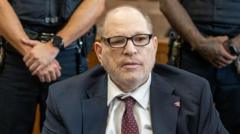
- Judge declares third mistrial in Harvey Weinstein New York rape case
- Jurors deadlock for third time, failing to reach unanimous verdict
- Disgraced film mogul Harvey Weinstein remains without verdict after three trials
A New York judge declared a third mistrial Wednesday in the high-profile rape case against Harvey Weinstein, the 74-year-old disgraced film producer, after jurors again failed to reach a unanimous verdict. This marks the third time a jury has considered the case, following two prior deadlocks that left the outcome unresolved. The decision leaves the future of the charges against Weinstein uncertain as prosecutors weigh their next steps.
The mistrial was declared by Justice James Burke in New York State Supreme Court, Manhattan, after jurors informed the judge they were unable to agree on a verdict. The case stems from allegations that Weinstein raped a woman in a New York hotel in 2013. Weinstein, who has pleaded not guilty, maintains his innocence and has long argued the encounters were consensual.
Jury deadlocks for third time
Prosecutors had sought a conviction on multiple charges, including rape and sexual assault, which carried potential life sentences. However, jurors deliberated for nearly a week before informing the judge they were deadlocked. The panel of seven men and five women reportedly struggled to agree on key elements of the case, including consent and the credibility of witnesses. The defense argued inconsistencies in the accuser’s testimony, while prosecutors emphasized the power dynamics at play during the alleged assault.
Weinstein, who once ruled Hollywood through his production company Miramax and The Weinstein Company, has faced decades of sexual misconduct allegations from more than 100 women. The allegations led to his 2017 arrest and the collapse of his career. This case is among the few that have proceeded to trial, as many accusers did not pursue criminal charges.
Prosecutors face tough decision
Manhattan District Attorney Alvin Bragg’s office now must decide whether to retry the case or drop the charges entirely. Legal experts suggest a retrial could be challenging given the jury’s repeated deadlocks, while dropping the case might be seen as a setback for the #MeToo movement, which gained momentum largely due to Weinstein’s downfall. Bragg has previously stated the case remains active, but no timeline has been provided for a decision.
Weinstein’s legal team has argued that the repeated mistrials demonstrate flaws in the prosecution’s case. His defense attorney, Donna Rotunno, has criticized the handling of the trial, suggesting the allegations are politically motivated. Weinstein, who is free on bail while awaiting the outcome, has remained largely out of the public eye during the legal proceedings.
Broader implications of the case
The case has become a symbol of the #MeToo movement, which exposed systemic abuse in Hollywood and beyond. While Weinstein’s initial conviction in a separate case in 2020 led to a 23-year prison sentence, that verdict was later overturned on appeal due to improperly admitted testimony. This latest mistrial underscores the challenges prosecutors face in securing convictions in cases involving historical sexual assault allegations, where evidence is often limited to witness testimony.
Legal analysts note that the outcome could influence future prosecutions of high-profile sexual assault cases. Prosecutors may become more cautious about pursuing charges without physical evidence or corroborating witnesses, while advocates for survivors argue that the legal system remains stacked against victims. The repeated deadlocks also raise questions about the fairness of jury deliberations in cases involving complex power dynamics.
What happens next remains unclear as Manhattan prosecutors review their options. The decision could come within weeks, but the case’s future hinges on whether Bragg’s office believes a conviction is still attainable. For Weinstein, the legal saga continues, but the third mistrial leaves his supporters and critics alike questioning when—or if—justice will be served.
What You Need to Know
- Source: BBC News
- Published: May 16, 2026 at 01:32 UTC
- Category: World
- Topics: #bbc · #world-news · #international · #entertainment · #movies · #judge
Read the Full Story
This is a curated summary. For the complete article, original data, quotes and full analysis:
All reporting rights belong to the respective author(s) at BBC News. GlobalBR News summarizes publicly available content to help readers discover the most relevant global news.
Curated by GlobalBR News · May 16, 2026
Related Articles
- Eurovision 2024 faces scrutiny over Israel’s participation amid war
- War in the Middle East: Israel targets top Hamas leader in Gaza
- US Justice Department preparing indictment against Raúl Castro
🇧🇷 Resumo em Português
O produtor de cinema Harvey Weinstein, uma das figuras mais poderosas de Hollywood antes de seu colapso por denúncias de abuso sexual, enfrenta mais um impasse judicial nos Estados Unidos, após o terceiro mistrial em seu caso de estupro em Nova York. A decisão do júri, que não conseguiu chegar a um consenso, reacende o debate sobre a impunidade de crimes sexuais nos sistemas judiciais ocidentais e a dificuldade de se obter justiça em casos complexos, especialmente quando envolvem figuras influentes.
O caso ganhou repercussão global não apenas pela gravidade das acusações — que incluem estupro e assédio sexual por parte de dezenas de mulheres —, mas também pela forma como expôs as estruturas de poder que permitiram que Weinstein agisse durante décadas sem consequências. Para o público brasileiro, o caso serve como um lembrete da importância das leis contra a violência de gênero e da necessidade de combater a cultura do medo e da vergonha que ainda permeia as denúncias de abuso no país. Além disso, a morosidade da justiça americana nesse caso contrasta com a realidade brasileira, onde processos por crimes sexuais também enfrentam longas delongas, mas com menos visibilidade internacional.
Agora, o destino de Weinstein depende de uma nova data para julgamento ou de um acordo judicial, enquanto ativistas e vítimas continuam pressionando por justiça, mesmo diante dos obstáculos processuais.
🇪🇸 Resumen en Español
El tercer juicio por violación contra Harvey Weinstein ha vuelto a quedar en un punto muerto, dejando al magnate del cine de nuevo en el centro de una polémica que ha sacudido a Hollywood y reabierto el debate sobre la impunidad de los poderosos.
Tras tres intentos fallidos, el proceso judicial se ha estancado por la división del jurado, que no logró alcanzar un veredicto unánime en un caso donde las acusaciones reviven el movimiento #MeToo y cuestionan la cultura de silencio que protegió durante décadas a figuras como Weinstein. Para el público hispanohablante, este caso no solo refleja la lucha global contra la violencia sexual, sino también cómo el sistema judicial, a menudo percibido como lento o parcial, sigue enfrentando obstáculos para impartir justicia en crímenes de esta gravedad. La incertidumbre sobre su futuro legal deja en el aire si este será el último capítulo de una saga que ha redefinido el poder y la responsabilidad en la industria del entretenimiento.
BBC News
Read full article at BBC News →This post is a curated summary. All rights belong to the original author(s) and BBC News.
Was this article helpful?

Discussion