Displaced Lebanese in Beirut stadiums use sports like martial arts and football to cope with war trauma.
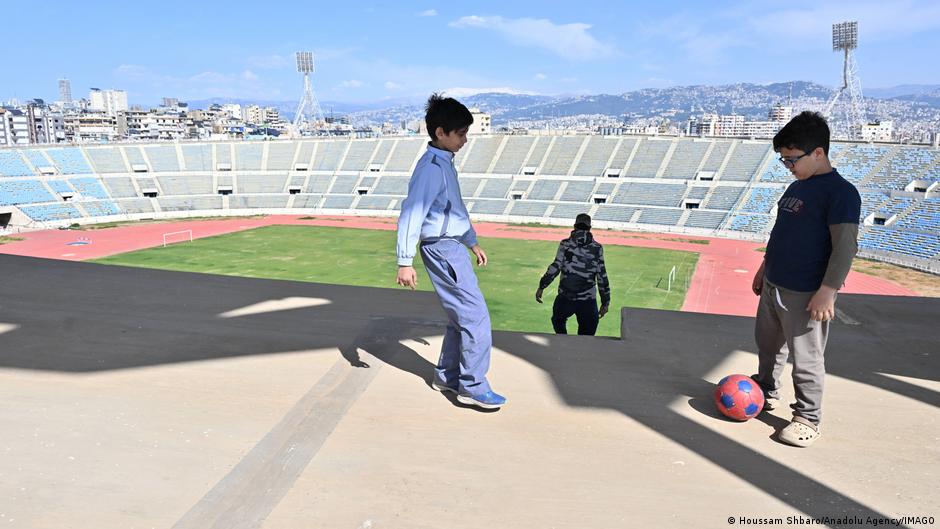
- Sports provide mental relief for displaced Lebanese in Beirut stadiums
- More than 1 million fled southern Lebanon due to Hezbollah-Israel fighting
- Martial arts coach Hassan Seif al-Din now teaches children in stadium tents
Beirut’s Camille Chamoun Sports City Stadium [https://en.wikipedia.org/wiki/Camille_Chamoun_Sports_City_Stadium] has become an unexpected sanctuary for displaced Lebanese families fleeing relentless bombings in southern Lebanon. Since fighting between Israeli forces and Hezbollah escalated in February, over a million people have been uprooted, many seeking shelter in the stadium’s rows of tents. Among them is 65-year-old Hassan Seif al-Din, a martial arts coach who now teaches children self-defense techniques to help them process trauma. ‘There was so much bombing around us, so we escaped and ended up displaced here,’ Hassan told DW. ‘Sports keep us going.’
Sports as therapy for displaced families
The stadium’s vast open spaces, designed for international competitions, now double as makeshift homes and activity hubs. Families sleep on cots between seating areas, while children and adults alike gather in designated zones for football matches, martial arts classes, and even chess tournaments. The Lebanese Red Cross has set up a medical clinic in the facility’s concourse, reporting a rise in stress-related ailments among displaced residents. ‘The adrenaline and focus from sports help distract from the constant fear of air raids,’ said Rania al-Mansour, a mother of three who escaped Tyre with her family. She now volunteers to organize daily football games for children.
UN agencies warn the displacement crisis is worsening. In April, the Office of the High Commissioner for Human Rights reported that over a million Lebanese had been forced from their homes as Israeli airstrikes targeted Hezbollah positions. The conflict, which began after U.S. and Israeli strikes on Iran in late February, has left Lebanon’s infrastructure in ruins and displaced nearly 20% of the country’s population. The stadium’s transformation into a community center reflects a broader coping mechanism among refugees—using familiar routines to reclaim a sense of normalcy.
Beirut’s stadiums become temporary homes and havens
The Sports City Stadium, originally built for the 2009 World Cup qualifiers, now hosts life-saving activities. Local NGOs have partnered with international aid groups to provide structured programs, including yoga for adults and art therapy for children. ‘We didn’t have space for this before, but now it’s the only place we can gather,’ said Imad Kanaan, a Lebanese Olympic Committee official overseeing sports activities in the stadium. ‘The goal is to give people something to focus on besides the war.’
For Hassan, the martial arts classes are more than exercise—they’re a lifeline. ‘The kids come in restless, but after an hour, they’re focused. It’s the only time they forget where they are,’ he said. His sessions, held under a tarp to shield from sun and rain, attract 20 to 30 children daily. Many arrive with stories of destroyed homes and lost loved ones. The sport offers them a way to rebuild resilience, even temporarily.
Long-term solutions remain uncertain amid ongoing conflict
While sports provide immediate relief, the future for the displaced remains dire. Lebanon’s economy, already in freefall before the conflict, is struggling under the weight of over a million new mouths to feed. The UN estimates that 70% of the displaced lack access to adequate shelter, food, or healthcare. Aid organizations warn that without a ceasefire, the stadiums—designed for temporary events—will become permanent housing for thousands.
For now, the stadium’s role as both a home and an activity center offers a glimmer of hope. ‘We can’t stop the bombs, but we can give people a reason to smile,’ said Kanaan. As the sun sets over the stadium’s floodlights, children kick footballs across the pitch, their laughter cutting through the silence of war. It’s a small comfort, but in times like these, it’s enough.
What You Need to Know
- Source: Deutsche Welle
- Published: May 12, 2026 at 11:34 UTC
- Category: World
- Topics: #europe · #world-news · #sport · #lebanese · #more
Read the Full Story
This is a curated summary. For the complete article, original data, quotes and full analysis:
All reporting rights belong to the respective author(s) at Deutsche Welle. GlobalBR News summarizes publicly available content to help readers discover the most relevant global news.
Curated by GlobalBR News · May 12, 2026
Related Articles
- Zimbabwe’s diaspora reshapes real estate and farming investment trends
- 🎉 250 Articles in World!
- Eurovision 2024 faces scrutiny over Israel’s participation amid war
🇧🇷 Resumo em Português
O esporte vira refúgio em Beirute: deslocados pela guerra encontram alívio em estádios lotados de vida
No coração de Beirute, estádios que antes ecoavam gritos de gols agora se transformam em palcos de esperança para mais de um milhão de libaneses forçados a abandonar suas casas pela guerra. Nesses espaços, o esporte deixou de ser apenas uma competição para se tornar uma válvula de escape contra o trauma e a incerteza que assolam a população deslocada, oferecendo uma rotina de atividades que vão do futebol ao vôlei, passando por aulas de dança e artes marciais.
A iniciativa, que ganha força nos arredores da capital libanesa, reflete não apenas a resiliência de um povo, mas também a capacidade do esporte de unir comunidades divididas por conflitos. Para o Brasil, onde a integração de refugiados e a promoção de políticas públicas de saúde mental ainda são desafios, o exemplo libanês serve como inspiração para repensar como o lazer pode ser um instrumento de reconstrução social. A relevância da pauta transcende fronteiras, especialmente em um momento em que crises humanitárias globais exigem soluções criativas e acessíveis.
Enquanto os estádios de Beirute seguem lotados de corpos em movimento, a pergunta que fica é: até quando esses espaços poderão sustentar essa rede de apoio ou se tornarão apenas mais uma lembrança de um país que ainda luta para se reerguer?
🇪🇸 Resumen en Español
Más de un millón de libaneses desplazados por la guerra encuentran consuelo en el deporte dentro de los estadios de Beirut. En medio de la crisis humanitaria que azota Líbano, estas instalaciones se han convertido en refugio no solo físico, sino emocional, donde la práctica deportiva mitiga el trauma de la violencia vivida.
La iniciativa, impulsada por organizaciones locales y agencias internacionales, ofrece más de una docena de actividades para aliviar el estrés y fomentar la cohesión social entre los damnificados. Para los hispanohablantes, este caso refleja cómo el deporte puede ser una herramienta de resiliencia en contextos de conflicto, algo que resuena en regiones con realidades similares, como Colombia o Centroamérica, donde la violencia ha dejado profundas huellas. Además, subraya la capacidad de adaptación de las comunidades ante la adversidad, un mensaje universal que trasciende fronteras.
Deutsche Welle
Read full article at Deutsche Welle →This post is a curated summary. All rights belong to the original author(s) and Deutsche Welle.
Was this article helpful?


Discussion