Putin pushed ex-German leader Schröder as Ukraine mediator, but Berlin dismissed the idea outright.
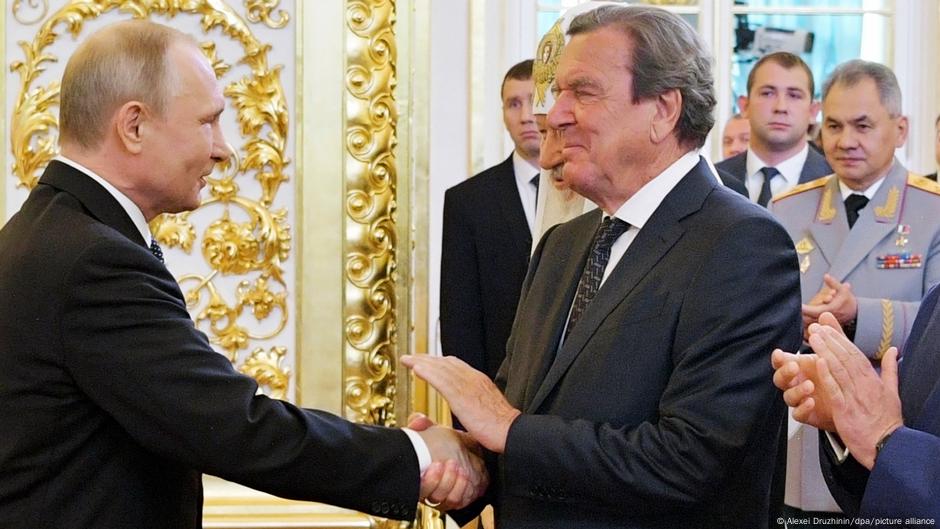
- Putin named Schröder as potential peace mediator during Victory Day speech
- Schröder's office refused to comment on the Russian leader's suggestion
- German government sources called Putin's idea 'not credible' without action
Russian President Vladimir Putin singled out a controversial figure on Saturday when he suggested former German Chancellor Gerhard Schröder could help mediate peace talks to end the war in Ukraine. Speaking to reporters after Victory Day celebrations, Putin said: ‘Of all European politicians, I would prefer talks with Schröder.’ The comment came just days after Russia restarted a three-day ceasefire this weekend, a move German officials said fell short of proving Moscow’s sincerity.
Schröder’s office wasted no time declining to engage. ‘No comment,’ a spokesperson told the DPA news agency on Sunday, ending any speculation before it could start. The refusal underscores the sensitivity around Schröder’s long-standing relationship with Putin and his role in Russian energy projects, which have drawn sharp criticism in Germany and across Europe. Schröder, who led Germany from 1998 to 2005, has repeatedly defended his ties to Moscow, calling them necessary for diplomacy despite sanctions and global condemnation of Russia’s invasion of Ukraine.
Why the idea faces instant skepticism
German government officials, speaking on condition of anonymity, dismissed Putin’s suggestion as ‘not credible’ without concrete changes on the ground. One test they pointed to was Russia extending the current ceasefire beyond 72 hours—a move that hasn’t happened yet. ‘Talk is cheap,’ said a senior official in Berlin. ‘We need to see real steps, not just media-friendly words.’ The skepticism reflects deep mistrust in Western capitals after years of broken ceasefires, stalled negotiations, and Moscow’s refusal to withdraw troops from occupied Ukrainian territory.
Putin’s endorsement of Schröder also carries political weight beyond the battlefield. Schröder, 82, has been a vocal critic of Western sanctions on Russia and has sat on the boards of energy giants like Rosneft and Gazprom, companies central to Russia’s war funding. His presence as a mediator would raise immediate questions about conflicts of interest and whether any deal brokered would prioritize European energy security over Ukrainian sovereignty.
Schröder’s legacy under scrutiny
The former chancellor’s reputation in Germany has never recovered from his post-politics career. After leaving office, he took lucrative positions with Russian state-linked firms, including Nord Stream AG, the company behind the now-cancelled gas pipeline to Germany. Critics argue his advocacy for Russian interests—even as Putin’s government faced international isolation—crossed a line that former allies say became impossible to ignore. Schröder has dismissed the criticism as ‘political posturing,’ but it has cost him access to mainstream German politics.
Even Schröder’s own party, the Social Democrats (SPD), has distanced itself. Current SPD leader Olaf Scholz has avoided direct confrontation with Schröder but has made clear Germany’s official stance: no normalization with Russia until Ukraine’s borders are respected. That stance was reiterated this weekend when the foreign ministry declined to endorse any role for Schröder in peace efforts.
What happens next?
For now, Putin’s suggestion appears more symbolic than substantive. There’s no indication Schröder will take up the offer, and even if he did, German officials have made clear there’s no mandate or appetite for such a role. The real test will be whether Russia uses the current ceasefire window to push for real negotiations—or continues its pattern of temporary pauses followed by renewed attacks. Western diplomats say they’re watching closely, but the mood in Berlin is one of caution. ‘We’ve heard these lines before,’ said one official. ‘Actions matter, not words.’
What You Need to Know
- Source: Deutsche Welle
- Published: May 10, 2026 at 11:14 UTC
- Category: World
- Topics: #europe · #world-news · #war · #ukraine · #russia
Read the Full Story
This is a curated summary. For the complete article, original data, quotes and full analysis:
All reporting rights belong to the respective author(s) at Deutsche Welle. GlobalBR News summarizes publicly available content to help readers discover the most relevant global news.
Curated by GlobalBR News · May 10, 2026
Related Articles
- 🎉 250 Articles in World!
- Bulgaria wins Eurovision 2025 with Dara’s historic victory
- ‘She was phenomenal, she was iconic’: Delta Goodrem wins praise as Australia places fourth at Eurovision
🇧🇷 Resumo em Português
O ex-chanceler alemão Gerhard Schröder, figura controversa por seus laços próximos com Moscou, foi inesperadamente sugerido pelo presidente russo, Vladimir Putin, para mediar as negociações de paz entre Rússia e Ucrânia, reacendendo o debate sobre a viabilidade de interlocutores neutros em um conflito tão polarizado. A proposta, feita em um momento de impasse nas tratativas internacionais, surpreendeu a comunidade diplomática e levou Berlim a se manter em silêncio, evitando qualquer posicionamento oficial que pudesse ser interpretado como um endosso à participação de Schröder.
A sugestão de Putin não é meramente casual: Schröder, que governou a Alemanha entre 1998 e 2005, manteve laços estreitos com o Kremlin mesmo após deixar o cargo, atuando como conselheiro de empresas russas como a Gazprom e a Rosneft, o que já havia gerado críticas internas na Alemanha e na União Europeia. Para o Brasil e os falantes de língua portuguesa, o episódio reforça a discussão sobre o papel de ex-líderes em conflitos internacionais, especialmente quando suas trajetórias pessoais ou políticas são marcadas por alianças questionáveis, como no caso de Schröder, que já foi chamado de “cavalo de Troia” de Putin na Europa.
A recusa alemã em comentar a indicação deixa em aberto se, de fato, Schröder poderia assumir um papel ativo nas negociações ou se a proposta foi apenas uma jogada retórica para pressionar outros mediadores.
🇪🇸 Resumen en Español
El expresidente alemán Gerhard Schröder ha sido propuesto por Vladimir Putin como mediador en las conversaciones entre Rusia y Ucrania, una iniciativa que ha dejado en silencio al gobierno de Berlín.
La polémica no ha tardado en surgir: Schröder, conocido por su estrecha relación con el Kremlin durante y después de su mandato, mantiene vínculos que han sido criticados incluso dentro de su propio partido. Mientras Putin busca figuras con influencia para aliviar las tensiones, Alemania —aliada clave de Kiev— evita pronunciarse, reflejando la complejidad de un conflicto donde las viejas alianzas europeas chocan con la realidad geopolítica actual.
Deutsche Welle
Read full article at Deutsche Welle →This post is a curated summary. All rights belong to the original author(s) and Deutsche Welle.
Was this article helpful?

Discussion