U.S. F-15E flies Mach Loop in Libya raid tribute paint marking 40 years since Operation El Dorado Canyon.
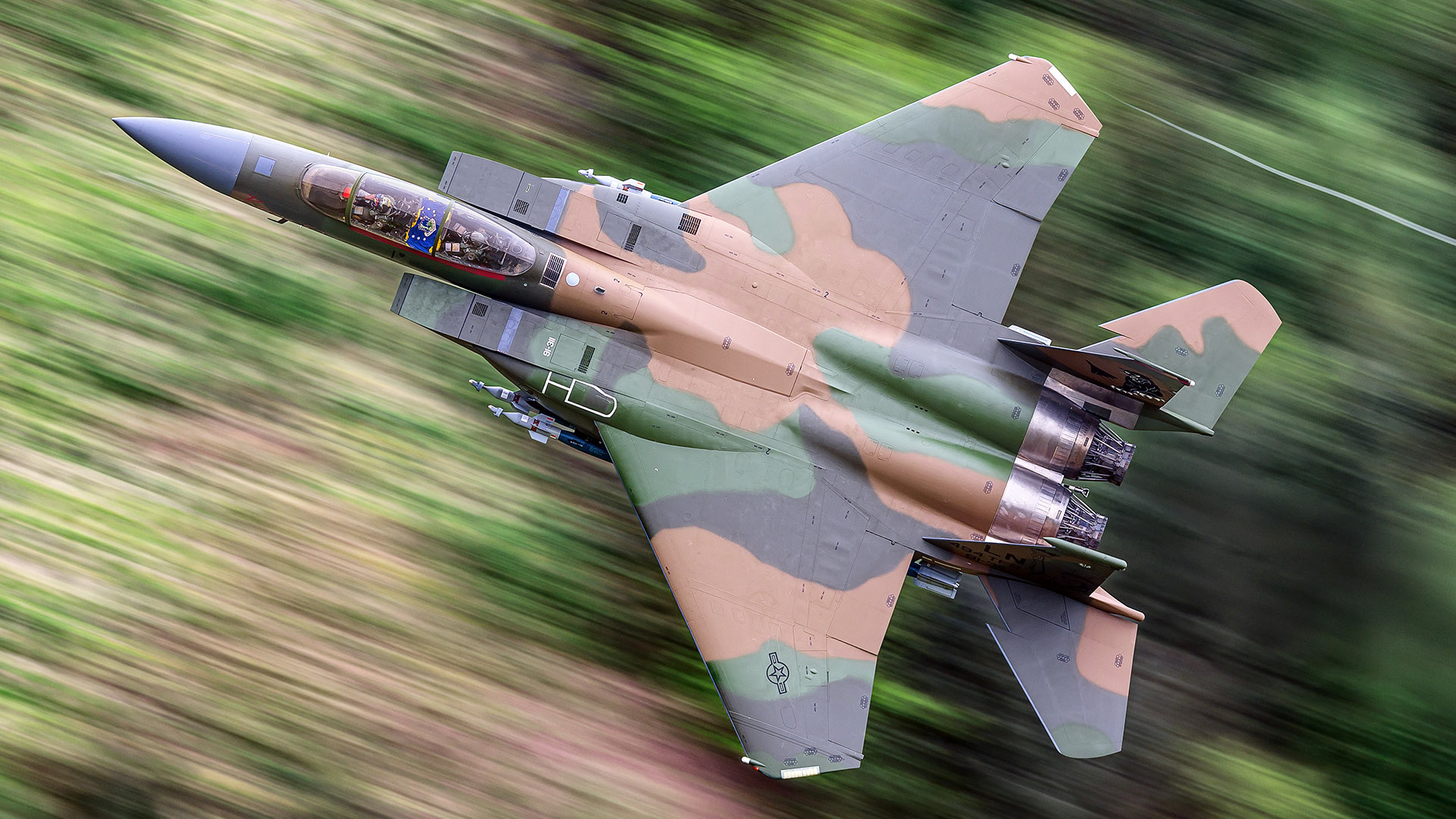
- F-15E flew Mach Loop with eight inert GBU-12 bombs
- Paint scheme mimics 1986 Libya raid F-111F Aardvark
- Aircraft first unveiled at RAF Lakenheath on April 28
A U.S. Air Force F-15E Strike Eagle F-15E Strike Eagle, painted in a special camouflage scheme marking the 40th anniversary of Operation El Dorado Canyon, completed its first flight in the new livery on Monday. The jet, carrying eight inert 500-pound GBU-12 laser-guided bombs, flew through the Mach Loop, a series of low-level training routes in Wales renowned for their dramatic terrain-following maneuvers. Photos of the sortie were provided by photographers David Lister and Alec Walker.
The F-15E, serial number 91-0311 and assigned to the 48th Fighter Wing 48th Fighter Wing, was first unveiled in its new paint scheme during a ceremony at RAF Lakenheath in England on April 28. The camouflage closely mirrors the markings of an F-111F Aardvark F-111F Aardvark, the aircraft flown by the same unit during the 1986 U.S. raid on Libya.
Operation El Dorado Canyon 40th anniversary
Operation El Dorado Canyon was a U.S. airstrike launched on April 15, 1986, targeting Libyan military sites in retaliation for the bombing of a Berlin nightclub that killed three people, including a U.S. soldier. The operation involved 18 F-111Fs from the 48th Tactical Fighter Wing, flying a 13-hour round-trip mission from RAF Lakenheath. The F-15E now honors that legacy with a paint scheme designed to evoke the Cold War-era F-111F.
The Mach Loop, a popular low-level flying route for NATO jets, stretches through the rugged terrain of Snowdonia in Wales. Pilots navigate valleys just hundreds of feet above the ground at high speeds, testing both their skills and aircraft capabilities. The F-15E’s flight through the Mach Loop highlights the jet’s adaptability for both high- and low-altitude missions.
RAF Lakenheath’s role in commemorating history
RAF Lakenheath, home to the 48th Fighter Wing, has played a key role in U.S. Air Force operations in Europe since World War II. The base’s involvement in commemorating Operation El Dorado Canyon underscores the enduring ties between the U.S. and its European allies. The F-15E’s new paint scheme serves as both a tribute and a reminder of the Air Force’s historical missions.
The 48th Fighter Wing’s F-15E Strike Eagle will continue to train in the Mach Loop, demonstrating the jet’s versatility in both air-to-ground and air-to-air roles. The commemorative paint scheme is expected to remain in place as the unit marks future anniversaries of its missions.
Next steps for the commemorative jet
Photographers and aviation enthusiasts will likely continue to document the F-15E’s flights through the Mach Loop, given the striking visual contrast of its Libya raid tribute paint against the Welsh landscape. The 48th Fighter Wing may incorporate the scheme into future training exercises, reinforcing the unit’s heritage and operational readiness.
What You Need to Know
- Source: The Drive
- Published: May 07, 2026 at 14:24 UTC
- Category: War
- Topics: #military · #weapons · #conflict · #camouflaged · #painted · #mark
Read the Full Story
This is a curated summary. For the complete article, original data, quotes and full analysis:
All reporting rights belong to the respective author(s) at The Drive. GlobalBR News summarizes publicly available content to help readers discover the most relevant global news.
Curated by GlobalBR News · May 07, 2026
Related Articles
- Wembanyama’s Spurs reach Western finals, Pistons stay alive in NBA playoffs
- 🎉 250 Articles in War!
- 🎉 100 Articles in War!
🇧🇷 Resumo em Português
Um caça norte-americano F-15E Strike Eagle, pintado com uma homenagem à operação na Líbia, chamou atenção ao realizar voos rasantes em baixa altitude sobre o País de Gales, em manobras típicas do lendário Mach Loop. As imagens, capturadas pelos fotógrafos David Lister e Alec Walker, revelam não apenas a capacidade operacional da aeronave, mas também um tributo visual a uma missão histórica que marcou a participação dos Estados Unidos em conflitos no norte da África.
A operação na Líbia, que ocorreu em 2011 durante a intervenção internacional para derrubar o regime de Muammar Gaddafi, foi um marco na estratégia de poder aéreo ocidental, demonstrando a capacidade de projeção de força em regiões instáveis. Para o Brasil, que mantém uma postura de neutralidade em conflitos externos mas acompanha de perto o cenário de defesa global, o episódio reforça a importância do treinamento em baixa altitude — uma técnica também empregada por forças aéreas sul-americanas em exercícios de simulação de combate em territórios montanhosos. Além disso, a pintura especial do caça evidencia como as forças armadas modernas utilizam símbolos e homenagens para manter viva a memória de operações bem-sucedidas, um aspecto que pode inspirar reflexões sobre a documentação histórica militar também no contexto brasileiro.
A imagem do F-15E sobre as montanhas galesas serve como um lembrete de que, mesmo décadas após sua entrada em serviço, o caça continua a ser uma peça-chave em missões de alto risco, enquanto sua presença simbólica reacende discussões sobre o legado das intervenções militares ocidentais no século XXI.
🇪🇸 Resumen en Español
Un caza F-15E Strike Eagle de la Fuerza Aérea de EE.UU. ha surcado los cielos galeses con un esquema de pintura especial en homenaje a la misión de Libia, un despliegue que combina historia militar y tecnología punta. Las impactantes imágenes, capturadas por los fotógrafos David Lister y Alec Walker, revelan la maniobra en el famoso Mach Loop, un ejercicio de bajo vuelo que pone a prueba la pericia de los pilotos y la resistencia de los aparatos en entornos hostiles.
El vuelo del F-15E no es un mero espectáculo aéreo, sino un recordatorio de la operatividad y versatilidad de este cazabombardero, clave en conflictos como la intervención en Libia de 2011. Para el público hispanohablante, especialmente en regiones con tensiones geopolíticas o que siguen de cerca la presencia militar occidental en el Mediterráneo, este tipo de despliegues subraya el compromiso de Washington con la proyección de poder en zonas críticas. Además, la difusión de estas imágenes refuerza el mensaje de que, más allá de los conflictos, la aviación de combate sigue siendo un símbolo de disuasión y prestigio tecnológico.
The Drive
Read full article at The Drive →This post is a curated summary. All rights belong to the original author(s) and The Drive.
Was this article helpful?



Discussion