Europe’s leaders can’t agree on Iran because their interests don’t line up.
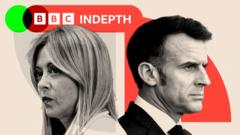
- France wants tougher Iran sanctions to curb nuclear risks
- Germany resists sanctions fearing economic fallout for EU firms
- Smaller EU states prioritize avoiding U.S. penalties over Iran policy
Europe keeps saying it wants to act as one. On Iran, that’s proving impossible. France’s president has pushed for tougher sanctions to stop Iran’s nuclear program. Germany’s chancellor warns those sanctions could hurt European companies already struggling under U.S. pressure. Poland, Sweden, and others care more about avoiding American penalties than they do about Tehran’s threats. The result? No single European stance on Iran—just a bunch of competing priorities wrapped in diplomatic language.
Sanctions divide the big three
France, Germany, and the UK used to coordinate closely on Iran through the so-called E3 group. Those days are fading. Paris now argues that Iran’s uranium enrichment is spinning out of control and that Europe must act before the U.S. election in November. Berlin counters that fresh EU sanctions could backfire, pushing Iran closer to Russia and China. London, still locked in post-Brexit alignment with Washington, sits somewhere in the middle—supporting sanctions but wary of overplaying its hand.
The split isn’t just about policy. It’s about money. German carmakers and French energy firms have billions tied up in Iran’s market. France’s energy giant Total TotalEnergies pulled out of Iran years ago after Trump’s sanctions. Germany’s Siemens still operates there through local partners. For Berlin, slapping new penalties on Tehran risks hitting those connections—and angering Washington at the same time.
Smaller states fear U.S. wrath more than Iran’s threats
Poland, Sweden, and the Baltic states aren’t buying France’s urgency. Their biggest fear isn’t Iran’s nuclear program—it’s the U.S. slapping secondary sanctions on their banks or companies. Poland, for example, just finalized a $4 billion arms deal with America. Sweden hosts a major NATO exercise this fall. For these countries, defying Washington on Iran could mean losing access to U.S. markets or security guarantees. Their Iran policy boils down to a simple calculation: don’t poke the bear.
Even the EU’s official Iran strategy isn’t coherent. The bloc’s foreign policy chief, Josep Borrell, keeps warning that Iran’s uranium enrichment is approaching weapons-grade levels. Yet Borrell can’t force member states to act. The EU’s sanctions toolkit is already maxed out, and new measures require unanimous approval. With Hungary and Slovakia often siding with Tehran, the math never adds up.
The U.S. isn’t helping Europe’s unity problem
America’s role in this mess is impossible to ignore. Trump’s 2018 withdrawal from the Iran nuclear deal JCPOA left Europe scrambling to salvage the agreement. Biden’s administration has softened the tone but kept most sanctions in place. Now, with Trump leading in polls, Europe worries about a repeat of 2018—except this time, the bloc is even more divided. France wants to show it can stand up to both Tehran and Washington. Germany wants to avoid another economic shock. The smaller states just want to survive the storm.
The cracks in Europe’s Iran policy aren’t new. But they’re widening. France’s recent strikes on Iranian-backed militias in Syria and Iraq show Paris is losing patience. Meanwhile, Germany’s economy minister recently met Iran’s oil minister in Tehran—a move some saw as a signal that Berlin still sees dialogue as the only way forward. The message from Europe? There isn’t one.
What happens next depends on three things: the U.S. election outcome, Iran’s next move, and whether France can convince the rest of Europe to get serious. If Trump wins, expect Europe to scramble for cover. If Iran crosses another red line—like enriching uranium to 90%—France may push for action whether others like it or not. But for now, Europe’s leaders are talking past each other. And Iran’s watching.
What You Need to Know
- Source: BBC News
- Published: March 03, 2026 at 16:26 UTC
- Category: Politics
- Topics: #bbc · #politics · #europe-iran-policy · #eu-sanctions-on-iran · #france-germany-iran-split
Read the Full Story
This is a curated summary. For the complete article, original data, quotes and full analysis:
All reporting rights belong to the respective author(s) at BBC News. GlobalBR News summarizes publicly available content to help readers discover the most relevant global news.
Curated by GlobalBR News · March 03, 2026
Related Articles
- Starmer’s leadership under pressure as Labour MPs question authority
- UK Labour’s Wes Streeting confirms leadership bid if race starts
🇧🇷 Resumo em Português
A Europa rasga-se em meio a divergências sem precedentes sobre o Irã, revelando fissuras profundas entre seus líderes que colocam em xeque até mesmo os objetivos supostamente compartilhados no Oriente Médio. Enquanto a guerra na Ucrânia e a crise energética já haviam exposto as fragilidades da unidade europeia, a questão iraniana surge como o novo divisor de águas, mostrando que, na prática, divergências estratégicas, interesses comerciais e visões de segurança dividem o bloco como nunca.
O impasse europeu reflete tensões que vão muito além de suas fronteiras. Para o Brasil, observador atento das relações internacionais, a crise expõe um cenário de incerteza na diplomacia global, onde nações antes alinhadas agora navegam por águas turbulentas. A dependência europeia de energia russa, os laços comerciais com o Irã e a pressão dos Estados Unidos por sanções mais duras criam um mosaico de posições conflitantes entre países como França e Alemanha. Enquanto Paris defende uma abordagem mais assertiva contra Teerã, Berlim hesita em romper acordos comerciais que considera vitais, mesmo sob críticas de seus parceiros.
O descompasso europeu não apenas enfraquece sua capacidade de influenciar o cenário geopolítico, como também abre espaço para que potências como China e Rússia explorem as lacunas deixas pela indecisão do bloco, reconfigurando alianças no tabuleiro internacional.
🇪🇸 Resumen en Español
La falta de consenso en Europa sobre cómo abordar la crisis con Irán ha destapado profundas divisiones entre sus líderes, mostrando que, pese a los objetivos compartidos, las estrategias chocan en aspectos clave. Mientras algunos apuestan por una línea dura frente a Teherán, otros abogan por el diálogo, revelando grietas que van desde lo comercial hasta lo geopolítico.
El debate refleja tensiones históricas entre potencias europeas como Francia, Alemania o Reino Unido, cada una con intereses distintos: desde proteger acuerdos energéticos hasta frenar el programa nuclear iraní. La reciente escalada de tensiones en Oriente Medio y el fracaso de las negociaciones han agravado estas diferencias, dejando a Europa sin una voz unificada. Para los lectores hispanohablantes, el escenario subraya cómo las potencias occidentales priorizan sus agendas nacionales sobre la unidad transnacional, un desafío que también condiciona su papel en conflictos globales.
BBC News
Read full article at BBC News →This post is a curated summary. All rights belong to the original author(s) and BBC News.
Was this article helpful?

Discussion