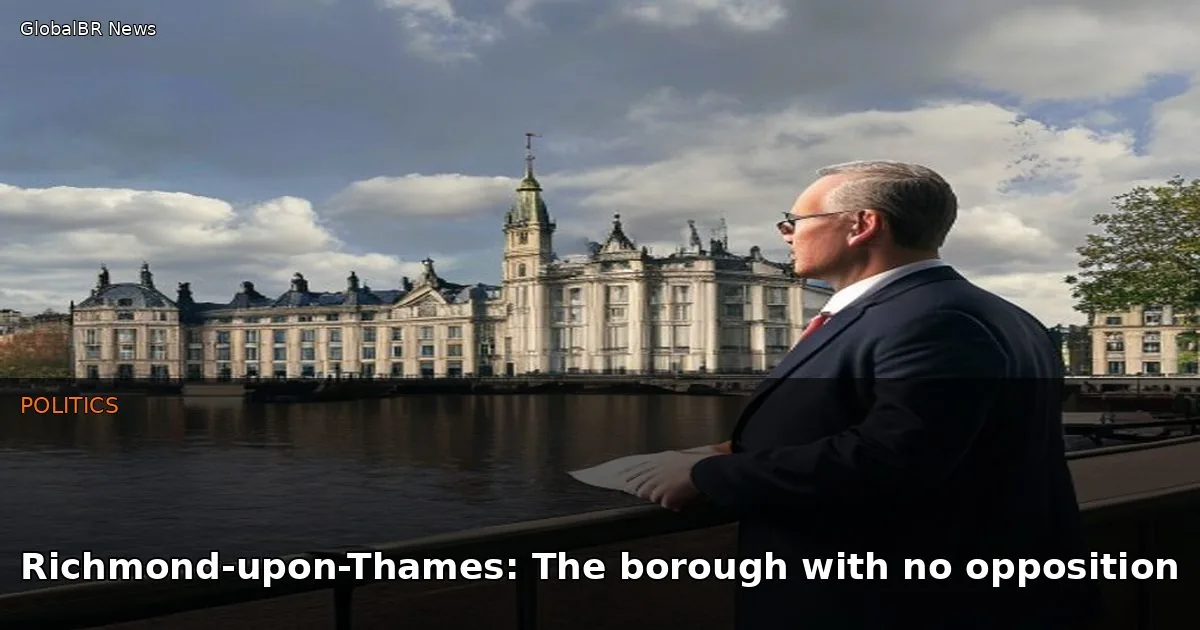
Richmond-upon-Thames council now has no opposition after Liberal Democrats won every seat in the local election.
- Liberal Democrats took all 48 council seats in Richmond-upon-Thames
- The wipeout happened in the May 2024 local elections
- No opposition remains on the borough council
Richmond-upon-Thames borough council now stands alone in Greater London. The Liberal Democrats swept every seat in last week’s local elections, giving them total control of the 48-seat council. It’s the first time in modern memory Richmond has no opposition at all—no Conservatives, no Labour, no Greens, just one party running the show.
That complete absence of opposition raises eyebrows even in a borough used to Liberal Democrat dominance. Richmond has leaned blue for years, but the wipeout suggests something bigger. Turnout hit 42%, up from 34% in 2023, yet the Lib Dems didn’t just win—they took every ward from Teddington to Kew. The Conservatives lost all 12 seats they held, Labour dropped two of its three, and the Greens lost their only seat. Even the independent candidate who’d held a seat for 12 years didn’t make the cut.
How did it happen?
Two things stand out. First, the national mood favored the Liberal Democrats in southern England. They gained 15 councils and 400+ seats nationwide, riding a wave of anti-Tory sentiment and local grievances over planning and transport. Second, Richmond’s own issues sharpened the divide. The Lib Dems campaigned hard against the council’s own Conservative-run predecessor, blaming it for a £20 million budget hole and cuts to youth services. Voters flipped the script and gave the Lib Dems the keys.
Locals say the result reflects frustration with years of infighting rather than blind love for the Lib Dems. In North Richmond, Tory strongholds fell after years of squabbles over housing developments near the river. In Hampton, Labour’s loss came after a candidate resigned over a social media post. The Greens, who’d held a seat for a decade, got squeezed by both turnout and messaging.
What does no opposition mean day to day?
Council meetings will still happen, but they’ll look different. No one will challenge the Lib Dem majority on budgets, policies, or appointments. The ruling group sets the agenda, and the public gallery will be quieter. Officers will still advise, but scrutiny usually comes from backbench councillors asking tough questions. That safety valve is gone.
Some residents welcome the change. They credit the Lib Dems for pushing back on London’s ultra-low traffic neighborhoods and supporting local businesses. Others worry about a lack of checks. One Kew resident said, “We’ll get what we’re given, and if it’s wrong, who’s going to stop them?” The Lib Dems insist they’ll run an open council, but the absence of dissent is unusual even here.
Is this good for democracy?
Democracy doesn’t stop at the ballot box. It needs people asking tough questions, offering alternatives, and holding power to account. Richmond’s new setup removes that built-in tension. The Lib Dems now face less pressure to explain decisions or compromise. Voters who disagree have no elected voice on the council to represent their views.
Historically, Richmond’s council has swung between parties, but a one-party council isn’t unprecedented. In 2002, Labour won every seat for one term before losing them all. The difference this time is the scale: a clean sweep in every ward. Analysts say Richmond’s result mirrors trends in affluent southern boroughs where incumbents lose big when national moods shift.
What’s next?
The Lib Dems start work this week with a full slate of cabinet roles and no opposition research to rebut. They’ve promised a “listening council” and faster decisions on planning. But the real test comes at the next election in 2026. If voters feel ignored or policies backfire, the Lib Dems could face a backlash—especially if turnout drops back to normal levels. For now, Richmond’s council chamber is the quietest it’s been in living memory.
What You Need to Know
- Source: BBC News
- Published: May 17, 2026 at 15:28 UTC
- Category: Politics
- Topics: #bbc · #politics · #election · #richmond · #thames
Read the Full Story
This is a curated summary. For the complete article, original data, quotes and full analysis:
All reporting rights belong to the respective author(s) at BBC News. GlobalBR News summarizes publicly available content to help readers discover the most relevant global news.
Curated by GlobalBR News · May 17, 2026
Related Articles
🇧🇷 Resumo em Português
Em um cenário político que costuma movimentar até os mais desatentos eleitores, a cidade de Richmond-upon-Thames, na Inglaterra, acaba de cravar um recorde que chama a atenção: pela primeira vez em décadas, todos os 54 assentos da câmara municipal foram conquistados pelo Partido Liberal Democrata, sem nenhuma oposição formal. A vitória esmagadora — que deixou os bancos da prefeitura vazios de qualquer representante de outros partidos — levanta questões sobre os rumos da democracia local e o que isso pode significar para o equilíbrio do poder no município.
No Brasil, onde a polarização partidária costuma definir eleições e a presença da oposição é vista como um sinal de saúde democrática, o caso de Richmond soa como um alerta. A ausência total de oposição pode fragilizar o controle público sobre as ações do governo, reduzir a fiscalização e até limitar a diversidade de ideias na gestão municipal. Especialistas brasileiros já destacam que, embora a estabilidade política seja desejável, ela não pode vir às custas da representatividade e do debate plural, pilares essenciais para a manutenção da confiança nas instituições.
Ainda não está claro se os eleitores de Richmond comemoram a hegemonia liberal-democrata ou se a ausência de oposição já começa a gerar insatisfação. O que se sabe é que, nos próximos meses, a cidade britânica será um laboratório improvável para se discutir até que ponto uma democracia pode — ou deve — funcionar sem contrapesos.
🇪🇸 Resumen en Español
La democracia local en Reino Unido se tambalea con la sorprendente victoria sin competencia de los Liberal Demócratas en el consejo de Richmond-upon-Thames, donde todos los escaños quedaron sin oposición. El resultado ha dejado al consistorio sin voces críticas en el pleno, algo inédito en décadas en el sistema político británico.
Este caso refleja un preocupante declive en la participación ciudadana y en la oferta política: solo el 28% de los votantes acudió a las urnas, y en seis distritos ni siquiera hubo candidatos rivales. Para los hispanohablantes, especialmente en comunidades con alta inmigración británica, el episodio subraya los riesgos de la apatía electoral y la necesidad de una sociedad civil vigilante. Además, plantea preguntas incómodas sobre cómo garantizar la rendición de cuentas cuando los partidos tradicionales pierden influencia y la abstención gana terreno. La ausencia de oposición no es solo un vacío institucional, sino un aviso sobre el futuro de la representación democrática.
BBC News
Read full article at BBC News →This post is a curated summary. All rights belong to the original author(s) and BBC News.
Was this article helpful?


Discussion