Austrian Air Force intercepted two U.S. Air Force turboprops violating airspace over two consecutive days.
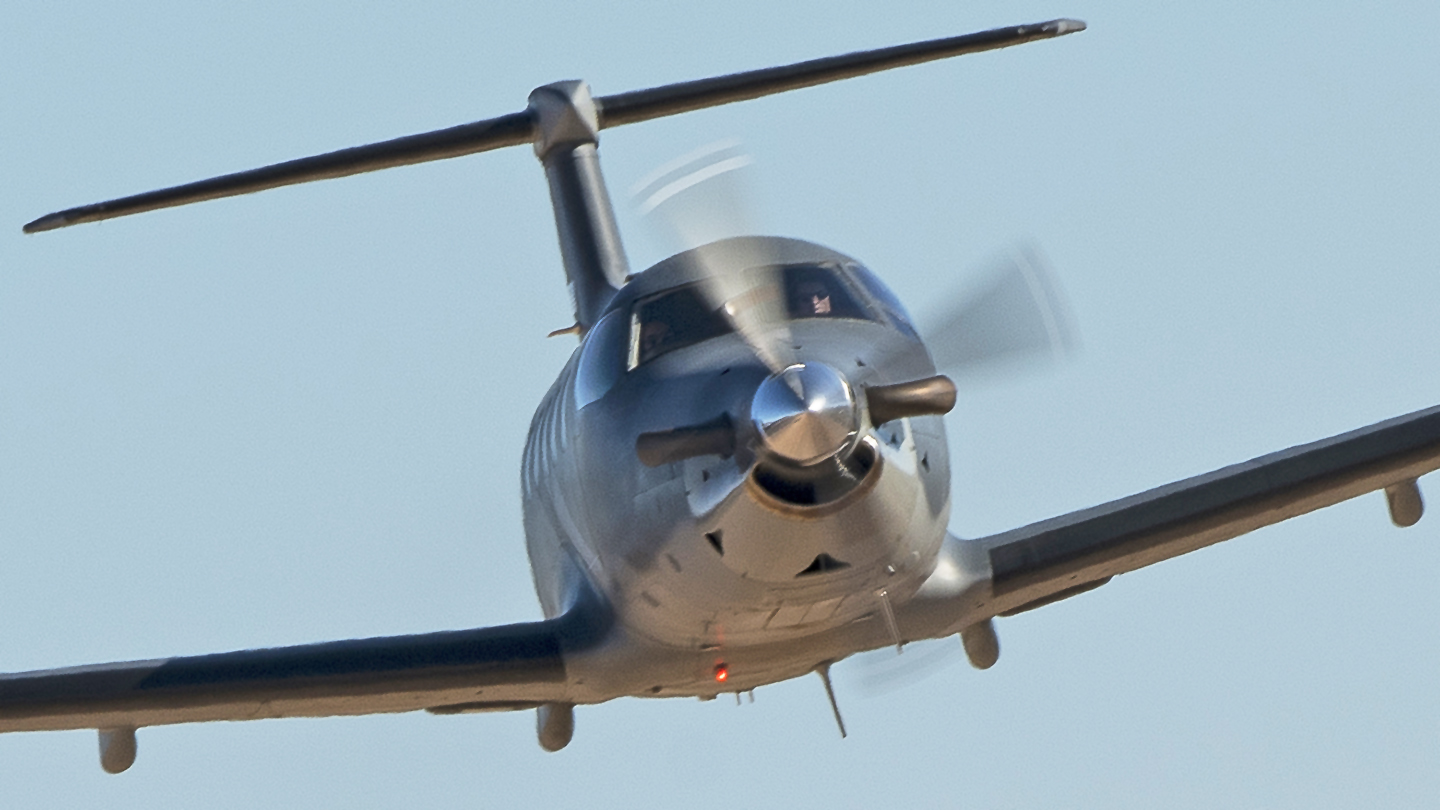
- Confirmed two unauthorized U.S. Air Force aircraft flights in Austrian airspace
- Austrian Eurofighters scrambled on Sunday and Monday in response
- U.S. military turboprops identified as PC-12s, likely U-28A Draco variants
Austria’s military scrambled its Eurofighter Typhoons twice in 48 hours after two U.S. Air Force turboprop aircraft allegedly violated the country’s airspace, according to the Austrian Ministry of Defense. The incidents, confirmed on Sunday and Monday, involved aircraft identified as PC-12s, which defense officials said are most likely the U-28A Draco, a turbine-powered aircraft operated by the U.S. Air Force Special Operations Command. These aircraft are typically used for intelligence, surveillance, and reconnaissance missions.
Austria’s response to unauthorized flights
The Austrian Air Force confirmed its Eurofighter Typhoons were scrambled at 12:31 p.m. local time on both days to intercept the U.S. aircraft. Austrian Defense Ministry spokesperson Michael Bauer shared details on X, stating the jets were launched with highest priority due to the overflights. The incidents occurred in Austrian airspace, which the country maintains as neutral under international law, though violations have occurred before without major diplomatic consequences.
U.S. military aircraft identified
The U.S. Air Force uses the PC-12 turboprop, particularly the U-28A Draco variant, for specialized missions, including ISR operations. These aircraft are not typically armed but are equipped for intelligence gathering. The U.S. Air Force Special Operations Command operates these platforms, often in support of global counterterrorism and special operations missions. The exact purpose of the flights over Austria remains unclear, as neither the U.S. nor Austrian defense officials have provided further details.
Austrian neutrality and airspace violations
Austria has maintained a policy of neutrality since 1955, but its airspace has been violated by foreign military aircraft before. The country’s military is required to respond to unauthorized incursions under NATO and EU air defense protocols, even in neutral states. The recent incidents follow a pattern of occasional airspace violations by military aircraft from neighboring and distant countries, though such events are rarely reported publicly.
What happens next?
The Austrian Defense Ministry has not indicated whether diplomatic protests will be filed with the U.S. government. Typically, such incidents are resolved quietly between military and diplomatic channels. The U.S. Embassy in Vienna and the Austrian Foreign Ministry have not responded to requests for comment. Further details about the flights, including their intended routes or missions, remain undisclosed. The incidents may prompt increased aerial monitoring of Austrian airspace in the coming weeks.
What You Need to Know
- Source: The Drive
- Published: May 12, 2026 at 16:00 UTC
- Category: War
- Topics: #military · #weapons · #conflict · #war · #defense · #force-special-operations
Read the Full Story
This is a curated summary. For the complete article, original data, quotes and full analysis:
All reporting rights belong to the respective author(s) at The Drive. GlobalBR News summarizes publicly available content to help readers discover the most relevant global news.
Curated by GlobalBR News · May 12, 2026
Related Articles
- Wembanyama’s Spurs reach Western finals, Pistons stay alive in NBA playoffs
- 🎉 250 Articles in War!
- 🎉 100 Articles in War!
🇧🇷 Resumo em Português
Dois caças da Força Aérea dos Estados Unidos adentraram, sem autorização, o espaço aéreo austríaco em menos de 48 horas, forçando o país a acionar seus Eurofighters em duas ocasiões distintas. O episódio, que expôs uma brecha na segurança aérea europeia, ocorreu justamente em um momento de tensão geopolítica global, onde a neutralidade da Áustria é constantemente testada por proximidade com conflitos como a guerra na Ucrânia.
A Áustria, país neutro desde 1955, mantém um rígido controle sobre seu espaço aéreo, especialmente em regiões próximas à fronteira com países em conflito. Os dois voos não autorizados dos jatos estadunidenses — que não responderam às chamadas dos controladores de tráfego aéreo — levantam questões sobre a fragilidade da soberania aérea europeia e a necessidade de reforçar mecanismos de coordenação entre aliados da OTAN e nações neutras. Para o Brasil, que também mantém uma posição de equidistância em conflitos internacionais e investe em sua defesa aérea com o projeto do Gripen E, o caso serve de alerta sobre os riscos de violações inadvertidas ou intencionais de soberania, mesmo entre parceiros estratégicos.
Especialistas já cobram uma investigação detalhada sobre as causas dos incidentes, enquanto Viena aguarda explicações oficiais de Washington, que até agora se limitou a expressar “arrependimento” pelos episódios.
🇪🇸 Resumen en Español
Dos cazas de la Fuerza Aérea estadounidense irrumpieron sin autorización en el espacio aéreo austriaco en apenas 48 horas, obligando a Viena a activar sus Eurofighters para interceptarlos en dos ocasiones distintas. El Ministerio de Defensa austriaco confirmó los incidentes, que han reavivado el debate sobre la vulnerabilidad de la neutralidad militar del país alpino en un escenario geopolítico cada vez más tenso.
Aunque Austria mantiene su estatus de neutralidad desde 1955, estos sobrevuelos no autorizados —que las autoridades estadounidenses atribuyen a “errores de navegación”— ponen de manifiesto los riesgos de su posición en un contexto de creciente presión militar en Europa. Para los hispanohablantes, el caso recuerda a episodios similares en el pasado, como la crisis de los misiles en Cuba o la tensión en los Balcanes, donde la neutralidad fue puesta a prueba. La rapidez de la respuesta austriaca subraya la importancia de la soberanía aérea, mientras Bruselas observa con atención estos incidentes que podrían redefinir la seguridad en el flanco oriental de la OTAN.
The Drive
Read full article at The Drive →This post is a curated summary. All rights belong to the original author(s) and The Drive.
Was this article helpful?



Discussion