BMW and Toyota are jointly building better hydrogen cars for a 2028 launch.
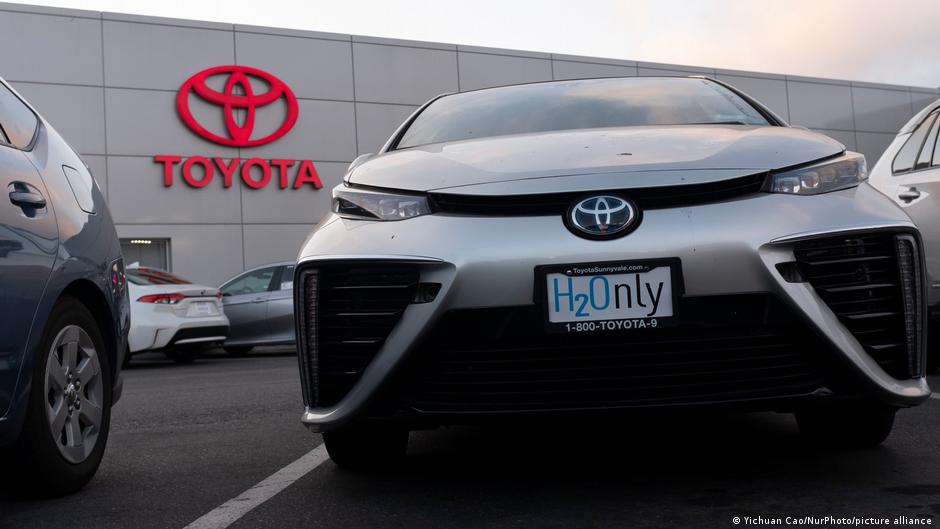
- Germany’s transport minister toured Toyota’s hydrogen factory in Japan
- BMW and Toyota are co-developing next-gen hydrogen fuel cells
- BMW’s first hydrogen car hits the road in 2028, Toyota updates existing models
Germany’s transport minister Patrick Schnieder visited Toyota’s hydrogen fuel cell factory in Japan this week, not just to see the tech but to ride in it—starting the day in a German BMW iX5 Hydrogen and ending it in a Japanese Toyota Crown FCEV. The message was clear: both countries are betting on hydrogen to clean up cars, and they’re doing it together. The two automakers, BMW and Toyota, are now in the second year of a joint project to build a smaller, more efficient hydrogen fuel cell. That means less space under the hood, more power, and hopefully lower costs once it goes into mass production. Right now, three BMW engineers are based in Japan, working side-by-side with Toyota’s team to fine-tune the system. Once the design is locked, BMW will build the new fuel cell at its factory in Austria, while Toyota will do the same in Japan. The first BMW hydrogen car with this tech is slated for 2028, while Toyota plans to drop the upgraded system into its two existing hydrogen models sometime after that. They haven’t released exact specs yet, but the goal is to make hydrogen cars cheaper and more practical for daily use. Both companies see this as a way to compete with electric cars without relying on big batteries. Hydrogen cars can fill up in minutes and drive farther on a tank than most EVs, but the tech’s still too pricey for most buyers. Schnieder, who’s pushing Germany’s green transport plans, said the cooperation between BMW and Toyota is key to making hydrogen cars work for everyday drivers. For now, hydrogen fuel is still mostly made from natural gas, which isn’t clean. But Schnieder and Japanese officials are pushing for green hydrogen—made with renewable energy—so the whole process is carbon-free. That’s a big deal if they want governments and buyers to take hydrogen seriously. Japan’s government has already spent hundreds of millions on hydrogen infrastructure, building refueling stations across the country. Germany’s doing the same, with plans to expand its network too. The two countries are also testing hydrogen trains and buses, not just cars. Last year, Germany ran a six-month trial with hydrogen-powered trains in Lower Saxony, and Japan’s been running similar tests for years. Schnieder’s visit wasn’t just about cars—it was about making hydrogen a real option for transport, not just a niche experiment. If BMW and Toyota can pull this off, hydrogen cars could finally shake off their ‘too expensive’ label and become a real alternative to gas and electric. But that depends on whether they can actually bring the cost down and convince people to buy in. The clock’s ticking. The first BMW hydrogen car rolls out in 2028. Toyota won’t say exactly when it’ll update its existing models, but it’s clear both companies are racing to make hydrogen the next big thing in green driving. If they succeed, it could change how we think about fuel—and maybe even help countries hit their climate goals faster.
What You Need to Know
- Source: Deutsche Welle
- Published: May 17, 2026 at 08:25 UTC
- Category: World
- Topics: #europe · #world-news · #german · #japan · #germany
Read the Full Story
This is a curated summary. For the complete article, original data, quotes and full analysis:
All reporting rights belong to the respective author(s) at Deutsche Welle. GlobalBR News summarizes publicly available content to help readers discover the most relevant global news.
Curated by GlobalBR News · May 17, 2026
Related Articles
- 🎉 250 Articles in World!
- WHO declares Ebola emergency as Congo outbreak spreads to Uganda
- WHO declares Ebola outbreak in DR Congo a global emergency
🇧🇷 Resumo em Português
A Alemanha e o Japão estão unindo forças para acelerar a revolução dos carros movidos a hidrogênio verde, selando uma parceria estratégica que pode redefinir a indústria automobilística global. Em visita à fábrica da Toyota em Fukuoka, o ministro alemão dos Transportes, Volker Wissing, reforçou o compromisso de Berlim com essa tecnologia limpa, enquanto a montadora japonesa e a BMW avançam juntas no desenvolvimento de células de combustível mais eficientes e acessíveis.
O acordo entre Toyota e BMW não é apenas um movimento tecnológico, mas também uma jogada geopolítica com reflexos diretos para o Brasil. Afinal, o país detém uma das maiores reservas de hidrogênio verde do mundo, graças ao seu potencial em energia renovável, como eólica e solar, especialmente na região Nordeste. Além disso, o Brasil já se posiciona como um possível hub global de produção de hidrogênio, atraindo investimentos internacionais — e a expertise japonesa e alemã pode acelerar essa transição. Para o consumidor brasileiro, isso poderia significar, no futuro, a chegada de veículos mais limpos e a redução da dependência de combustíveis fósseis, alinhando-se às metas de descarbonização do país.
A próxima etapa deve ser a definição de cronogramas e investimentos concretos, com possíveis testes em mercados-chave como a Europa e o Japão, antes de uma expansão global — o que deve manter os olhos do setor sobre os desdobramentos dessa aliança.
🇪🇸 Resumen en Español
El gobierno alemán apuesta fuerte por el hidrógeno verde como alternativa a los combustibles fósiles, alineándose con un acuerdo estratégico entre Toyota y BMW para impulsar la tecnología de pilas de combustible en vehículos. La visita del ministro de Transportes germano a la planta japonesa de Toyota refuerza este compromiso, subrayando el interés de Europa y Asia por liderar una revolución energética en la movilidad.
La colaboración entre el gigante japonés y la firma bávara no solo acelera la innovación en motores de hidrógeno —más eficientes y limpios que los eléctricos convencionales—, sino que también refleja una tendencia global hacia la descarbonización del transporte. Para los hispanohablantes, este avance es clave: abre la puerta a una industria más sostenible, reduce la dependencia del petróleo y podría abaratar costes a largo plazo, aunque aún enfrenta desafíos como la infraestructura de repostaje. El futuro de los coches pasa, cada vez más, por combustibles que no dejen huella en el planeta.
Deutsche Welle
Read full article at Deutsche Welle →This post is a curated summary. All rights belong to the original author(s) and Deutsche Welle.
Was this article helpful?



Discussion