High Court hears UK’s largest ever pollution lawsuit against chicken producer and water company over three polluted rivers.
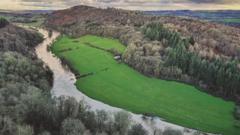
- Court hears UK's largest environmental pollution claim over River Wye
- Major chicken producer and water company named in lawsuit
- Allegations include illegal discharges into three rivers
The UK’s largest environmental pollution lawsuit is being heard in the High Court today, naming one of the country’s biggest chicken producers and a water company as defendants. The claim, brought by environmental groups, alleges the companies illegally polluted three rivers, including the iconic River Wye, with repeated discharges of harmful waste. The case marks the first time such a large-scale pollution claim has reached the High Court, setting a precedent for future environmental litigation in the UK.
The River Wye, a protected Site of Special Scientific Interest and Area of Outstanding Natural Beauty, is central to the allegations. Environmental campaigners claim Avara Foods, the chicken producer, and Southern Water, the utility company, are responsible for repeated contamination incidents over several years. Testing data cited in the claim shows elevated levels of nitrates and phosphates in the river, which campaigners say exceed legal limits and harm wildlife.
Legal claims and environmental impact
The claimants allege the pollution has caused significant ecological damage, including the loss of fish populations and the growth of toxic algae blooms. They also argue that the discharges violate environmental laws, including the Water Resources Act 1991 and the Environmental Permitting Regulations. The lawsuit seeks damages, cleanup orders, and improved monitoring to prevent future harm. If successful, it could force the companies to overhaul their waste management practices and pay substantial fines.
Southern Water has previously faced criticism and fines for pollution incidents, including a £90 million penalty in 2021 for thousands of illegal sewage discharges. The company has denied wrongdoing in this case, stating its operations comply with environmental regulations. Avara Foods has also rejected the allegations, citing its commitment to sustainable farming practices and environmental responsibility.
High Court scrutiny and public concern
The case has drawn widespread attention from environmental groups, local communities, and policymakers. The River Wye has long been a symbol of Britain’s natural beauty, attracting tourists and supporting biodiversity. Campaigners warn that unchecked pollution threatens its future and could set a dangerous precedent for other rivers. The High Court’s decision will be closely watched as a test of the UK’s environmental enforcement regime.
Environmental lawyers argue that the lawsuit underscores broader issues with industrial farming and water company practices. The intensification of poultry farming, particularly in the Wye Valley, has been linked to increased nutrient runoff, which exacerbates pollution. Regulators face pressure to tighten oversight and hold polluters accountable.
What happens next? The High Court will hear evidence over the coming weeks, with a ruling expected later this year. The outcome could influence future environmental lawsuits and shape policies on river protection. For the River Wye and other polluted waterways, the case represents a critical moment in the fight against industrial pollution in the UK.
What You Need to Know
- Source: BBC News
- Published: April 26, 2026 at 23:01 UTC
- Category: Environment
- Topics: #bbc · #environment · #climate · #high-court-one · #river-wye · #uk-pollution-lawsuit
Read the Full Story
This is a curated summary. For the complete article, original data, quotes and full analysis:
All reporting rights belong to the respective author(s) at BBC News. GlobalBR News summarizes publicly available content to help readers discover the most relevant global news.
Curated by GlobalBR News · April 26, 2026
🇧🇷 Resumo em Português
O rio Wye, cartão-postal do Reino Unido conhecido por suas águas cristalinas e paisagens de tirar o fôlego, tornou-se o centro de uma batalha judicial que expõe os limites do modelo agroindustrial e seus impactos ambientais. A Justiça britânica analisa agora o maior processo por poluição hídrica da história do país, que acusa uma gigante do frango e uma empresa de saneamento de envenenar três importantes cursos d’água, entre eles o próprio Wye, com dejetos industriais e resíduos de granjas. A cena, que poderia ser confundida com um pesadelo ecológico, é real: rios tingidos de verde, peixes mortos flutuando e comunidades locais lutando pela sobrevivência de ecossistemas que há séculos abrigam biodiversidade única.
No Brasil, onde rios como o São Francisco e o Tietê enfrentam desafios semelhantes de poluição por agrotóxicos e efluentes agroindustriais, o caso do Wye serve como um alerta precoce do que pode vir a acontecer caso não haja fiscalização rigorosa e responsabilização de grandes empresas. O modelo de produção de frango em larga escala, replicado em diversos estados brasileiros, já é apontado por pesquisadores como um dos principais vetores de contaminação de aquíferos e corpos d’água, com consequências diretas para a saúde pública e a segurança alimentar. A decisão judicial britânica pode estabelecer um precedente global, forçando governos e corporações a repensarem suas práticas antes que mais rios se tornem vítimas silenciosas da ganância industrial.
Se os acusados forem condenados, o caso poderá abrir caminho para indenizações bilionárias e mudanças na legislação ambiental europeia — e, por tabela, pressionar o Brasil a adotar medidas semelhantes para proteger seus recursos hídricos.
BBC News
Read full article at BBC News →This post is a curated summary. All rights belong to the original author(s) and BBC News.
Was this article helpful?
Discussion