Switzerland plans to open secret files on Auschwitz's 'Angel of Death' Josef Mengele in 2025.
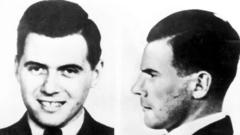
- Switzerland will release Mengele files in 2025 after decades in archives
- Rumors persisted Mengele lived in Switzerland after fleeing Europe
- Files may reveal new details about his post-war whereabouts
Switzerland announced Friday it will declassify decades-old intelligence files on Josef Mengele Josef Mengele, the Nazi doctor known as the ‘Angel of Death’ for his horrific experiments at Auschwitz. The files, held by Swiss authorities in Bern, will be opened to the public in 2025 after years of public and legal pressure for transparency.
For decades, conspiracy theories and witness accounts suggested Mengele spent time in neutral Switzerland after disappearing from Europe in 1949. Swiss officials have never confirmed his presence, but the decision to release the files indicates there may have been credible leads or investigations into his possible activities in the country. The move follows similar declassifications in Germany and Argentina, where Mengele lived under a false identity for years.
Swiss archives may hold answers to Mengele’s post-war life
The classified documents reportedly include intelligence reports, border crossing records, and surveillance logs from the 1950s through the 1970s. Historian Svenja Goltermann at the University of Zurich said the files could provide new insight into whether Swiss officials turned a blind eye to Mengele’s presence or actively protected him. “Switzerland’s neutrality during World War II has been scrutinized for decades,” Goltermann said. “If Mengele was here, even briefly, it would raise serious questions about complicity.”
Mengele, a member of the Nazi SS, fled to South America after the war and lived in Argentina, Paraguay, and Brazil under aliases. He drowned in Brazil in 1979 while swimming at a beach resort. Despite his death, rumors persisted that he had visited Europe multiple times, possibly including Switzerland, due to the country’s banking secrecy and lenient immigration policies at the time.
International pressure mounts for historical accountability
The decision to release the files comes amid growing calls from Holocaust survivors, historians, and governments for full disclosure of Nazi fugitives who may have found refuge in neutral countries. In 2022, Germany declassified thousands of pages of intelligence files on Nazi criminals, including Mengele, while Argentina opened archives in 2017 that suggested local officials knew of his whereabouts in the 1960s.
Swiss authorities have not detailed what the files contain but confirmed they include materials from multiple intelligence agencies. A spokesperson for the Swiss Federal Archives said the government is committed to historical transparency but did not specify whether the files would prove Mengele was in Switzerland. “We are reviewing documents that may shed light on Switzerland’s role during and after the war,” the spokesperson said.
What the files could reveal
If the files contain evidence of Mengele’s presence, it would contradict decades of official denials from Swiss authorities. In 1998, a Swiss parliamentary investigation concluded there was no proof Mengele had entered Switzerland after 1945. However, the same report noted that some records were incomplete or missing, leaving gaps in the historical record. The upcoming release could fill those gaps or confirm that Mengele avoided detection in Europe entirely.
Historian Gerhard Hirschfeld of the University of Stuttgart said the files might not provide definitive proof but could offer clues about Nazi networks operating in Switzerland. “Even negative evidence—the absence of his name—can be significant,” Hirschfeld said. “It would tell us about the effectiveness of Swiss border controls and intelligence sharing at the time.”
The release follows Switzerland’s recent efforts to confront its wartime past, including a 2020 government report acknowledging the country’s role in accepting stolen Nazi gold and restricting Jewish refugees during the Holocaust. While Mengele’s presence in Switzerland remains unproven, the file release could reopen debates about the country’s wartime neutrality and post-war moral responsibilities.
What You Need to Know
- Source: BBC News
- Published: May 15, 2026 at 23:04 UTC
- Category: World
- Topics: #bbc · #world-news · #international · #war · #conflict · #switzerland
Read the Full Story
This is a curated summary. For the complete article, original data, quotes and full analysis:
All reporting rights belong to the respective author(s) at BBC News. GlobalBR News summarizes publicly available content to help readers discover the most relevant global news.
Curated by GlobalBR News · May 15, 2026
Related Articles
- Zimbabwe’s diaspora reshapes real estate and farming investment trends
- Eurovision 2024 faces scrutiny over Israel’s participation amid war
- War in the Middle East: Israel targets top Hamas leader in Gaza
🇧🇷 Resumo em Português
A Suíça, país conhecido por seus bancos e sigilos, prepara-se para revelar segredos há décadas trancados em seus arquivos: os documentos sobre Josef Mengele, o médico nazista conhecido como o “Anjo da Morte” de Auschwitz. A decisão, anunciada recentemente, pode lançar nova luz sobre os anos que o criminoso de guerra passou escondido na Europa após a Segunda Guerra Mundial, incluindo seu período na Suíça, onde teria vivido sob falsa identidade.
Os arquivos suíços, até agora inacessíveis ao público, prometem detalhes inéditos sobre a vida de Mengele após 1945, quando fugiu para a América do Sul e, segundo investigações recentes, teria passado por territórios europeus antes de se estabelecer no Brasil. Para o Brasil, onde Mengele viveu por décadas até sua morte em 1979, a abertura desses documentos reacende discussões sobre a efetividade da justiça internacional na perseguição a nazistas e questiona se mais criminosos escaparam impunes com a ajuda de rotas de fuga que passaram por países neutros. Além disso, a medida pode inspirar outros países a revisitar seus próprios arquivos em busca de respostas sobre colaborações ou omissões durante aquele período sombrio.
Com a revelação iminente, a pergunta que fica é: até onde os novos documentos podem nos aproximar da verdade sobre os últimos anos do “Anjo da Morte” e de outros fugitivos nazistas ainda não identificados?
🇪🇸 Resumen en Español
Suiza desclasificará archivos secretos sobre Josef Mengele, el siniestro médico de Auschwitz apodado el ‘Ángel de la Muerte’, en un giro histórico que podría arrojar luz sobre su enigmática vida tras la guerra en Europa.
El acceso a estos documentos inéditos, custodiados por autoridades helvéticas, reviste una importancia crucial para las víctimas del Holocausto y sus descendientes, así como para los historiadores que buscan reconstruir las redes de impunidad que permitieron a criminales nazis como Mengele escapar de la justicia tras 1945. La medida, impulsada por presiones internacionales y por la creciente sensibilidad hacia la memoria histórica en Suiza, podría revelar conexiones locales que facilitaron su huida, incluyendo posibles apoyos en círculos políticos o económicos del país alpino. Además, el caso reabre el debate sobre la complicidad de naciones neutrales durante la posguerra, un capítulo aún controvertido en la Europa de habla hispana, donde el exilio de criminales de guerra alemanes sigue siendo un tema sensible.
BBC News
Read full article at BBC News →This post is a curated summary. All rights belong to the original author(s) and BBC News.
Was this article helpful?

Discussion