Germany’s AfD gains support as Merz’s coalition stumbles after one year in power.
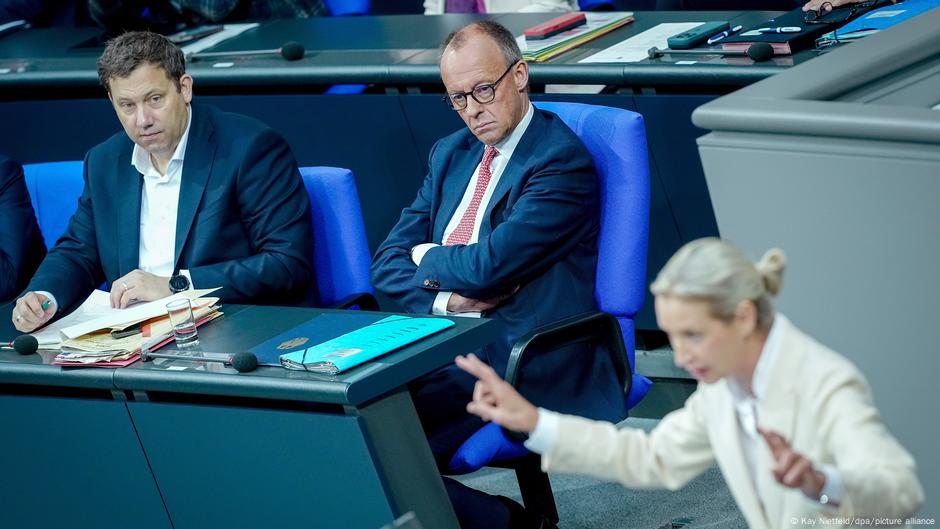
- Merz’s coalition hit historic lows after one year in office
- AfD capitalizes on voter frustration over economic stagnation
- Government’s slow reforms and internal conflicts slow progress
Chancellor Friedrich Merz’s Christian Democratic Union (CDU) coalition is facing a crisis of confidence just 12 months after taking office. The government, which includes the Social Democratic Party of Germany (SPD) and the Christian Social Union (CSU), promised rapid economic recovery and sweeping reforms when it formed in May 2025. But voters aren’t seeing it. Polls now show the coalition’s approval rating in freefall, with frustration over economic stagnation and bureaucratic gridlock driving support toward the far-right Alternative for Germany (AfD) party instead. The AfD, long a fringe movement, now holds double-digit polling numbers in multiple states and is positioning itself as the only party willing to challenge the status quo. Merz’s government, meanwhile, is stuck in a pattern of half-measures and delayed decisions, with cabinet infighting slowing even modest progress. The Chancellor himself has admitted that steering Germany toward growth and stability in just a year was never realistic. But voters don’t care about excuses. They care about results—and so far, they’re not getting any. The fallout is visible in state elections, where the AfD has surged past expectations, and in national polls, where it’s now polling higher than any other single party outside the ruling coalition. The shift is most pronounced in eastern Germany, where economic anxiety and disillusionment with Berlin run deepest. Yet the malaise isn’t confined to one region. From industrial Ruhr Valley cities to rural Bavaria, the sentiment is the same: the government talks big but delivers little. ## The coalition’s promises fell flat The coalition’s collapse in popularity isn’t accidental. It’s the result of broken promises and misaligned priorities. In his first speech as Chancellor, Merz vowed that Germany would “turn the corner” on stagnant growth and bureaucratic inertia within months. He promised sweeping reforms in energy, infrastructure, and social policy by autumn 2025. But internal divisions—especially between the CDU/CSU’s conservative wing and the SPD’s labor-focused base—have paralyzed decision-making. Key bills on tax reform, digitalization, and climate policy remain stuck in committee, while inflation remains stubbornly high and real wages continue to shrink. The government’s attempt to address economic woes with a mix of austerity and stimulus has satisfied no one. Business leaders complain about overregulation and high costs, while unions argue the reforms don’t go far enough to protect workers. Voters, caught in the middle, see a government that can’t agree on anything—except how to avoid blame. ## AfD steps into the void The AfD, led by co-chairs Alice Weidel and Tino Chrupalla, has wasted no time exploiting the gap. The party’s message is simple: the establishment has failed, and only they can fix it. They’ve focused on three core themes—opposition to immigration, skepticism toward green energy policies, and a push for nationalist economic protectionism—each tailored to resonate with voters feeling left behind. In state after state, the AfD has gained ground by positioning itself as the protest party of choice. It’s not just rhetoric. The AfD has already forced policy shifts in some regions, pushing local governments to adopt harder-line stances on migration and energy. Its rise has also emboldened other far-right figures across Europe, who see Germany as a new battleground for conservative backlash against the political center. Internally, the AfD remains fractured between hardliners and more pragmatic factions, but its current momentum has papered over those divides—for now. The party’s leaders have avoided major scandals in recent months, and its messaging has grown more polished, appealing even to voters who previously rejected its extremist roots. ## What happens next? The coalition’s survival now depends on whether Merz can regain control or if the SPD and CSU finally force a reckoning. Some analysts suggest the government could survive only if it delivers a major policy win—like a breakthrough on energy or tax reform—before the next federal election in 2029. But the clock is ticking. The AfD isn’t waiting for mistakes. It’s actively recruiting disillusioned voters, especially young men and older workers who feel the economy has passed them by. Meanwhile, the SPD’s junior role in the coalition is eroding its traditional base, raising fears of a permanent realignment in German politics. One thing is clear: Germany’s political center is under siege. Whether it collapses entirely depends on how quickly Merz and his partners can prove they still have a plan—or if the AfD’s momentum becomes unstoppable.
What You Need to Know
- Source: Deutsche Welle
- Published: May 08, 2026 at 10:40 UTC
- Category: World
- Topics: #europe · #world-news · #germany · #merz-never · #german
Read the Full Story
This is a curated summary. For the complete article, original data, quotes and full analysis:
All reporting rights belong to the respective author(s) at Deutsche Welle. GlobalBR News summarizes publicly available content to help readers discover the most relevant global news.
Curated by GlobalBR News · May 08, 2026
Related Articles
- 🎉 250 Articles in World!
- WHO declares Ebola emergency as Congo outbreak spreads to Uganda
- WHO declares Ebola emergency as Congo and Uganda outbreaks surge
🇧🇷 Resumo em Português
A Alemanha mergulha em uma crise política inédita há décadas, com a legenda de extrema-direita Alternativa para a Alemanha (AfD) consolidando sua ascensão enquanto o governo do chanceler Friedrich Merz, do partido conservador CDU, amarga um ano de fracassos na recuperação econômica e na gestão das crises internas. Pesquisas recentes mostram que a AfD, já considerada a segunda força política do país, deve superar os 20% de intenção de voto em alguns estados, ameaçando não apenas a estabilidade do governo Merz, mas também o futuro da União Europeia e dos valores democráticos no coração da Europa.
O cenário preocupa não só Berlim, mas também Brasília e outros governos latino-americanos, que veem com apreensão a onda conservadora e anti-imigração que ganha força na Alemanha — um dos principais parceiros comerciais e políticos do Brasil na Europa. A crise alemã chega em um momento delicado para a economia global, com reflexos diretos no comércio exterior brasileiro, especialmente em setores como automobilístico e maquinário, que dependem fortemente das exportações para a Alemanha. Além disso, a ascensão da AfD pode influenciar as eleições europeias do próximo ano, redefinindo alianças e políticas migratórias, o que afeta diretamente os fluxos de migrantes brasileiros na Europa.
Se Merz não conseguir reverter o desgaste em 2025, a Alemanha pode viver um dos momentos mais turbulentos de sua história recente, com possíveis eleições antecipadas e uma guinada à direita que reconfiguraria o mapa político europeu.
🇪🇸 Resumen en Español
El avance de Alternativa para Alemania (AfD) refleja el malestar social en el país germano, donde la coalición liderada por Friedrich Merz cumple un año sin cumplir sus promesas de recuperación económica. El desgaste del gobierno ha abierto espacios para el discurso populista, que capitaliza la frustración ciudadana ante el estancamiento y las tensiones sociales.
Tras doce meses de gestión, la coalición de Merz —integrada por su partido, la Unión Demócrata Cristiana (CDU), y su aliado bávaro (CSU)— no ha logrado reactivar la economía ni mitigar el descontento por el alto coste de vida y la incertidumbre laboral. La AfD, que ya lidera sondeos en algunos estados orientales, aprovecha este vacío para ganar apoyo con un mensaje antiestablishment, lo que amenaza con reconfigurar el mapa político alemán y, por extensión, el equilibrio de poder en la Unión Europea.
Deutsche Welle
Read full article at Deutsche Welle →This post is a curated summary. All rights belong to the original author(s) and Deutsche Welle.
Was this article helpful?


Discussion