Peacocks now dominate Punta Marina, Italy, as residents clash over the invasive birds during mating season.
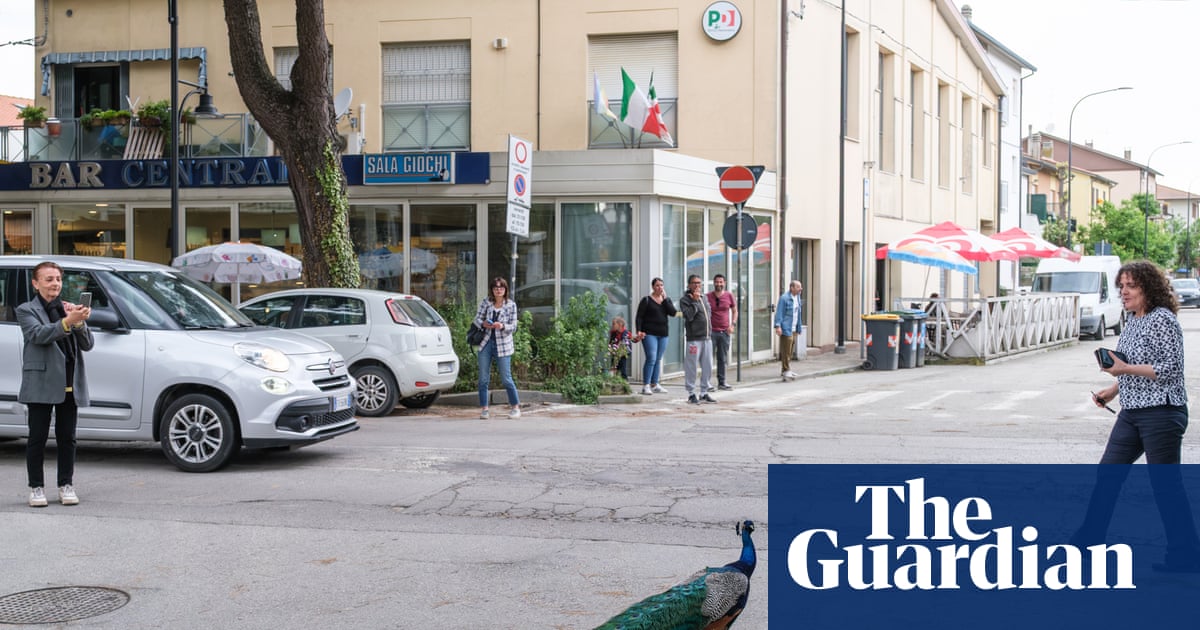
- Peacocks now outnumber humans in Punta Marina during mating season.
- Residents split between welcoming and opposing the invasive birds.
- 'Peacock rangers' appointed to mediate local tensions.
PUNTA MARINA, Italy — Federico Bruni was enjoying a piadina romagnola (flatbread sandwich) on a bench when a peacock strutted toward him, hoping for crumbs. The bird’s iridescent tail fanned out behind it as it wandered past, a scene more akin to a wildlife park than an Italian seaside town.
This is Punta Marina, a coastal community on the Adriatic Sea in Italy’s Emilia-Romagna region. The town, normally a quiet summer retreat, has been overrun by peacocks, whose loud calls and aggressive behavior have sparked division among residents. Some adore the birds for their striking beauty, while others resent their intrusion into daily life.
To ease tensions, local officials have appointed ‘peacock rangers’—volunteers tasked with monitoring the birds and educating residents on coexistence. The rangers, often locals familiar with the birds’ habits, patrol the streets where peacocks roam freely, particularly around a disused military barracks that has become a hotspot for the flock.
The peacocks, originally from Asia, were introduced to the area decades ago as ornamental birds. Their population has exploded in recent years, especially during mating season, which peaks in spring and summer. Male peacocks, with their vibrant trains, perform elaborate courtship displays, drawing crowds of tourists eager to photograph the spectacle.
But not everyone welcomes the feathered visitors. Some residents complain about the noise, with the birds’ high-pitched calls echoing through the streets at dawn and dusk. Others report aggressive behavior, particularly during mating season, when males can become territorial. A few locals have even called for culling the birds to control their numbers.
The debate reflects a broader struggle between nature and urban life. Punta Marina’s peacocks are not native to Italy, and their unchecked growth has disrupted the local ecosystem. The birds compete with native species for food and nesting sites, while their droppings foul public spaces and private property.
Peacocks disrupt daily routines in Punta Marina
For business owners like Bruni, the peacocks are both a nuisance and an attraction. His café, located near the barracks, has become a popular stop for tourists hoping to catch a glimpse of the birds. While some customers linger to photograph the peacocks, others demand action to curb their presence.
“They’re beautiful, but they’re also a problem,” Bruni said. “They scare away other birds, damage gardens, and leave a mess everywhere. We need a solution that works for everyone.”
Local authorities are exploring options, including relocation programs and birth control for the birds. However, any solution must balance the interests of residents, tourists, and the peacocks themselves. The town’s ‘peacock rangers’ play a key role in this effort, mediating conflicts and promoting peaceful coexistence.
Can Punta Marina’s peacocks and people coexist?
The challenge is not unique to Punta Marina. Other Italian towns, including nearby Ravenna, have grappled with similar issues as peacock populations grow. In some cases, authorities have resorted to culling programs, though such measures are often controversial.
For now, the peacocks remain a symbol of Punta Marina’s unexpected fame. Social media posts and travel blogs have drawn attention to the town, boosting tourism but also fueling the debate over how to manage the birds. Some residents hope the influx of visitors will bring economic benefits, while others worry about the long-term impact on their community.
As the mating season winds down, the town faces a critical question: How can Punta Marina embrace its unusual visitors without sacrificing its quality of life? For the ‘peacock rangers,’ the answer may lie in education and compromise, ensuring that the birds—and the people who live alongside them—can thrive together.
What You Need to Know
- Source: The Guardian
- Published: May 16, 2026 at 12:00 UTC
- Category: World
- Topics: #guardian · #world-news · #international · #war · #military · #defense
Read the Full Story
This is a curated summary. For the complete article, original data, quotes and full analysis:
All reporting rights belong to the respective author(s) at The Guardian. GlobalBR News summarizes publicly available content to help readers discover the most relevant global news.
Curated by GlobalBR News · May 16, 2026
Related Articles
- Eurovision 2024 faces scrutiny over Israel’s participation amid war
- War in the Middle East: Israel targets top Hamas leader in Gaza
- US Justice Department preparing indictment against Raúl Castro
🇧🇷 Resumo em Português
Os moradores de Punta Marina, na Itália, estão divididos entre o fascínio e a exasperação com uma invasão inesperada: pavões, outrora símbolos de elegância, agora dominam as ruas como donos do pedaço, transformando a cidade costeira em um cenário quase surreal. O que começou como um capricho de um proprietário local há décadas virou um problema de proporções inusitadas, com centenas de aves coloridas espalhadas pela região, causando alvoroço entre residentes e turistas.
O fenômeno, que já dura anos, ganhou contornos de crise nos últimos meses, com moradores se dividindo entre quem defende a preservação dos animais — agora protegidos por um grupo de “guardas de pavões” que media conflitos — e quem cobra medidas para controlar a população. A situação expõe dilemas comuns em cidades que se veem repentinamente no papel de refúgio para espécies exóticas, gerando discussões sobre meio ambiente, convivência urbana e até responsabilidade histórica. Para o Brasil, onde projetos de reintrodução de fauna nativa geram debates semelhantes, o caso italiano serve como alerta sobre os desafios de equilibrar ecologia e vida cotidiana.
Enquanto as autoridades ainda buscam uma solução, a lição é clara: a beleza das penas pode esconder armadilhas quando o homem interfere no equilíbrio natural.
🇪🇸 Resumen en Español
La pintoresca localidad costera de Punta Marina, en Italia, se ha convertido en el escenario de un insólito conflicto vecinal donde los pavos reales campan a sus anchas por calles y playas, transformando el pueblo en un auténtico parque natural. Lo que comenzó como una anécdota turística se ha convertido en un problema de convivencia, con residentes divididos entre quienes celebran la exótica presencia de estas aves y quienes exigen soluciones urgentes por el caos que generan.
El origen del alboroto se remonta a hace décadas, cuando un criadero privado decidió liberar los pavos reales para evitar su sacrificio, pero la población creció sin control. Ahora, más de 200 aves de vistosos plumajes inundan Punta Marina, dañando jardines, asustando a los turistas y generando disputas entre vecinos. Las autoridades locales han optado por una solución intermedia, creando un equipo de “guardianes de los pavos” que intentan mediar entre los afectados, aunque la polémica sigue abierta. El caso refleja cómo la convivencia entre humanos y fauna salvaje puede volverse un desafío en entornos urbanos, dejando en evidencia la falta de planificación previa y la necesidad de un diálogo comunitario para gestionar estos conflictos.
The Guardian
Read full article at The Guardian →This post is a curated summary. All rights belong to the original author(s) and The Guardian.
Was this article helpful?


Discussion