Honda posts first loss since 1957 due to EV write-downs but shares rise on 2026 profit forecast.
- Honda reports 413.4 billion yen operating loss in fiscal 2025
- First loss since 1957 after aggressive EV strategy shift
- Shares rise on 2026 forecast of return to profitability
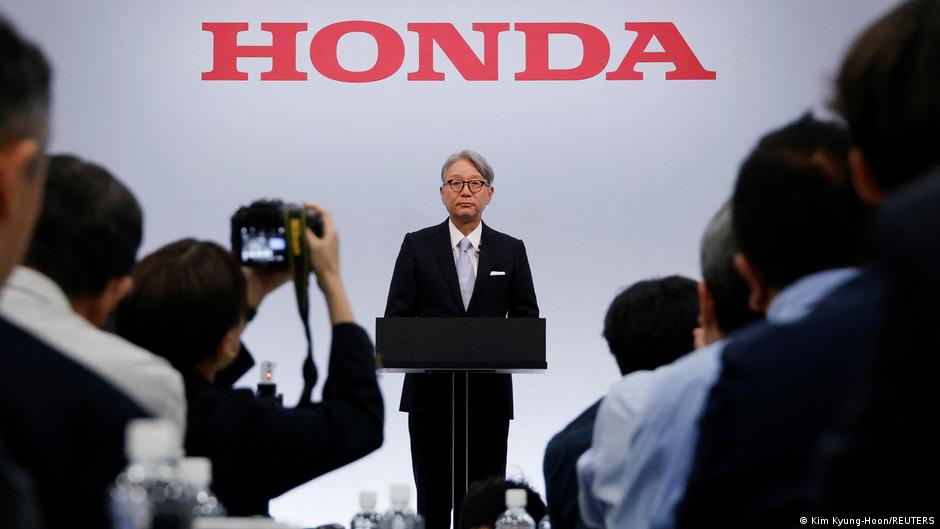
Japanese automaker Honda on Thursday reported its first operating loss since 1957, totaling 413.4 billion yen ($2.6 billion), driven largely by massive write-downs in its electric vehicle operations. The company also posted a net loss of 423.9 billion yen for the fiscal year ending March 31, marking a sharp reversal from its long-standing profitability. Despite the historic setback, Honda’s shares surged after CEO Toshihiro Mibe announced the company expects to return to profitability in 2026.
The loss reflects a major strategic pivot away from the rapid electrification of its vehicle lineup, particularly in the U.S., where Honda had previously committed to aggressive EV expansion. The company sold 3.4 million vehicles globally in the fiscal year, a figure that includes both traditional internal combustion engine models and newer electric offerings. The financial hit was anticipated: Honda had already warned investors in March that the strategic shift would result in significant losses, softening the market reaction to Thursday’s earnings report.
Honda’s decision to slow its EV expansion comes as the broader auto industry grapples with uneven demand for electric vehicles. Consumer uptake has lagged in key markets, and rising interest rates have increased borrowing costs, dampening EV affordability. The company’s revised strategy includes a more gradual transition to electrification, with a renewed focus on hybrid models and internal combustion engines as stopgaps. This approach aligns with similar moves by competitors such as Toyota and Ford, which have also tempered EV ambitions amid market realities.
Shift in Strategy Reflects Broader Industry Challenges
Honda’s aggressive EV push, launched just a few years ago, aimed to position the company as a leader in zero-emission mobility. However, supply chain disruptions, high battery costs, and slower-than-expected consumer adoption forced a reassessment. The company now plans to extend the life of some gas-powered models and prioritize hybrid technology as it rebuilds its EV pipeline. Analysts suggest this shift may help Honda stabilize its financial position in the near term, even as it risks ceding ground to rivals like Tesla and BYD in the electric vehicle space.
Honda’s U.S. market remains a critical battleground. The company had initially targeted 40% EV sales in North America by 2030 but has since dialed back those ambitions. The revised plan focuses on a more phased rollout, with hybrids serving as a bridge between gasoline and fully electric vehicles. This adjustment could ease financial strain while allowing Honda to meet regulatory requirements without overcommitting to unproven market segments.
Investor Reaction Signals Confidence in Long-Term Outlook
Despite the historic loss, Honda’s stock jumped on the 2026 profitability forecast, reflecting investor confidence in the company’s ability to navigate the transition. The company’s market cap remains robust, and analysts note that Honda’s strong presence in motorcycle and power equipment segments provides a financial cushion. The 2026 target also hinges on improving macroeconomic conditions, including stabilizing interest rates and sustained consumer demand.
Looking ahead, Honda plans to leverage its global manufacturing footprint to optimize production costs. The company is also investing in battery recycling and solid-state battery research, positioning itself for a future where EVs regain momentum. Whether this strategy succeeds will depend on market conditions, regulatory pressures, and Honda’s ability to execute without repeating past missteps. For now, the company’s immediate focus is on restoring profitability while maintaining a competitive edge in an evolving industry.
What You Need to Know
- Source: Deutsche Welle
- Published: May 14, 2026 at 08:52 UTC
- Category: World
- Topics: #europe · #world-news · #gadgets · #electric-vehicle
Read the Full Story
This is a curated summary. For the complete article, original data, quotes and full analysis:
All reporting rights belong to the respective author(s) at Deutsche Welle. GlobalBR News summarizes publicly available content to help readers discover the most relevant global news.
Curated by GlobalBR News · May 14, 2026
Related Articles
- Eurovision 2024 faces scrutiny over Israel’s participation amid war
- War in the Middle East: Israel targets top Hamas leader in Gaza
- US Justice Department preparing indictment against Raúl Castro
🇧🇷 Resumo em Português
A Honda registrou seu primeiro prejuízo em mais de seis décadas, desde 1957, em meio a ajustes em sua estratégia de veículos elétricos, mas as ações da empresa subiram após projeções otimistas para 2026. O gigante japonês anunciou um prejuízo operacional de US$ 2,6 bilhões, impulsionado por desvalorizações em sua divisão de EVs, enquanto os investidores reagiram positivamente às metas de recuperação nos próximos anos.
O resultado reflete os desafios da Honda em acompanhar a rápida transição global para a eletrificação, especialmente diante da concorrência agressiva da China e da queda de demanda por modelos híbridos no mercado asiático. No Brasil, onde a marca mantém uma forte presença com fábricas e uma base de clientes leais, a notícia pode gerar preocupações sobre a competitividade do país no setor automotivo, que ainda depende fortemente dos motores a combustão. Além disso, a estratégia da Honda de “desacelerar” a produção de EVs contrasta com as metas brasileiras de incentivar a indústria de veículos elétricos, o que pode influenciar debates sobre políticas públicas e investimentos no setor.
A reação positiva do mercado, com alta nas ações, sugere que os investidores apostam na capacidade da Honda de se reerguer até 2026, mas o caminho será marcado por ajustes estratégicos e possíveis impactos na cadeia produtiva brasileira.
🇪🇸 Resumen en Español
Honda registra su primera pérdida en 67 años tras ajustar su apuesta por los vehículos eléctricos, aunque sus acciones se disparan al anticipar ganancias récord para 2026. El gigante japonés cerró su ejercicio fiscal con un agujero de 2.600 millones de dólares en operaciones, arrastrado por las fuertes depreciaciones en sus inversiones en movilidad eléctrica, un sector donde ha optado por ralentizar su transformación ante la feroz competencia asiática y los cambios en las preferencias del mercado.
La decisión refleja la encrucijada en la que se mueven las grandes marcas tradicionales: reducir costes y replantearse plazos para no quedarse atrás en la carrera tecnológica. Para el público hispanohablante, este giro tiene implicaciones prácticas, ya que afecta a la disponibilidad y precios de modelos clave en Europa y Latinoamérica, donde Honda aún confía en motores híbridos y de combustión como puente hacia la electrificación. Además, la subida bursátil —impulsada por la confianza en un futuro más rentable— podría ser un termómetro para otros fabricantes que, como Volkswagen o Toyota, navegan entre la presión regulatoria y las expectativas de los consumidores.
Deutsche Welle
Read full article at Deutsche Welle →This post is a curated summary. All rights belong to the original author(s) and Deutsche Welle.
Was this article helpful?


Discussion