USS Gerald R. Ford completes 320-day deployment, returns to Virginia Saturday with crew celebration.
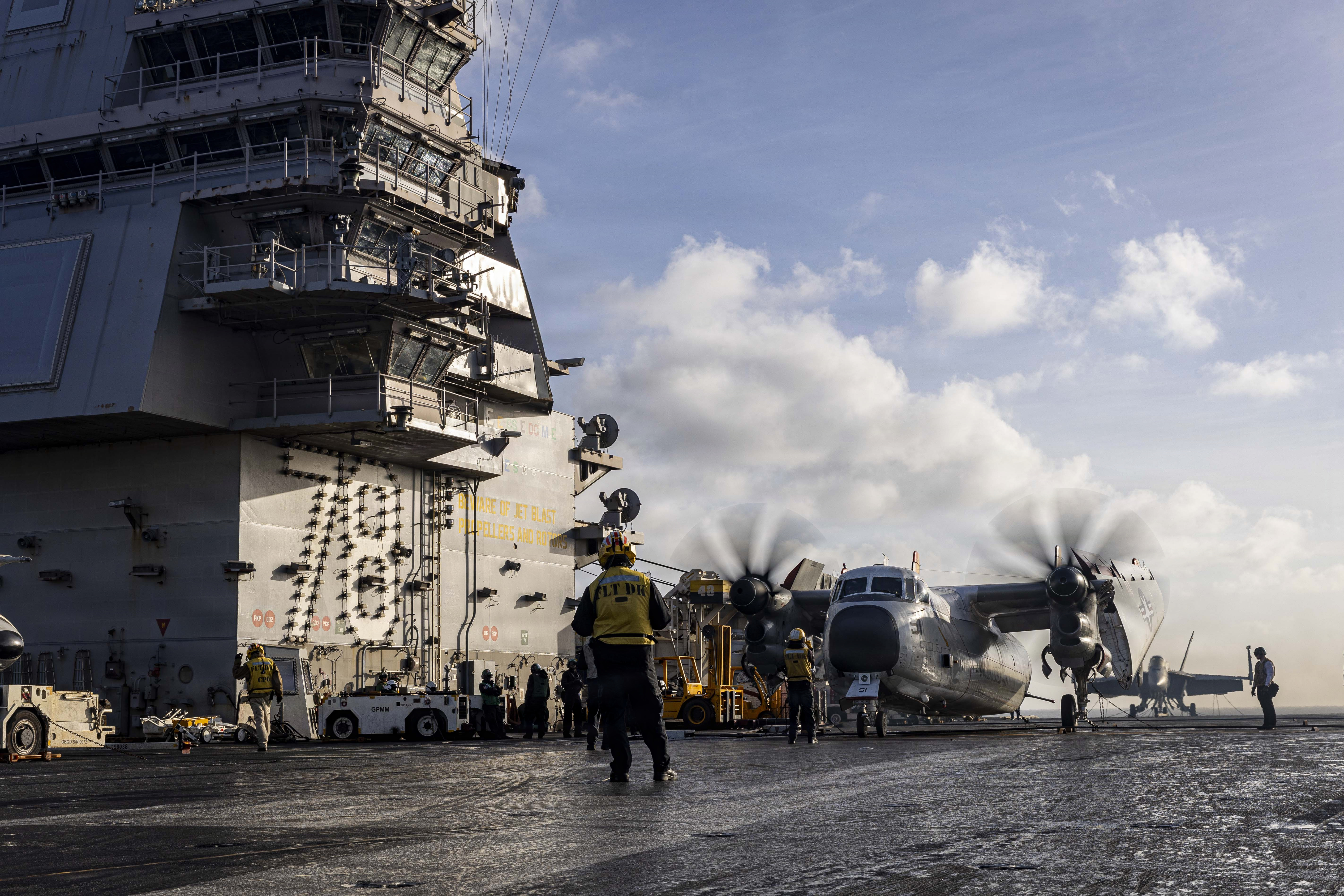
- USS Gerald R. Ford ends longest carrier deployment since Vietnam after 320 days
- Carrier returns to Naval Station Norfolk, Virginia, on Saturday
- Ship supported U.S. Central Command operations in Middle East
The USS Gerald R. Ford will arrive at Naval Station Norfolk, Virginia, on Saturday after more than 320 days at sea, marking the longest deployment for a U.S. aircraft carrier since the Vietnam War. Chief of Naval Operations Adm. Daryl Caudle announced the return during a House Armed Services Committee hearing Thursday, calling the deployment a historic achievement for the carrier and its crew.
The carrier strike group recently operated in the Middle East in support of U.S. Central Command and Operation Prosperity Guardian, a multinational effort to secure Red Sea shipping lanes amid Houthi rebel threats. The deployment tested the Ford’s advanced systems, including its electromagnetic aircraft launch system and new radar technology, under real-world combat conditions.
Ford’s crew completes record deployment
Adm. Caudle praised the Ford’s crew during the hearing, stating, “We’re going to give our heroes a welcome back on Saturday and it’s just an extraordinary ship, extraordinary crew, an extraordinary strike group.” The deployment exceeded previous post-Vietnam carrier deployments, which typically lasted 6-9 months, by more than four months. Crew rotations and logistics were managed to sustain operations without port calls.
The Ford, commissioned in 2017, is the lead ship of its class and the first new U.S. aircraft carrier design in 40 years. Its deployment comes as tensions in the Middle East remain high following years of conflict in Gaza and ongoing Houthi attacks on commercial vessels. The carrier’s presence reinforced U.S. naval dominance in the region while testing its next-generation capabilities.
Next steps for the Ford and its crew
After docking, the crew will undergo maintenance and training to prepare for future deployments. The Ford’s advanced systems, including its nuclear propulsion and automated systems, will be assessed for performance and reliability. The Navy plans to use lessons learned from this deployment to refine future carrier operations and fleet readiness.
The return of the Ford also highlights the Navy’s shift toward longer, more sustained deployments as part of its global presence strategy. With the Middle East remaining a key focus, the Ford’s experience will shape how the Navy deploys its carrier strike groups in high-threat environments. The crew’s homecoming marks the end of a historic mission but also sets the stage for future operations.
What You Need to Know
- Source: Defense News
- Published: May 15, 2026 at 18:04 UTC
- Category: War
- Topics: #defense · #military · #pentagon · #gerald · #navy · #vietnam
Read the Full Story
This is a curated summary. For the complete article, original data, quotes and full analysis:
All reporting rights belong to the respective author(s) at Defense News. GlobalBR News summarizes publicly available content to help readers discover the most relevant global news.
Curated by GlobalBR News · May 15, 2026
Related Articles
- Wembanyama’s Spurs reach Western finals, Pistons stay alive in NBA playoffs
- 🎉 100 Articles in War!
- Man killed in great white shark attack in western Australia
🇧🇷 Resumo em Português
O porta-aviões USS Gerald R. Ford, o maior do mundo, chega neste sábado à base naval de Norfolk, na Virgínia, após um recorde de 320 dias no mar, marcando o maior período de operação contínua de um navio de guerra norte-americano em décadas. A missão, que integrou a 6ª Frota dos EUA e apoiou operações do Comando Central (CENTCOM) no Oriente Médio, reforçou a presença militar dos EUA em uma região cada vez mais instável, enquanto tensões com o Irã e conflitos como os de Gaza e Iêmen mantêm a comunidade internacional em alerta.
Para o Brasil, que tem buscado equilibrar sua política externa entre neutralidade e parcerias estratégicas no Atlântico Sul, a volta do Ford serve como um lembrete da crescente militarização dos oceanos e das disputas por influência global. O navio, equipado com tecnologias inovadoras como o sistema eletromagnético de lançamento de aeronaves (EMALS), representa não apenas poderio bélico, mas também um avanço na doutrina naval norte-americana, que prioriza flexibilidade e projeção de força em águas distantes — um cenário que afeta diretamente a segurança marítima brasileira, especialmente com o aumento da presença chinesa na África e no Atlântico.
O retorno do Gerald R. Ford deve acirrar debates sobre como o Brasil, com sua extensa costa e interesses estratégicos, pode modernizar sua própria frota naval para não ficar à margem das novas dinâmicas de poder no século XXI.
🇪🇸 Resumen en Español
El portaaviones más grande del mundo, el USS Gerald R. Ford, regresa a Estados Unidos tras una misión récord de 320 días en Oriente Medio, marcando un hito en la proyección de poder naval de Washington en una región clave.
Su despliegue, vinculado a operaciones bajo el Mando Central de EE.UU., refuerza la presencia militar estadounidense en un escenario estratégico donde persisten tensiones con Irán y conflictos como los de Yemen o Siria. Para España y Europa, este movimiento subraya la importancia de la alianza transatlántica y la necesidad de mantener un equilibrio en un escenario global cada vez más polarizado, donde la estabilidad marítima sigue siendo un pilar de la seguridad internacional.
Defense News
Read full article at Defense News →This post is a curated summary. All rights belong to the original author(s) and Defense News.
Was this article helpful?


Discussion