Gulf states deploy Chinese, Israeli and US laser weapons to shoot down drones amid rising regional tensions.
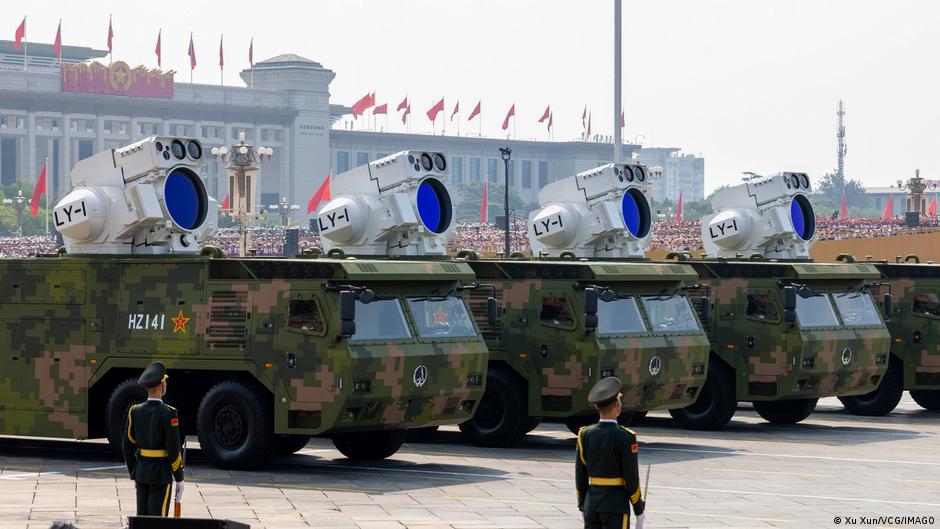
- Gulf states deploy laser weapons to counter drone threats from Iran
- UAE tests Chinese and Israeli systems at Dubai airport and Iron Beam
- Oman and Saudi Arabia buy Chinese laser weapons systems
A Chinese-made laser weapon system appeared at Dubai airport last week, marking the latest step in the Gulf’s rapid military buildup against drone threats. The vehicle-mounted system, spotted by weapons trackers online, joins Israel’s Iron Beam—loaned to the UAE—and an emerging US system under consideration by Gulf states. Oman was outed as a buyer of Chinese laser weapons in late 2025 after a transport company posted shipping photos, while Saudi Arabia has tested Chinese systems and may expand purchases.
China, the United States and Israel are now locked in a three-way race to sell laser weapons to Gulf states facing drone attacks linked to Iran. The UAE has gone further than most, securing both Chinese and Israeli systems and pursuing co-development deals with European and US firms. Qatar, still recovering from an Israeli strike on its capital in September 2025, is reportedly evaluating Turkey’s Steel Dome air defense system, which includes laser interceptors.
Israel’s Iron Beam, developed by Rafael Advanced Defense Systems, has been tested extensively against rockets and mortars. The UAE’s reported loan of the system underscores the urgency of counter-drone defense in the region. Meanwhile, China’s Silent Hunter and related systems have been deployed or sold to multiple Gulf states, offering high-energy laser solutions for drone and missile interception.
Laser weapons offer speed-of-light engagement and low cost per shot compared to missiles, making them attractive for small, high-frequency threats like drones. Military analysts say the technology is maturing but still faces challenges in power supply, atmospheric conditions and sustained operation. “Lasers can engage targets in milliseconds, but their effectiveness drops in dust, fog or heavy rain,” said a defense analyst with the International Institute for Strategic Studies. “Power consumption and cooling remain limiting factors.”
The UAE’s dual-track approach—testing foreign systems and co-developing domestic ones—reflects a broader regional strategy to diversify defense suppliers. Analysts say this reduces reliance on any single nation and fosters local defense industries. Oman’s purchase of Chinese systems and Saudi Arabia’s trials suggest the trend is spreading across the Gulf Cooperation Council.
Qatar’s interest in Turkey’s Steel Dome—part of a broader push for regional air defense integration—signals shifting alliances and a desire for layered protection. The system combines radar, interceptor missiles and laser weapons to counter drones and short-range rockets. “Gulf states are hedging their bets,” said a Gulf security expert. “They want redundancy and interoperability in the face of evolving threats.”
As tensions with Iran persist, the demand for laser weapons is expected to grow. Industry sources say contracts worth billions are under negotiation, with deliveries and trials accelerating. The next phase of competition will likely focus on reliability, integration with existing air defenses and cost-effective deployment at scale. For now, the Gulf’s laser race is on—and the stakes couldn’t be higher.
What You Need to Know
- Source: Deutsche Welle
- Published: May 16, 2026 at 09:13 UTC
- Category: World
- Topics: #europe · #world-news · #war · #conflict · #china
Read the Full Story
This is a curated summary. For the complete article, original data, quotes and full analysis:
All reporting rights belong to the respective author(s) at Deutsche Welle. GlobalBR News summarizes publicly available content to help readers discover the most relevant global news.
Curated by GlobalBR News · May 16, 2026
Related Articles
- Keir Starmer faces leadership jostling as Labour allies push back
- Eurovision 2024 faces scrutiny over Israel’s participation amid war
- US Justice Department preparing indictment against Raúl Castro
🇧🇷 Resumo em Português
O Oriente Médio vira um laboratório de guerra de alta tecnologia, com os países do Golfo Árabe correndo para equipar suas forças com armas de laser contra a crescente ameaça de drones. Em meio à escalada de tensões regionais e ao aumento de ataques com veículos aéreos não tripulados, Emirados Árabes Unidos, Omã e Catar já estão testando ou implantando sistemas de defesa baseados em feixes de energia, enquanto potências como China, Estados Unidos e Israel disputam o controle de um mercado bilionário.
A corrida pelos lasers antiaéreos reflete não apenas a modernização militar dos países árabes, mas também a busca por soluções mais baratas e eficientes frente a um inimigo difícil de combater com mísseis convencionais. Para o Brasil e seus aliados de língua portuguesa, a notícia serve como um alerta sobre o futuro dos conflitos modernos, especialmente em um cenário onde drones se tornam armas cada vez mais acessíveis a grupos não estatais. Além disso, o Brasil, que também investe em tecnologias de defesa, pode enxergar nessa tendência um caminho para atualizar suas próprias estratégias de segurança.
A próxima etapa desse embate deve incluir a expansão do uso de armas de energia direta no campo de batalha, o que poderia redefinir as regras da guerra.
🇪🇸 Resumen en Español
En plena escalada de tensión regional, los países del Golfo Pérsico aceleran la adquisición de sistemas láser para neutralizar la creciente amenaza de drones, impulsados por la competencia tecnológica entre China, EE.UU. e Israel. Emiratos Árabes Unidos, Omán y Catar ya despliegan o prueban estas armas de alta precisión, que prometen revolucionar la defensa antimisiles con costes operativos mínimos.
La apuesta por los láseres responde a la vulnerabilidad de la zona frente a ataques con drones, cada vez más frecuentes y sofisticados, especialmente tras conflictos como el de Ucrania o las tensiones con Irán. Para los lectores hispanohablantes, este avance subraya cómo Oriente Medio se convierte en un laboratorio de innovación militar, donde potencias globales compiten por vender tecnología punta. Además, plantea interrogantes sobre la posible expansión de estos sistemas a otros escenarios de conflicto, reforzando la idea de que el futuro de la guerra podría escribirse con luz, no con balas.
Deutsche Welle
Read full article at Deutsche Welle →This post is a curated summary. All rights belong to the original author(s) and Deutsche Welle.
Was this article helpful?


Discussion