Police monitor large far-right and pro-Palestine marches in London amid heightened security measures.
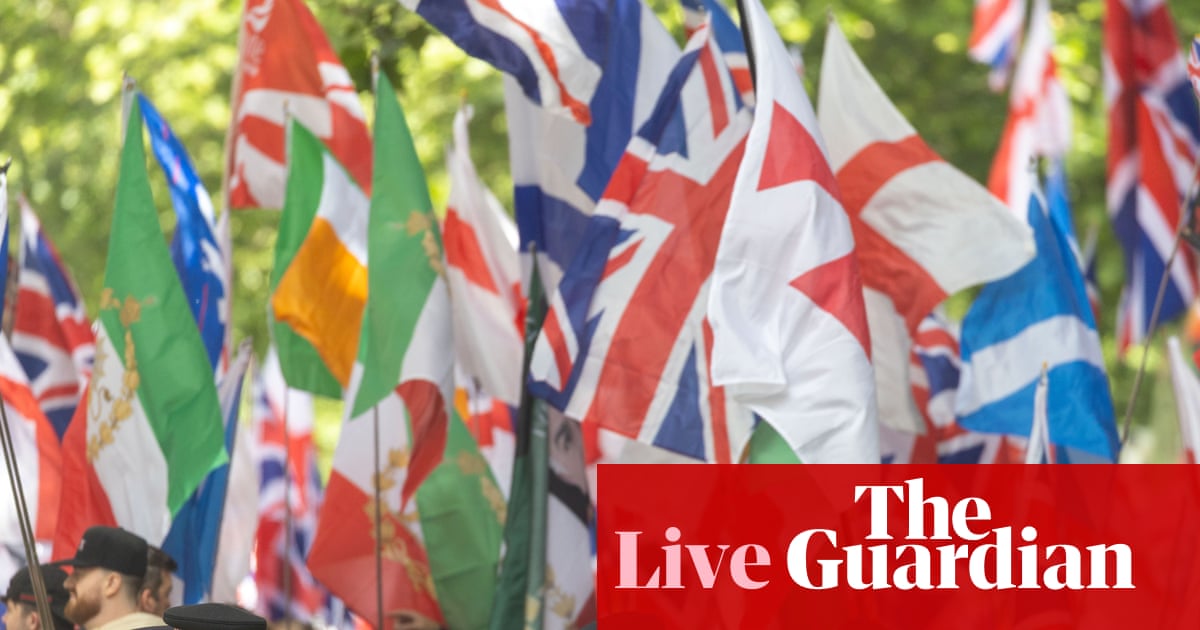
- Police deploy extra units to monitor far-right and pro-Palestine marches in London
- Tommy Robinson’s Unite the Kingdom rally draws thousands of supporters
- Pro-Palestine Nakba Day march also draws large crowd to central London
Thousands of demonstrators converged on central London Saturday for two polarizing marches, prompting a heavy police presence to prevent clashes between far-right activists and pro-Palestine groups. Police confirmed they were monitoring both events in real time, with additional officers deployed across key locations including Westminster and Whitehall.
Tommy Robinson, whose real name is Stephen Yaxley-Lennon, led the far-right Unite the Kingdom rally near Parliament Square, drawing supporters from across the UK. Robinson, a prominent far-right figure, has faced criticism for his inflammatory rhetoric and past convictions. Meanwhile, the annual Nakba Day march commemorated the 1948 displacement of Palestinians and drew counter-protesters from both sides of the debate.
Police presence and public safety
Scotland Yard confirmed all routes had been mapped and officers were on standby to respond to any disturbances. Authorities urged the public to avoid the areas around the marches to minimize disruption. The Metropolitan Police also shared updates via social media, reassuring residents that safety was their top priority.
A Hope Not Hate poll released Saturday found that 17% of Britons view Robinson positively, with support rising to 34% among men aged 25-34. The anti-fascist group, which tracks far-right activity, conducted the survey of 45,000 people. Robinson’s Unite the Kingdom movement has gained traction in recent months, drawing criticism from civil rights groups.
Nakba Day and its significance
The Nakba Day march, organized by Palestinian solidarity groups, marked the 76th anniversary of the 1948 Arab-Israeli war, which resulted in the displacement of hundreds of thousands of Palestinians. Protesters carried placards and chanted slogans calling for justice and an end to the Israeli occupation. The event has been held annually in London since the 1980s.
Broader implications
The simultaneous marches highlight deepening divisions in British society over issues of immigration, national identity, and foreign policy. Analysts warn that such events could fuel further polarization if not managed carefully. Community leaders have called for dialogue to bridge gaps between opposing groups.
Police are expected to maintain a visible presence through the evening as both marches wind down. Authorities have warned that anyone caught inciting violence will face immediate arrest. The situation remains fluid, with updates expected as the day progresses.
What You Need to Know
- Source: The Guardian
- Published: May 16, 2026 at 10:42 UTC
- Category: Politics
- Topics: #guardian · #politics · #thousands · #london · #palestine
Read the Full Story
This is a curated summary. For the complete article, original data, quotes and full analysis:
All reporting rights belong to the respective author(s) at The Guardian. GlobalBR News summarizes publicly available content to help readers discover the most relevant global news.
Curated by GlobalBR News · May 16, 2026
Related Articles
🇧🇷 Resumo em Português
Dezenas de milhares de pessoas tomaram as ruas de Londres neste sábado em duas marchas paralelas que expuseram a crescente polarização política no Reino Unido, enquanto a polícia britânica mobilizou um esquema reforçado de segurança para evitar confrontos entre manifestantes de extrema-direita e ativistas pró-Palestina.
A cidade se tornou um palco de tensões inéditas, com a marcha do ativista Tommy Robinson, figura controversa ligada ao movimento anti-imigração, e a tradicional comemoração do Nakba Day, que marca a expulsão de palestinos durante a criação de Israel em 1948. Enquanto a extrema-direita britânica explora o discurso anti-Islã e a insatisfação com a política migratória do governo, a comunidade palestina e seus apoiadores mantêm viva a memória de décadas de conflito no Oriente Médio, transformando Londres em um ponto de ebulição de disputas ideológicas que reverberam globalmente.
O desdobramento dessas manifestações pode acirrar ainda mais os ânimos em um cenário europeu já abalado por ondas de protestos contra governos e pela escalada de violência em Gaza, deixando claro que o debate sobre identidade, soberania e direitos humanos seguirá dominando a agenda política internacional nos próximos meses.
🇪🇸 Resumen en Español
Miles de personas se congregaron este sábado en las calles de Londres para participar en dos grandes marchas que reflejaron la creciente polarización social en Reino Unido: una convocada por el activista de extrema derecha Tommy Robinson y otra en apoyo a Palestina con motivo del Día de la Nakba. Los dispositivos policiales desplegados, reforzados tras los disturbios de semanas anteriores, intentaron evitar el choque entre ambos grupos, que portaban banderas y consignas opuestas.
La coyuntura no es casual: la tensión entre el auge de movimientos ultraderechistas y el cuestionamiento creciente hacia la política israelí en Gaza ha avivado el debate sobre la libertad de expresión y los límites de la protesta en Europa. Para los hispanohablantes, este escenario evoca recuerdos de oleadas migratorias y conflictos identitarios en sus propios países, donde la ultraderecha también gana terreno mientras el conflicto palestino suscita solidaridades transnacionales. La cobertura mediática de estos eventos subraya cómo las divisiones globales se replican en las calles, obligando a las democracias a buscar un frágil equilibrio entre el orden público y los derechos civiles.
The Guardian
Read full article at The Guardian →This post is a curated summary. All rights belong to the original author(s) and The Guardian.
Was this article helpful?

Discussion