Trump leads 16 CEOs including Musk and Huang to China for Xi Jinping talks on trade and business deals.
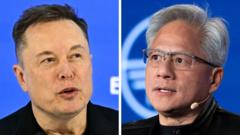
- Trump brings 16 US CEOs to China for Xi Jinping talks
- CEOs include Elon Musk and Nvidia’s Jensen Huang
- Trip follows recent US-China trade negotiations
President Donald Trump arrived in China Friday with sixteen top US executives, including Tesla CEO Elon Musk and Nvidia founder Jensen Huang, for high-stakes meetings with Chinese President Xi Jinping. The delegation represents a broad cross-section of American industry, including technology, automotive and finance firms, aiming to strengthen commercial ties amid ongoing trade discussions. The visit follows months of negotiations that stalled over tariffs and market access issues, with both sides seeking breakthroughs in sectors critical to future growth.
High-profile CEOs signal serious business focus
The presence of Musk and Huang underscores the seriousness of the economic agenda. Musk, whose companies operate globally, has long advocated for expanded access to China’s electric vehicle and energy markets. Huang, whose Nvidia designs advanced AI chips, has pushed for regulatory clarity in China’s tech sector. Their inclusion sends a signal to Beijing that US business leaders are ready to invest heavily if conditions improve. Other executives represent companies like Apple, Qualcomm and JPMorgan Chase, reflecting a wide industry footprint.
US officials described the trip as part of a broader push to rebalance trade relations after years of friction. The White House said the delegation would focus on investment, intellectual property protections and regulatory barriers that have hindered US firms in China. While no major deals have been announced yet, a senior administration official told reporters the visit could lay the groundwork for future agreements, including potential joint ventures in semiconductors and clean energy.
China signals cautious cooperation ahead of talks
Chinese state media reported Xi Jinping welcomed the US delegation and expressed hope for “pragmatic cooperation” that benefits both nations. However, analysts note lingering tensions over US export controls on advanced technology and China’s industrial subsidies remain unresolved. The meeting comes as both countries face pressure to de-escalate trade tensions ahead of upcoming global summits.
The trip also includes stops in Shanghai and Shenzhen, key hubs for technology and manufacturing. Local officials have pledged streamlined approvals for US investments, though skepticism remains among foreign business groups about enforcement. Some executives on the trip told reporters they expected only incremental progress but stressed the symbolic importance of high-level dialogue after years of strained relations.
Broader implications for global markets
Financial markets reacted cautiously to news of the visit, with analysts warning that even symbolic progress could ease investor anxiety. The S&P 500 and Nasdaq edged higher Friday morning on reports of constructive talks in Beijing. Still, many investors remain cautious, citing unresolved disputes over subsidies, cybersecurity and market access. The outcome of this trip could influence future US trade policy toward China and set the tone for broader geopolitical relations in Asia.
Looking ahead, the White House said follow-up meetings would be scheduled in the coming months to track progress on any agreements made. Meanwhile, the CEOs plan to hold private discussions with Chinese counterparts to explore partnership opportunities. The trip’s success may hinge on whether both sides can move beyond rhetoric to deliver tangible results—something neither has achieved consistently in recent years.
What You Need to Know
- Source: BBC News
- Published: May 13, 2026 at 07:10 UTC
- Category: Business
- Topics: #bbc · #business · #economy · #politics · #government · #elon-musk
Read the Full Story
This is a curated summary. For the complete article, original data, quotes and full analysis:
All reporting rights belong to the respective author(s) at BBC News. GlobalBR News summarizes publicly available content to help readers discover the most relevant global news.
Curated by GlobalBR News · May 13, 2026
Related Articles
- IDEO’s human-centered design faces AI challenge as clients cut costs
- How Trump’s ‘unusual’ brokerage account traded around his own market-moving decisions—selling hyperscalers and buying energy stocks during the war
🇧🇷 Resumo em Português
O presidente dos Estados Unidos, Donald Trump, desembarcou na China acompanhado por um seleto grupo de 16 CEOs de gigantes globais, como Elon Musk (Tesla) e Jensen Huang (Nvidia), para selar acordos comerciais bilionários em um momento crucial para as relações sino-americanas. A visita, que promete reaquecer a parceria econômica entre as duas maiores economias do mundo, chega em um cenário de tensões comerciais recentes e busca redefinir o fluxo de investimentos e tecnologia entre os países.
Para o Brasil, que mantém uma relação comercial complexa com ambos os gigantes, a movimentação americana tem reflexos diretos. O país sul-americano, que exporta commodities como soja e minério de ferro para a China e importa bens industrializados dos EUA, pode sentir os efeitos de uma eventual aproximação comercial entre Washington e Pequim — seja na formação de novos acordos que influenciem preços globais, seja na concorrência por mercados estratégicos. Além disso, a presença de líderes como Musk, cujo foco em energia limpa e veículos elétricos alinha-se aos interesses brasileiros em diversificar sua matriz energética, abre espaço para possíveis parcerias tecnológicas ou investimentos no setor.
A próxima rodada de negociações, marcada para os próximos dias, deve revelar se os EUA e a China conseguem superar divergências históricas em troca de benefícios econômicos mútuos — um movimento que, inevitavelmente, reverberará no comércio exterior brasileiro.
🇪🇸 Resumen en Español
El magnate Donald Trump ha reunido a dieciséis de los CEO más influyentes de Estados Unidos, entre ellos Elon Musk y Jensen Huang, para acompañarle en una gira comercial por China con el objetivo de estrechar lazos económicos con el gigante asiático. La comitiva, que incluye a los máximos dirigentes de empresas como Tesla, Nvidia y Boeing, busca cerrar acuerdos millonarios en un escenario marcado por las tensiones comerciales previas entre ambas potencias.
El viaje se produce en un momento crítico, tras años de aranceles y disputas que han afectado a sectores clave como la tecnología y la automoción, donde China es un mercado esencial. Para los lectores hispanohablantes, especialmente en Latinoamérica, el encuentro subraya la importancia de China como socio comercial y la necesidad de que Estados Unidos recupere su influencia en la región asiática. Además, refleja cómo las decisiones geoeconómicas entre ambas potencias pueden repercutir en los precios globales, desde semiconductores hasta aviones, y en las estrategias de inversión de las multinacionales con intereses en ambos continentes.
BBC News
Read full article at BBC News →This post is a curated summary. All rights belong to the original author(s) and BBC News.
Was this article helpful?


Discussion