Hezbollah’s drone attacks on Israel now use fibre-optic guidance for more accurate strikes.
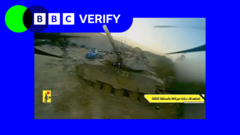
- Hezbollah released footage of drone strikes using fibre-optic guidance
- Drones now carry smaller, more precise guided munitions
- Israel reports increased drone incursions near the northern border
BBC Verify analyzed over 50 videos showing fibre-optic guided drone attacks by Hezbollah Hezbollah, the Lebanese armed group, against Israel. The footage, posted on social media and verified by BBC journalists, shows drones dropping munitions with pinpoint accuracy. Analysts say this marks a shift from earlier drone strikes, which often relied on unguided rockets or larger payloads with less precision. The new tactic suggests Hezbollah is improving its targeting, likely to maximize damage while minimizing civilian casualties on both sides of the border. The group has used drones against Israel since the 1990s, but these videos show a clear evolution in their methods. Experts note the fibre-optic guidance allows real-time adjustments during flight, making the drones harder to intercept. “This is a tactical upgrade,” said one regional security analyst. “It’s not just about hitting targets—it’s about hitting the right spots.” Israel’s military has reported a rise in drone incursions near its northern border in recent months. The uptick coincides with escalating tensions between Hezbollah and Israeli forces. In July, the Israeli army said it intercepted multiple drones attempting to cross into its territory. The drones were reportedly carrying explosives, though none detonated before being shot down. Hezbollah has not commented on the latest footage but has previously claimed responsibility for drone operations targeting Israeli military sites. ## Hezbollah’s drone program grows more sophisticated The fibre-optic guidance system seen in these videos is a marked improvement over earlier models. Older drones relied on pre-programmed flight paths or simple radio controls, which made them easier to jam or shoot down. The new system uses a thin fibre-optic cable to transmit live video and control signals between the drone and its operator. This allows for real-time adjustments, even if the drone’s signal is jammed. The munitions being dropped are also smaller and more precise. Earlier Hezbollah drone strikes often used repurposed anti-tank weapons or homemade explosives, which caused collateral damage. The newer payloads appear to be modified versions of standard military grenades or mortar rounds, designed to minimize unintended harm. ## Israel adapts to the drone threat Israel has struggled to counter Hezbollah’s drone threat in the past. Traditional anti-aircraft systems like the Iron Dome are designed for rockets and missiles, not slow-moving drones. The Israeli military has deployed new radar systems and electronic warfare tools to detect and disrupt drone operations, but the fibre-optic guidance makes some of these countermeasures less effective. In response, Israel has increased its use of armed drones and fighter jets to patrol the northern border. The military has also warned civilians in border areas to stay vigilant, as Hezbollah has occasionally used drones to conduct surveillance before launching attacks. The latest footage shows drones flying at low altitudes, likely to avoid radar detection. Some videos capture the moment of impact, with explosions hitting specific structures—often military outposts or observation posts. Analysts say this suggests Hezbollah is using the drones not just for harassment but as part of a broader strategy to pressure Israel. ## What happens next? The release of these videos is likely a message from Hezbollah to Israel and its allies. By showcasing its upgraded drone capabilities, the group is signaling it can inflict damage without resorting to full-scale war. For Israel, the videos underscore the need for better counter-drone technology. The military has already begun testing new systems, including lasers and AI-driven interception tools. But experts warn that the drone threat won’t disappear overnight. Hezbollah’s drone program is just one piece of a larger conflict that has simmered for decades. Until both sides find a way to de-escalate, the skies over southern Lebanon and northern Israel will remain a battleground.
What You Need to Know
- Source: BBC News
- Published: May 16, 2026 at 23:10 UTC
- Category: World
- Topics: #bbc · #world-news · #international · #war · #drones · #military
Read the Full Story
This is a curated summary. For the complete article, original data, quotes and full analysis:
All reporting rights belong to the respective author(s) at BBC News. GlobalBR News summarizes publicly available content to help readers discover the most relevant global news.
Curated by GlobalBR News · May 16, 2026
Related Articles
- 🎉 250 Articles in World!
- Zimbabwe’s diaspora reshapes real estate and farming investment trends
- 🎉 250 Articles in World!
🇧🇷 Resumo em Português
Um novo capítulo na tensão entre Israel e o Hezbollah libanês foi aberto com a revelação de vídeos que mostram drones cada vez mais sofisticados sendo usados pelo grupo para ataques precisos contra alvos israelenses. As imagens, analisadas pela BBC Verify, revelam um avanço notável nas táticas do Hezbollah, que passou a empregar métodos de guiagem por fibra óptica para aumentar a acurácia de seus drones, uma evolução que coloca em xeque a capacidade de defesa israelense.
O uso de drones com controle por fibra óptica representa uma virada estratégica, pois permite correções em tempo real durante o voo, dificultando a interceptação pelos sistemas antimísseis de Israel, como o Iron Dome. Para o Brasil, que mantém relações complexas com o Oriente Médio — especialmente por sua comunidade árabe e interesses comerciais na região —, o desenvolvimento dessas tecnologias de guerra assimétrica é um alerta sobre como conflitos distantes podem ganhar contornos cada vez mais tecnológicos e imprevisíveis. Além disso, a situação reacende debates sobre a segurança de fronteiras e a proteção de infraestruturas críticas em um mundo cada vez mais conectado por drones e ciberameaças.
O próximo passo deve ser monitorado de perto por especialistas em segurança internacional, pois a escalada no uso de drones armados pelo Hezbollah pode redefinir as regras do jogo no confronto com Israel, com possíveis reflexos em outros conflitos regionais.
🇪🇸 Resumen en Español
Un análisis de imágenes difundidas por la BBC revela cómo Hezbolá ha perfeccionado sus tácticas con drones para atacar Israel, demostrando una capacidad operativa en constante evolución. Los vídeos filtrados muestran el uso de drones equipados con sistemas de guiado por fibra óptica, una tecnología que permite mayor precisión en los ataques y dificulta las contramedidas israelíes.
La aparición de estos drones con fibra óptica subraya no solo el avance militar de Hezbolá, respaldado por Irán, sino también la creciente sofisticación de los conflictos en la región. Para los lectores hispanohablantes, este desarrollo plantea interrogantes sobre la eficacia de los sistemas de defensa israelíes y la capacidad de grupos armados no estatales para adaptarse rápidamente a los avances tecnológicos. Además, refleja cómo las tensiones en Oriente Medio escalan más allá de los enfrentamientos convencionales, incorporando herramientas de guerra asimétrica que desafían las estrategias tradicionales de seguridad.
BBC News
Read full article at BBC News →This post is a curated summary. All rights belong to the original author(s) and BBC News.
Was this article helpful?


Discussion