AI and the Rubin Observatory may rewrite cosmic distance measurements using Type 1a supernovas to better understand dark energy.
- AI will analyze Rubin Observatory’s supernova data to refine cosmic distance measurements
- Type 1a supernovas act as ‘standard candles’ for measuring the universe’s expansion
- Dark energy’s role in cosmic expansion remains one of astronomy’s biggest unsolved questions
Astronomers are turning to artificial intelligence and the upcoming Vera C. Rubin Observatory to challenge long-held assumptions about the universe’s expansion. The observatory, set to begin operations in 2025, will survey the entire southern sky every few nights, capturing vast amounts of data on Type 1a supernovas—exploding stars that serve as cosmic yardsticks for measuring distances across the universe.
For decades, scientists have relied on these supernovas as ‘standard candles’ to track the universe’s accelerating expansion, attributed to dark energy. But new AI tools could reveal flaws in this model, uncovering unknown variables that may reshape our understanding of the cosmos. Researchers at the Space Telescope Science Institute and NOIRLab are leading the effort to test these assumptions using data from the Rubin Observatory’s Legacy Survey of Space and Time (LSST).
Rethinking cosmic ‘rulers’
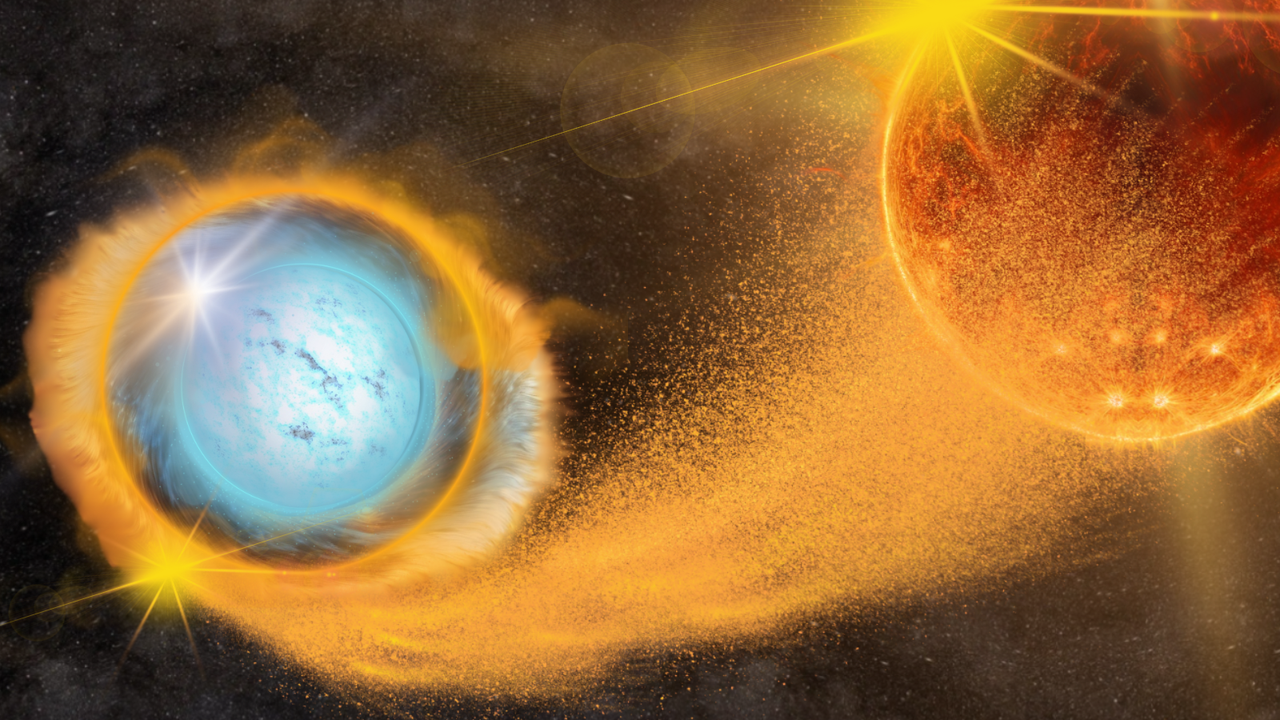
Type 1a supernovas have been the gold standard for cosmic distance measurements because their brightness can be predicted with remarkable consistency. When a white dwarf star in a binary system accumulates too much mass from its companion, it detonates in a predictable explosion. By comparing the observed brightness of these supernovas to their known intrinsic luminosity, astronomers calculate distances across billions of light-years.
However, recent studies suggest subtle variations in these explosions may distort distance measurements. The Rubin Observatory’s LSST will collect data on tens of thousands of Type 1a supernovas, far exceeding previous surveys. AI algorithms will sift through this data to identify patterns and anomalies that could indicate missing pieces in the dark energy puzzle.
The dark energy dilemma
Dark energy, the mysterious force driving the universe’s accelerating expansion, remains one of the biggest unsolved questions in physics. First discovered in 1998 through observations of distant supernovas, its nature is still unknown. Current models rely heavily on Type 1a supernovas as anchors, but if even small errors exist in these measurements, they could skew our understanding of dark energy’s strength and behavior over time.
The Rubin Observatory’s unprecedented scale could help resolve this. Its decade-long survey will generate a 3D map of the cosmos, charting the positions and brightness of billions of galaxies and millions of supernovas. By cross-referencing this data with AI-driven analysis, researchers hope to detect discrepancies that hint at new physics beyond the current model.
What’s next for dark energy research
The first light from the Rubin Observatory is expected in 2024, with full operations beginning in 2025. Early data from the LSST will immediately be fed into AI pipelines designed to flag unusual supernova behaviors. If successful, this approach could lead to more precise distance measurements, potentially revealing whether dark energy is constant over time or evolving.
This work could also uncover unexpected phenomena, such as ‘cannibal stars’—white dwarfs that consume their stellar companions in violent mergers—which may mimic or obscure Type 1a supernovas. Identifying these impostors is critical to ensuring the accuracy of cosmic distance scales. Ultimately, the findings may force scientists to rewrite the rules of cosmology, offering a clearer picture of the universe’s fate.
What You Need to Know
- Source: Space.com
- Published: May 12, 2026 at 18:00 UTC
- Category: Science
- Topics: #space · #astronomy · #nasa · #food · #cooking · #recipe
Read the Full Story
This is a curated summary. For the complete article, original data, quotes and full analysis:
All reporting rights belong to the respective author(s) at Space.com. GlobalBR News summarizes publicly available content to help readers discover the most relevant global news.
Curated by GlobalBR News · May 12, 2026
Related Articles
- Vast, Untapped Source of Lithium Found in The US Could Last 300 Years
- Strange Metal From Beyond Our World Spotted in an Ancient Treasure Stash
🇧🇷 Resumo em Português
Cientistas brasileiros e internacionais unem inteligência artificial e o futuro Observatório Vera C. Rubin para desvendar um dos maiores mistérios do cosmos: a energia escura. Utilizando supernovas do Tipo Ia como “réguas cósmicas”, a pesquisa promete revolucionar nossa compreensão sobre a expansão acelerada do universo, um fenômeno que intriga a ciência há décadas.
O Brasil, que já contribui com projetos astronômicos como o telescópio Soar, pode se beneficiar diretamente dessa colaboração, especialmente por meio de dados abertos e colaborações internacionais. A relevância da descoberta transcende fronteiras, já que a energia escura compõe cerca de 68% do universo, segundo modelos cosmológicos atuais. Além disso, o uso de IA no processamento de imagens astronômicas abre novas possibilidades para a pesquisa brasileira em astrofísica e ciência de dados.
Com a primeira luz do Observatório Rubin prevista para 2025, os próximos anos serão decisivos para confirmar ou refinar teorias sobre a energia escura e seu papel na evolução do universo.
🇪🇸 Resumen en Español
Un equipo internacional de científicos ha unido inteligencia artificial y el futuro Observatorio Vera C. Rubin para redefinir el estudio de la energía oscura mediante las explosiones de estrellas conocidas como supernovas de tipo Ia. Estas estrellas en colapso, consideradas “candelas estándar” por su brillo predecible, podrían revelar nuevos secretos sobre la aceleración del universo, un misterio que desafía la física desde su descubrimiento en 1998.
El proyecto aprovechará la cámara LSST del observatorio chileno, capaz de escanear todo el cielo cada pocas noches, combinada con algoritmos de aprendizaje automático para analizar miles de supernovas con una precisión sin precedentes. Para la comunidad hispanohablante, especialmente en Latinoamérica donde se ubica el observatorio, esto significa no solo un avance científico sin igual, sino también una oportunidad para impulsar el desarrollo tecnológico local y fomentar vocaciones en astronomía y ciencia de datos. Además, al tratarse de un esfuerzo global con participación de instituciones españolas, refuerza el papel de la región en la vanguardia de la exploración cósmica.
Space.com
Read full article at Space.com →This post is a curated summary. All rights belong to the original author(s) and Space.com.
Was this article helpful?



Discussion