Russia’s 2014–2015 Donbas campaign shows small, mobile units with artillery and drones can win wars without large invasions.
- Russia used hybrid tactics in Donbas to avoid direct invasion while achieving goals.
- Small, well-armed units with artillery and drones outmaneuvered larger Ukrainian forces.
- Lessons apply to Ukraine’s current war and future conflicts worldwide.
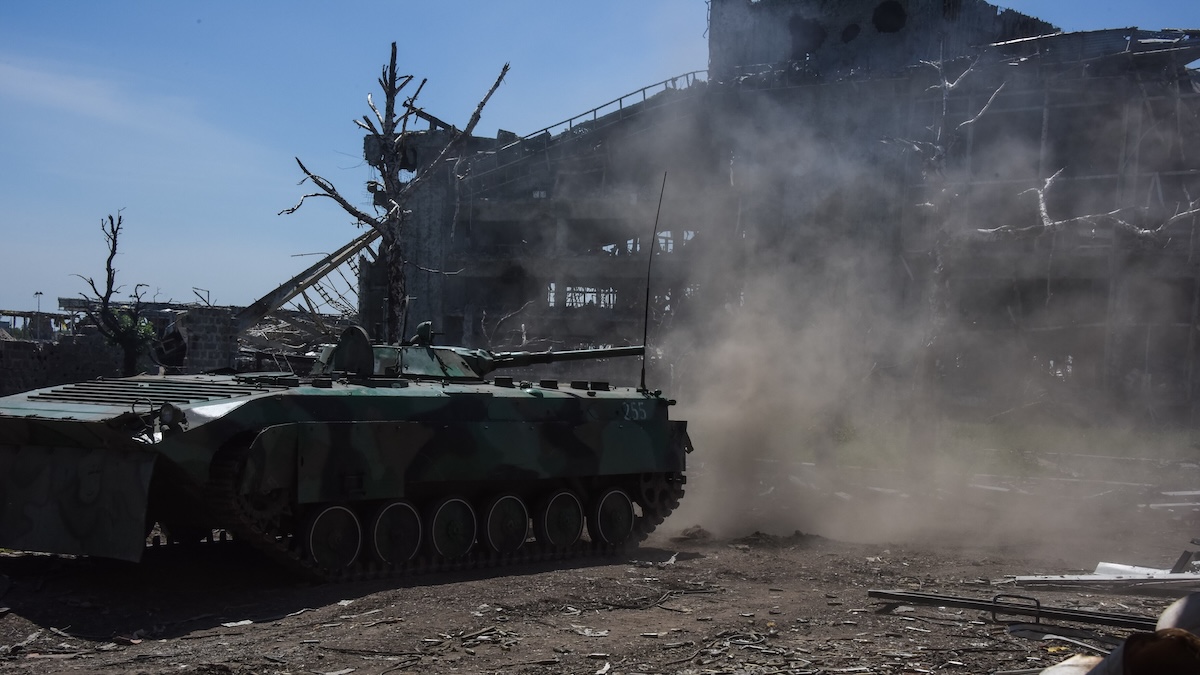
Russia didn’t need tanks rolling into Ukraine to win in Donbas in 2014–2015—it used a mix of local proxies, artillery barrages, and drone surveillance to carve out control. The campaign showed how hybrid warfare can deliver strategic wins without the cost of a full-scale invasion. Small, well-armed units, often disguised as local militias, used mobility and precision strikes to push back larger Ukrainian forces. Artillery became the decisive weapon, not tanks or infantry charges. Drones like Russia’s Orlan-10 flew overhead, guiding artillery strikes with real-time footage, something Ukraine struggled to match early on. By 2015, the frontlines had frozen in place, but Russia had achieved its goal: keeping Donetsk and Luhansk out of Kyiv’s control without absorbing them outright. It was a war won on the cheap, with deniable forces and overwhelming firepower in key sectors.
The Donbas campaign wasn’t just about brute force. Russia’s forces adapted fast, using decentralized small units that could strike, then melt into the countryside. They avoided large, predictable formations that drones or artillery could target. This wasn’t the Cold War’s massed tank assaults—it was a war of platoons and batteries, where a few dozen soldiers with radios and mortars could hold territory for weeks. Ukraine’s early attempts to counter with larger, traditional units backfired. Their forces were too slow, too visible, and lacked the coordination to match Russia’s firepower. The lesson? In modern war, size matters less than agility. A squad with a drone feed and a howitzer can change the battlefield faster than a brigade stuck in traffic on a dirt road.
Why artillery became the king of the Donbas
Artillery decided fights in Donbas, not infantry charges or air strikes. Russia’s Grad and Uragan rocket launchers fired salvos of 40 rockets in under a minute, blanketing Ukrainian positions. Ukrainian artillery, often older Soviet systems, couldn’t match the volume or precision. The difference wasn’t just firepower—it was coordination. Russian drones like the Orlan-10 fed targeting data directly to artillery batteries, cutting the time from detection to destruction from hours to minutes. Ukraine eventually caught up by adopting NATO-style artillery tactics, but in 2014–2015, Kyiv was playing catch-up. The Donbas showed that whoever controls the artillery race wins the war.
Drones weren’t just for spotting either. Russia used them to adjust artillery fire in real time, turning them into a force multiplier. Ukrainian forces had few counter-drone tools at first, leaving them blind to incoming barrages. By the time Kyiv secured Western drones like the Bayraktar TB2, the tide had already turned in Donbas. The lesson is clear: in wars like Donbas, airpower isn’t just fighter jets—it’s cheap, disposable drones guiding shells to targets. The U.S. and NATO spent decades perfecting stealth bombers; Russia proved that a $50,000 drone can do the job just as well for a fraction of the cost.
The role of local proxies and deniability
Russia didn’t invade Donbas with its own troops—at least not officially. Instead, it armed, trained, and backed local separatists, creating a force that looked like a civil war but was really a Russian operation. The “little green men” of Crimea in 2014 reappeared in Donbas as “volunteers” with Russian weapons and tactics. This hybrid approach let Moscow claim plausible deniability while achieving its goals. The strategy worked because it exploited Ukraine’s weak governance in the region. Without a strong state presence, local militias filled the void, and Russia’s support made them formidable. It’s a playbook that’s been reused in Syria, Libya, and now Ukraine—arming proxies to fight without triggering a direct response.
But the proxy strategy had limits. The separatist forces weren’t disciplined soldiers—they were often undisciplined, brutal, and prone to infighting. Russia had to step in repeatedly to prop them up, sending its own troops and advisors when things got messy. By 2015, the Donbas front had stabilized, but the cost to the separatists was high. They relied on Russia for everything: weapons, logistics, even paychecks. The lesson? Hybrid wars are cheap in the short term, but they require constant investment to sustain. When the fighting drags on, the veneer of deniability wears thin.
What the Donbas campaign means for Ukraine today
Ukraine’s war since 2022 has shown how much it learned from its Donbas mistakes—and how much it still struggles with them. Kyiv now uses drones, precision artillery, and small, mobile units modeled after Russia’s 2014–2015 tactics. Its drone warfare, especially with First-Person View (FPV) drones, has become a key advantage, allowing Ukraine to target Russian positions with deadly accuracy. But Ukraine still faces the same challenges it did in Donbas: a lack of airpower, slow artillery production, and the need to coordinate across a vast front. The Donbas campaign proved that small units with the right tools can win battles, but winning a war requires more than just tactics—it needs strategy, supply chains, and industrial capacity.
NATO’s response to Donbas has also been telling. The alliance realized that hybrid wars require hybrid responses. It’s why Ukraine now gets Western drones, HIMARS rockets, and NATO-style artillery tactics. But the Donbas campaign also showed that quantity matters. Russia’s ability to throw shells at Ukraine by the millions has forced Kyiv to prioritize artillery over other needs. The lesson for NATO? Modern wars aren’t won by a single weapon system—they’re won by a system of systems: drones, artillery, electronic warfare, and infantry working together. The Donbas showed the future, and it’s messy, decentralized, and dominated by firepower.
The broader implications are even bigger. The Donbas campaign proved that the era of large, massed armies is over. Wars are now won by small units with the right tools, fighting in a decentralized way. The U.S. and its allies spent years focused on stealth bombers and precision missiles, but Russia showed that a cheap drone and a howitzer can do the same job. For policymakers, the lesson is clear: if you want to win wars in the 21st century, you need to invest in drones, artillery, and small-unit tactics—not just tanks and fighter jets. The Donbas wasn’t a fluke. It was a preview of how future wars will be fought.
What You Need to Know
- Source: War on the Rocks
- Published: April 17, 2026 at 07:15 UTC
- Category: War
- Topics: #defense · #military · #geopolitics · #war · #conflict · #winning
Read the Full Story
This is a curated summary. For the complete article, original data, quotes and full analysis:
All reporting rights belong to the respective author(s) at War on the Rocks. GlobalBR News summarizes publicly available content to help readers discover the most relevant global news.
Curated by GlobalBR News · April 17, 2026
Related Articles
- Wembanyama’s Spurs reach Western finals, Pistons stay alive in NBA playoffs
- 🎉 250 Articles in War!
- 🎉 100 Articles in War!
🇧🇷 Resumo em Português
A Rússia demonstrou como a guerra assimétrica e a combinação de forças irregulares com unidades convencionais podem desestabilizar regiões inteiras, uma aula de táticas que ecoa até hoje nas frentes de batalha da Ucrânia. A campanha no Donbas entre 2014 e 2015, marcada pela utilização de “pequenos grupos operacionais” e apoio indireto a milícias locais, revelou uma nova face da guerra moderna: não necessariamente a do confronto direto entre exércitos, mas a da manipulação de conflitos internos com atores não estatais.
No Brasil, país com uma das maiores extensões territoriais do mundo e que há décadas debate a modernização de suas Forças Armadas, o caso do Donbas serve como um alerta estratégico. A experiência russa, que combinou desinformação, apoio a grupos separatistas e uso limitado de tropas regulares, expõe fragilidades em nações que precisam lidar com ameaças híbridas — como ciberataques, guerras de informação e conflitos prolongados em fronteiras porosas. Para a Otan e aliados ocidentais, o episódio reforça a importância de investimentos em inteligência, defesa cibernética e treinamento de forças especiais, enquanto o País precisa avaliar como essas lições se aplicam à sua própria geopolítica, especialmente diante de tensões na Amazônia e em fronteiras com vizinhos instáveis.
O fechamento dessa página, contudo, ainda depende de como o Brasil e seus parceiros regionais irão adaptar suas doutrinas militares para um cenário onde as guerras não são mais travadas apenas em campos de batalha tradicionais, mas também nas redes sociais e nas entrelinhas dos acordos internacionais.
🇪🇸 Resumen en Español
Rusia logró consolidar su dominio en el Donbás entre 2014 y 2015 mediante una combinación letal de tácticas asimétricas y el uso de fuerzas locales apoyadas por artillería y unidades rusas encubiertas, un modelo que redefinió el arte de la guerra moderna.
El conflicto en el este de Ucrania demostró que, incluso en la era de los drones y los misiles de precisión, los combates terrestres y la agilidad de pequeñas unidades siguen siendo decisivos, un aprendizaje que Ucrania y la OTAN estudian con urgencia. Para España, con su experiencia en misiones de paz y su participación en la Alianza Atlántica, este episodio subraya la importancia de modernizar sus fuerzas terrestres y reforzar la cooperación con aliados europeos en un contexto de creciente tensión en Europa del Este. Las lecciones del Donbás no solo sirven para anticipar futuras amenazas, sino también para entender cómo los conflictos híbridos —donde se entrelazan guerra convencional, propaganda y ciberataques— pueden erosionar la estabilidad regional sin que medie una declaración formal de guerra.
War on the Rocks
Read full article at War on the Rocks →This post is a curated summary. All rights belong to the original author(s) and War on the Rocks.
Was this article helpful?


Discussion