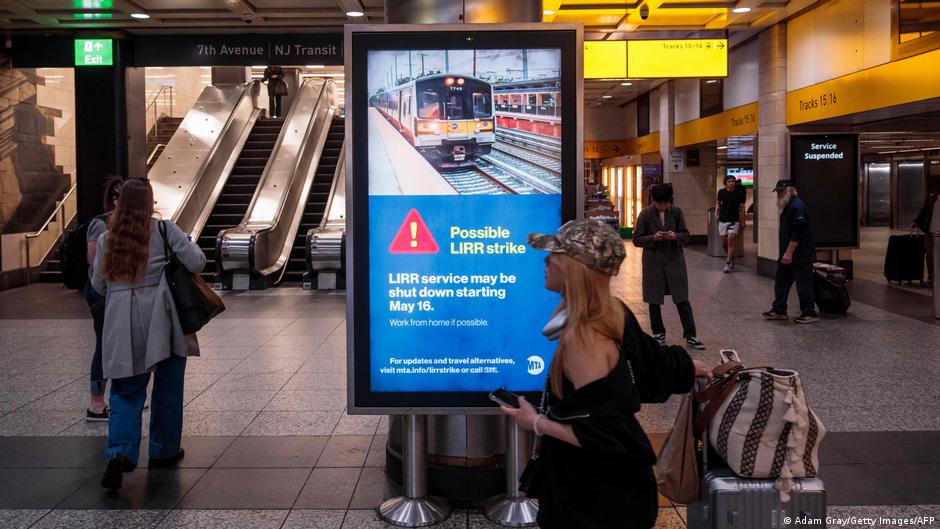
3,500 LIRR workers strike, halting 300,000 daily commuters after wage and healthcare talks with MTA collapse.
- Strike shuts down busiest US commuter rail system with 3,500 workers walking out
- First LIRR strike in 32 years disrupts 300,000 daily passengers
- Negotiations over pay raises and healthcare premiums stalled with MTA
Workers for New York’s Long Island Rail Road (LIRR) walked off the job Saturday, crippling the nation’s busiest commuter rail system and stranding nearly 300,000 daily passengers. The walkout by 3,500 union members—including engineers, machinists and signalmen—marks the first strike on the LIRR in more than three decades. The stoppage follows the collapse of negotiations between five unions and the Metropolitan Transportation Authority (MTA), which manages the system.
Governor Kathy Hochul urged commuters to work from home Saturday, warning that limited alternate transit options exist. The governor’s office stated the state is exploring contingency plans to restore service as quickly as possible. MTA officials confirmed no new talks are scheduled with the unions, signaling a prolonged disruption for riders who rely on the LIRR to connect Manhattan, Queens, Brooklyn and the Bronx with Long Island suburbs.
Union leaders say workers have gone three years without raises during stalled bargaining sessions. The International Brotherhood of Teamsters and the Brotherhood of Locomotive Engineers and Trainmen accuse the MTA of refusing fair wage increases while pushing higher healthcare premiums. Kevin Sexton, national vice president of the locomotive engineers’ union, called the gap between the two sides ‘far apart’ and said no immediate return to negotiations is planned.
LIRR strike disrupts daily life for Long Island commuters
The strike hits particularly hard in Nassau and Suffolk counties, where tens of thousands of workers depend on the LIRR for access to Manhattan jobs. Many commuters face long delays or cancellations on other transit modes like buses or subways, which are already strained during peak hours. The LIRR operates 726 weekday trains, serving 124 stations across a 117-mile network that stretches from Manhattan to the eastern tip of Long Island.
The MTA, a state agency, has warned that without service, traffic congestion on major highways like the Long Island Expressway and bridges to Manhattan will worsen. Commuters who typically use the LIRR for its speed and reliability now face uncertain travel times or costly alternatives. Local businesses, especially those near LIRR stations, also anticipate reduced foot traffic during the strike.
Governor Hochul activates emergency response amid strike
Hochul has directed state agencies to coordinate emergency response efforts, including increased bus service on key routes and coordination with regional transit authorities. The governor also emphasized that the state will not tolerate unlawful work stoppages that harm the economy and public safety. The MTA has stated it remains committed to resuming service but insists that any resolution must address fiscal sustainability, including healthcare costs that have risen sharply in recent years.
Analysts note that the strike could cost the regional economy millions per day in lost productivity and wages. The LIRR generates billions in annual revenue, and prolonged disruptions may force businesses to adjust operations or allow remote work for employees who cannot commute. Tourism-dependent areas on Long Island could also see reduced visitation without reliable rail access.
The last LIRR strike occurred in 1994 and lasted 12 days, costing the MTA an estimated $100 million. Since then, the system has expanded, and daily ridership has grown significantly. Union leaders have warned that if the current dispute is not resolved quickly, another prolonged walkout could follow similar economic impacts. Both sides remain far from agreement as the strike enters its first weekend, leaving commuters and businesses to brace for further uncertainty.
What You Need to Know
- Source: Deutsche Welle
- Published: May 16, 2026 at 09:33 UTC
- Category: World
- Topics: #europe · #world-news · #travel · #destinations · #long-island
Read the Full Story
This is a curated summary. For the complete article, original data, quotes and full analysis:
All reporting rights belong to the respective author(s) at Deutsche Welle. GlobalBR News summarizes publicly available content to help readers discover the most relevant global news.
Curated by GlobalBR News · May 16, 2026
Related Articles
- Eurovision 2024 faces scrutiny over Israel’s participation amid war
- US Justice Department preparing indictment against Raúl Castro
- US planning to criminally indict ex-Cuban leader Raúl Castro
🇧🇷 Resumo em Português
Um dia que começou como qualquer outro para 300 mil nova-iorquinos virou caos quando cerca de 4.000 trabalhadores da Long Island Rail Road (LIRR), principal ferrovia da cidade, cruzaram os braços em greve após o fracasso das negociações com a Metropolitan Transportation Authority (MTA). A paralisação, que entrou em vigor em plena quarta-feira, interrompeu o transporte de passageiros que dependem diariamente do sistema para ir ao trabalho, estudar ou simplesmente circular pela região metropolitana de Nova York, onde a LIRR é um dos pilares da mobilidade urbana.
A disputa salarial e a recusa da MTA em ceder às reivindicações dos funcionários — que incluem reajustes salariais e melhorias no plano de saúde — expõem as tensões crescentes em torno dos direitos trabalhistas nos Estados Unidos, especialmente em setores essenciais como o transporte público. Para o Brasil, o episódio serve como um alerta sobre os riscos de desequilíbrios em negociações semelhantes, que podem paralisar cidades inteiras e afetar milhões de pessoas, como já ocorreu em greves de metrôs e ônibus em grandes capitais como São Paulo e Rio de Janeiro. Além disso, a situação reforça a importância de políticas públicas que garantam condições justas de trabalho sem prejudicar a população dependente desses serviços.
Com a greve em curso e o governo de Nova York tentando mediar uma solução emergencial, a expectativa é de que as negociações sejam retomadas rapidamente, mas o estrago já está feito: viagens adiadas, prejuízos econômicos e a incerteza de quando tudo voltará ao normal.
🇪🇸 Resumen en Español
Un paro masivo en el tren de cercanías de Nueva York deja sin servicio a 300.000 viajeros diarios, paralizando uno de los sistemas de transporte más transitados de Estados Unidos.
La huelga de los trabajadores del Long Island Rail Road, que se suma a las tensiones laborales en el sector del transporte estadounidense, refleja las dificultades para cerrar acuerdos en materia salarial y prestaciones sanitarias. Para los hispanohablantes que residen en la zona —especialmente en comunidades como Queens o Brooklyn, donde el uso de este tren es clave—, la situación agrava la incertidumbre en sus desplazamientos cotidianos, desde ir al trabajo hasta acceder a servicios esenciales. Además, este conflicto subraya los desafíos más amplios que enfrentan los sistemas de transporte público en un país donde las inversiones en infraestructura suelen quedar relegadas frente a intereses privados.
Deutsche Welle
Read full article at Deutsche Welle →This post is a curated summary. All rights belong to the original author(s) and Deutsche Welle.
Was this article helpful?


Discussion