Trump sparks debate by easing pressure on China over human rights during Beijing summit.
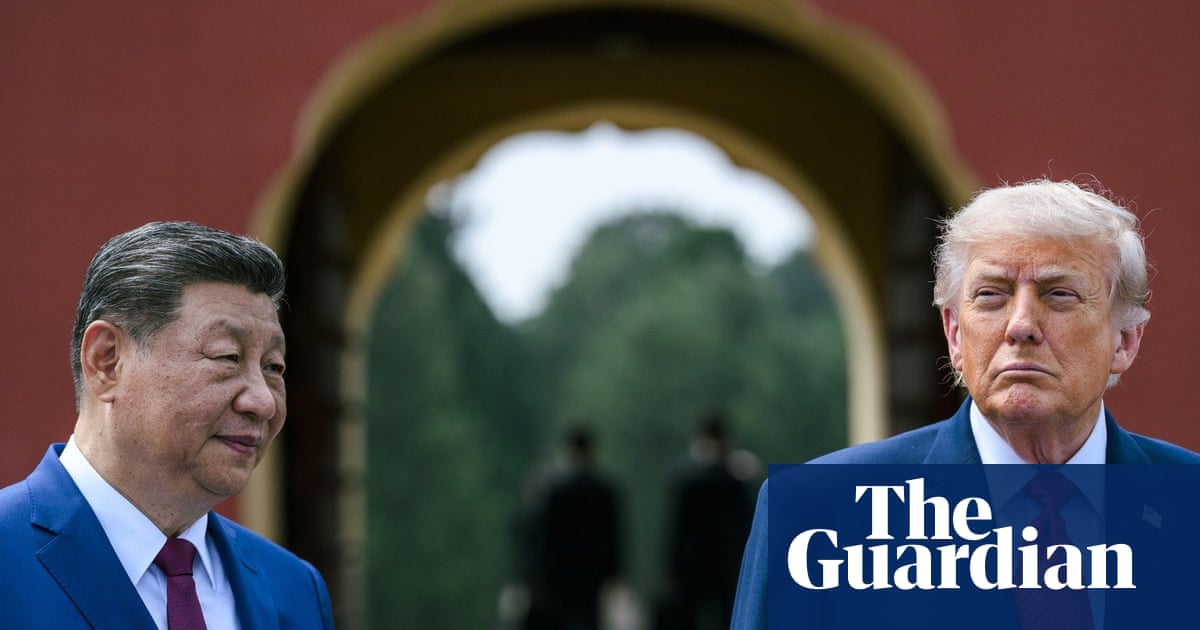
- Trump called human rights talks with China 'hard,' compared to freeing Comey
- U.S. diplomacy shift reflects Trump-era priorities under his administration
- China’s growing global confidence contrasts with past U.S. pressure on rights
Donald Trump’s recent comments on China’s human rights record during his Beijing visit signaled a stark departure from decades of U.S. policy. When asked if he would raise the case of Jimmy Lai, the jailed pro-democracy activist in Hong Kong, Trump responded with a dismissive comparison to James Comey, a former FBI director often criticized by the president. “It’s like saying to me, ‘If Comey ever went to jail, would you let him out?’ It might be a hard one for me,” Trump said. The remarks underscored a broader shift in U.S. diplomacy under his administration, prioritizing economic and strategic interests over human rights advocacy.
The transformation reflects both the changes within the U.S. under Trump and China’s rising confidence on the global stage. Past administrations, including those led by both Republicans and Democrats, routinely pressed Beijing on issues like free speech, religious freedom, and the treatment of ethnic minorities. However, Trump’s approach has often been transactional, focusing on trade deficits, North Korea, and regional security rather than public criticism of China’s domestic policies.
China’s growing assertiveness in international affairs has further complicated the dynamic. Under President Xi Jinping [https://en.wikipedia.org/wiki/Xi_Jinping], Beijing has expanded its influence through initiatives like the Belt and Road program and tightened control over territories like Hong Kong and Xinjiang. The country’s economic clout and diplomatic maneuvers have reduced the leverage other nations once held to challenge its policies on human rights.
Analysts argue that Trump’s reluctance to confront China on rights issues aligns with his broader skepticism of multilateral institutions and human rights frameworks. During his presidency, Trump withdrew the U.S. from the UN Human Rights Council in 2018, citing bias against Israel, and reduced funding for global human rights programs. His administration also avoided direct condemnation of China’s mass detention camps in Xinjiang, where an estimated 1 million Uyghurs and other Muslim minorities have been held in what critics call forced labor and reeducation programs.
Trump’s foreign policy priorities shift from rights to economics
Trump’s approach contrasts with predecessors like Barack Obama [https://en.wikipedia.org/wiki/Barack_Obama], who frequently linked trade agreements to human rights improvements. Obama administration officials regularly raised concerns about China’s crackdown on dissent, including the 2014 Umbrella Movement in Hong Kong and the 2008 Olympics crackdown in Tibet. The U.S. also imposed sanctions on Chinese officials over rights abuses, though these were often symbolic given China’s economic and political influence.
The current administration’s stance has drawn criticism from human rights groups and some lawmakers. “The U.S. has long positioned itself as a global leader on human rights, but this administration’s silence on China sends a dangerous message,” said Sophie Richardson, China director at Human Rights Watch. “It emboldens authoritarian regimes to act with impunity.” Republicans and Democrats in Congress have introduced bills to sanction Chinese officials over Xinjiang and Hong Kong, but the White House has not supported these measures.
What happens next for U.S.-China diplomacy
The shift in U.S. policy comes as China prepares for its third leadership reshuffle under Xi Jinping, expected to solidify his control over the Communist Party. The government has recently intensified efforts to suppress dissent, including passing a sweeping national security law for Hong Kong that criminalizes criticism of China’s central government. Meanwhile, the U.S. continues to pursue trade talks with Beijing, with the next round of negotiations expected later this year.
Experts warn that Trump’s approach could weaken America’s moral authority on the world stage while failing to secure long-term concessions from Beijing. “Human rights abuses in China won’t disappear because the U.S. stops talking about them,” said Elizabeth Economy, a senior fellow at the Council on Foreign Relations. “The question is whether this silence will lead to greater cooperation on other fronts—or simply embolden further repression.”
What You Need to Know
- Source: The Guardian
- Published: May 15, 2026 at 23:30 UTC
- Category: World
- Topics: #guardian · #world-news · #international · #politics · #government · #trump
Read the Full Story
This is a curated summary. For the complete article, original data, quotes and full analysis:
All reporting rights belong to the respective author(s) at The Guardian. GlobalBR News summarizes publicly available content to help readers discover the most relevant global news.
Curated by GlobalBR News · May 15, 2026
Related Articles
- Zimbabwe’s diaspora reshapes real estate and farming investment trends
- 🎉 250 Articles in World!
- Eurovision 2024 faces scrutiny over Israel’s participation amid war
🇧🇷 Resumo em Português
O ex-presidente dos EUA, Donald Trump, surpreendeu o mundo ao suavizar sua posição sobre as violações de direitos humanos na China, sinalizando uma guinada radical na diplomacia americana em relação a Pequim. Em meio às tensões comerciais e geopolíticas que há anos dominam as relações entre as duas maiores economias globais, a mudança de tom de Trump representa não apenas uma estratégia política interna, mas também um recado claro sobre prioridades internacionais — e o que isso significa para países como o Brasil, que navegam em um cenário de alianças cada vez mais voláteis.
Historicamente, os EUA lideraram discussões sobre direitos humanos no Conselho de Direitos Humanos da ONU e em fóruns internacionais, pressionando regimes como o chinês em questões como a repressão em Xinjiang, Hong Kong e a perseguição a minorias étnicas e religiosas. No entanto, a nova abordagem de Trump — alinhada a uma visão mais pragmática e menos ideológica — pode enfraquecer iniciativas globais de defesa da democracia, especialmente em um momento em que a China intensifica sua influência na América Latina e na África, regiões estratégicas para o Brasil. Para o governo brasileiro, que já enfrenta críticas por sua postura ambígua em direitos humanos, essa reconfiguração da política externa americana pode criar um vazio de liderança ou, pior, legitimar práticas autoritárias em troca de vantagens comerciais.
Se a estratégia de Trump vingar, o mundo poderá testemunhar uma nova era de diplomacia onde os direitos humanos cedem espaço a interesses econômicos — e o Brasil, como player regional, terá de decidir se segue essa corrente ou reforça seu compromisso com valores democráticos.
🇪🇸 Resumen en Español
La diplomacia de Donald Trump hacia China da un giro estratégico al suavizar su postura sobre los derechos humanos, priorizando intereses económicos y geopolíticos sobre principios democráticos. Este viraje no solo redefine la relación bilateral, sino que también refleja un cambio más amplio en la política exterior de Washington, donde el pragmatismo gana terreno frente a las críticas históricas.
La relajación de la retórica sobre derechos humanos en China subraya una estrategia estadounidense centrada en contener el ascenso de Pekín sin confrontaciones innecesarias, especialmente en temas comerciales y tecnológicos. Para los hispanohablantes, este enfoque plantea interrogantes sobre la coherencia de Occidente en la defensa de valores universales, donde el equilibrio entre poder y principios parece inclinarse hacia el primero. Además, podría influir en la posición de países latinoamericanos, muchos de ellos aliados tradicionales de EE.UU., que podrían verse presionados a alinear sus políticas exteriores con este nuevo realismo diplomático.
The Guardian
Read full article at The Guardian →This post is a curated summary. All rights belong to the original author(s) and The Guardian.
Was this article helpful?



Discussion