Protesters clashed with police in Vienna over Israel’s Eurovision 2026 participation during the grand final.
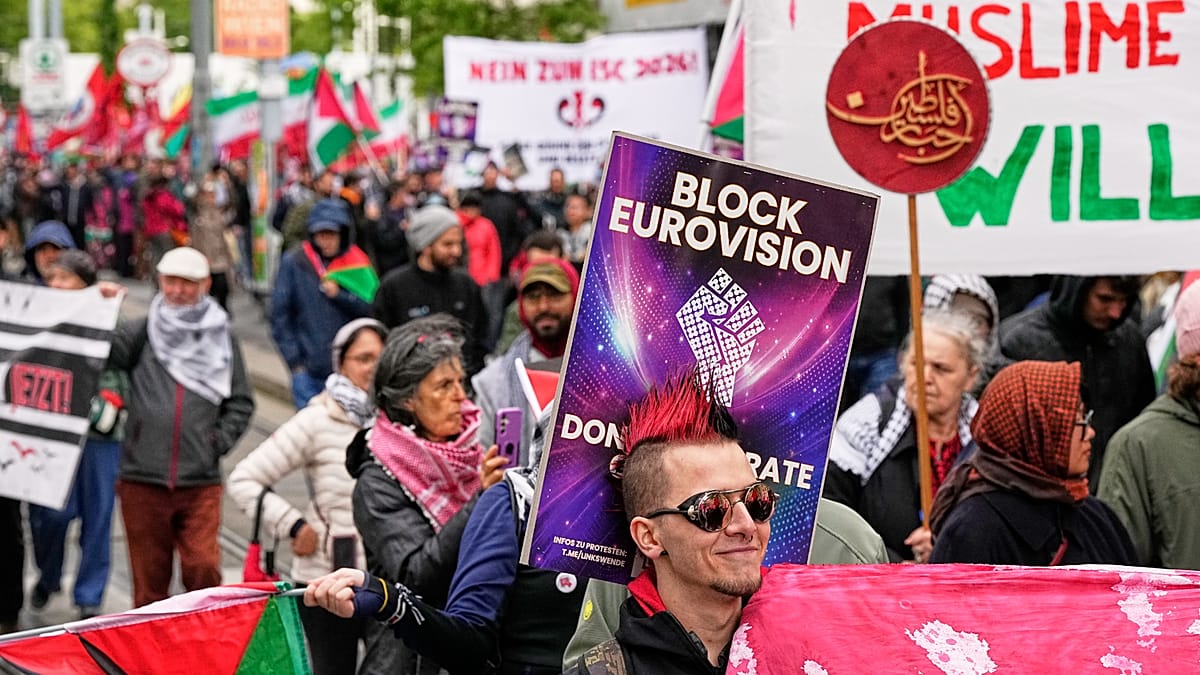
- Protesters clashed with police in Vienna over Israel’s Eurovision 2026 participation
- Security tightened at Wiener Stadthalle ahead of grand final
- Tensions linked to Gaza war fueled demonstrations
Hundreds of demonstrators took to the streets of Vienna on Saturday to protest Israel’s inclusion in Eurovision 2026, turning the spotlight away from the annual song contest’s grand final at Wiener Stadthalle. Police in riot gear responded to the clashes, reinforcing security around the venue where 26 acts competed for the title. The protests reflected broader global tensions tied to the ongoing conflict in Gaza, with activists calling for Israel’s exclusion from the competition.
Escalating tensions ahead of final
The demonstrations intensified as the final approached, with organizers increasing police presence around Wiener Stadthalle. Authorities confirmed the deployment of additional officers to prevent disruptions during the high-profile event, which aired to millions worldwide. Israel’s participation had drawn criticism from advocacy groups, who argued the contest should not serve as a platform amid the war in Gaza.
Protesters chanted slogans and carried signs criticizing Israel’s actions in Gaza, while police maintained a visible presence to ensure the event proceeded without incident. The Austrian government, which had faced calls to cancel the competition, reiterated its commitment to neutrality while acknowledging the sensitivity of the issue. Eurovision organizers defended the inclusion of all participating countries, stating the contest is a celebration of music and culture, not politics.
Eurovision defends inclusion of all countries
The European Broadcasting Union European Broadcasting Union, which oversees Eurovision, issued a statement emphasizing the event’s apolitical nature. “Eurovision is about bringing people together through music,” a spokesperson said. “We regret that political issues have overshadowed this year’s competition.” The statement did not address calls to exclude Israel, though it acknowledged the heightened security measures.
Critics argued that Eurovision’s refusal to bar Israel sets a precedent that could normalize participation amid ongoing conflicts. Supporters of Israel’s inclusion countered that the contest should remain neutral, even in times of geopolitical strife. The debate highlighted the tension between cultural events and global politics, a recurring theme in Eurovision’s history.
Broader implications for future contests
The protests in Vienna may influence how future Eurovision host countries approach security and political neutrality. Organizers are expected to review the incident to assess whether additional measures are needed to balance artistic freedom with public safety. The controversy also raises questions about the role of international events in times of war, a topic likely to resurface in global discussions.
Eurovision 2026’s host broadcaster, ORF ORF, has not commented on potential changes to its approach for next year’s event. However, analysts suggest the incident could prompt a re-evaluation of how political protests are managed during high-profile cultural events. For now, the focus remains on the aftermath of Saturday’s final and the broader implications for Eurovision’s future.
What You Need to Know
- Source: Euronews
- Published: May 16, 2026 at 18:21 UTC
- Category: World
- Topics: #euronews · #europe · #world-news · #war · #conflict · #eurovision
Read the Full Story
This is a curated summary. For the complete article, original data, quotes and full analysis:
All reporting rights belong to the respective author(s) at Euronews. GlobalBR News summarizes publicly available content to help readers discover the most relevant global news.
Curated by GlobalBR News · May 16, 2026
Related Articles
- Zimbabwe’s diaspora reshapes real estate and farming investment trends
- 🎉 250 Articles in World!
- Eurovision 2024 faces scrutiny over Israel’s participation amid war
🇧🇷 Resumo em Português
Centenas de manifestantes tomaram as ruas de Viena nesta semana, transformando a final do Eurovision 2026 em palco de protestos contra a participação de Israel no evento, enquanto a guerra em Gaza segue acirrando os ânimos no Oriente Médio. Com cartazes que iam de “Boicote a Israel” a críticas à política internacional, os manifestantes se concentraram em frente ao Wiener Stadthalle, onde a apresentação do festival foi realizada sob forte esquema de segurança, refletindo a tensão que extrapolou as fronteiras da música e atingiu o coração da Europa.
O caso reacendeu debates sobre a neutralidade de eventos internacionais e o papel da arte como ferramenta de protesto ou de diplomacia, temas que ressoam profundamente no Brasil, país marcado por uma sociedade civil vibrante e historicamente engajada em causas humanitárias. A participação israelense no Eurovision, tradicionalmente visto como um espetáculo de união cultural, tornou-se controversa justamente por ocorrer em meio ao conflito em Gaza, que já deixou milhares de mortos e uma crise humanitária sem precedentes. Enquanto governos europeus buscam equilibrar liberdade de expressão e segurança pública, a sociedade brasileira — acostumada a manifestar solidariedade a causas internacionais, como a Palestina — acompanha com atenção se o evento servirá como vitrine ou como palco de resistência.
A repercussão no Brasil deve crescer nos próximos dias, especialmente entre artistas e ativistas que já sinalizaram possíveis boicotes ou protestos simbólicos em apoio à causa palestina.
🇪🇸 Resumen en Español
Las tensiones derivadas de la guerra en Gaza han alcanzado el escenario del festival de Eurovision, donde cientos de manifestantes han salido a las calles de Viena para protestar contra la participación de Israel en el certamen de 2026. La ira por el conflicto en Oriente Medio ha empañado la gala, obligando a reforzar la seguridad en la Wiener Stadthalle antes de la gran final.
El descontento se enmarca en un contexto de creciente rechazo global a la actuación de Israel en el festival, percibida como una legitimación política en medio de la ofensiva militar en Gaza. Para el público hispanohablante, la polémica resuena especialmente en países como España, donde sectores críticos con la política israelí han mostrado su solidaridad con las protestas, recordando casos similares de boicots culturales en conflictos pasados. La polémica también plantea preguntas sobre el papel del arte como herramienta de neutralidad o, por el contrario, de toma de postura en escenarios geopolíticos.
Euronews
Read full article at Euronews →This post is a curated summary. All rights belong to the original author(s) and Euronews.
Was this article helpful?


Discussion