Visitors slept in London’s Clapham deep shelter during the 1951 Festival of Britain for just 3 shillings a night.
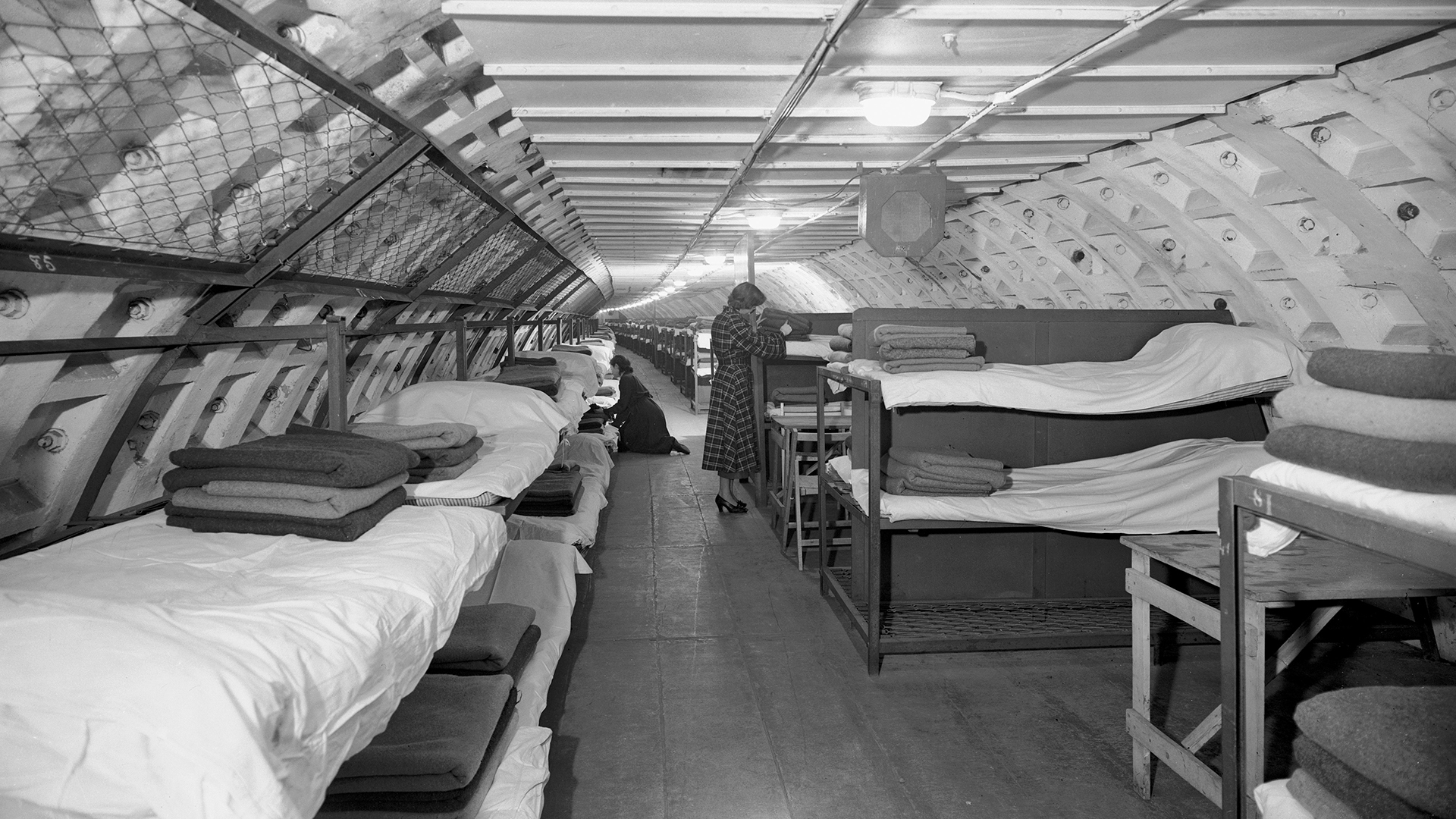
- London’s Clapham deep shelter housed 4,000 Festival of Britain guests in 1951
- Beds cost 3 shillings nightly in the WWII-era bunker 45 feet underground
- The mile-long shelter ran beneath London’s underground railway system
London’s Clapham deep shelter, a relic of World War II, became an unlikely tourist attraction during the 1951 Festival of Britain. The London County Council London County Council transformed the mile-long bunker, situated 45 feet beneath the city’s underground railway London Underground, into a temporary lodging for festival-goers. Each night, visitors paid 3 shillings—equivalent to about 75 pence today—for a bed in the sprawling underground complex.
The shelter, originally built during the Blitz to protect Londoners from air raids, was one of many deep shelters constructed across the city. By 1951, its purpose had shifted from wartime refuge to festival accommodation. The London County Council advertised the space as a unique place to stay, offering both sleeping quarters and dining facilities. The arrangement provided an eerie yet fascinating experience for those attending the Festival of Britain, a national celebration of arts, science, and industry held to boost morale after the war.
A wartime bunker meets peacetime celebration
The Festival of Britain Festival of Britain showcased a modern, forward-looking Britain emerging from wartime austerity. While most visitors stayed in conventional hotels or lodgings, some chose the Clapham deep shelter for its novelty. The bunker’s stark, utilitarian design offered a stark contrast to the festival’s optimistic displays. Inside, rows of metal beds filled the cavernous space, each marked with a number for easy identification. The London County Council ensured basic amenities were available, though comfort was far from luxurious by modern standards.
Photographs from the time capture the unusual scene: beds lined up in neat rows beneath the earth, with visitors milling about in a space designed for survival, not hospitality. The deep shelter’s proximity to the London Underground system made it an accessible yet hidden destination. The festival’s organizers likely saw the appeal of offering a stay in one of London’s most famous wartime bunkers, turning a symbol of wartime hardship into a quirky tourist attraction.
Public reaction and historical context
Contemporary accounts suggest mixed reactions from festival attendees. Some were intrigued by the chance to sleep in a historic bunker, while others may have found the experience unsettling. The Festival of Britain itself was a subject of debate, with critics arguing it was a waste of resources in a still-struggling economy. Yet, the event drew millions of visitors and left a lasting cultural mark on Britain. The Clapham deep shelter’s brief stint as a lodging option remains a footnote in its history, but one that highlights the unusual ways wartime infrastructure shaped peacetime life.
Today, the Clapham deep shelter is no longer used for public lodging. The London County Council’s experiment in repurposing wartime infrastructure reflects the broader post-war efforts to reimagine urban spaces. While the shelter’s days as a festival accommodation are long gone, its legacy endures in photographs, archives, and the occasional recollection of those who spent a night underground in 1951.
For historians and urban explorers, the shelter offers a glimpse into London’s layered past. The Festival of Britain’s use of the bunker underscores how cities adapt old structures for new purposes, often in surprising ways. The Clapham deep shelter’s role in the festival may have been short-lived, but it remains a tangible connection to a pivotal moment in British history—a time when the country balanced recovery with innovation.
What You Need to Know
- Source: The Drive
- Published: May 15, 2026 at 22:13 UTC
- Category: War
- Topics: #military · #weapons · #conflict · #bunker-talk · #talk-about-all · #did-and-didn
Read the Full Story
This is a curated summary. For the complete article, original data, quotes and full analysis:
All reporting rights belong to the respective author(s) at The Drive. GlobalBR News summarizes publicly available content to help readers discover the most relevant global news.
Curated by GlobalBR News · May 15, 2026
Related Articles
🇧🇷 Resumo em Português
A história subterrânea de Londres revela um capítulo curioso da Guerra Fria: em 1951, durante o Festival da Grã-Bretanha, milhares de pessoas pagaram três xelins por noite para dormir em leitos instalados a 14 metros de profundidade no abrigo antiaéreo de Clapham. A cena, que hoje parece saída de um roteiro de ficção científica, mostrava como o medo de um conflito nuclear moldava o cotidiano europeu mesmo em tempos de relativa paz, com o governo britânico explorando a curiosidade pública para financiar a manutenção de estruturas que, décadas antes, haviam servido para proteger civis dos bombardeios da Segunda Guerra Mundial.
O episódio ganha relevância no Brasil quando se analisa como a memória dos conflitos globais influencia políticas de defesa atuais, inclusive no hemisfério sul. Embora o país não tenha enfrentado ameaças nucleares diretas, a experiência europeia serve de alerta para a importância de planejamento civil em tempos de instabilidade geopolítica — um tema que ressoa em discussões sobre a modernização das estruturas de defesa civil no Brasil, ainda carentes de investimentos sistemáticos. Além disso, a curiosidade histórica sobre soluções improvisadas em tempos de crise, como os abrigos de Clapham, pode inspirar reflexões sobre resiliência urbana e adaptação de espaços públicos para emergências.
Enquanto a Grã-Bretanha transformava sua herança bélica em atração turística, a pergunta que fica é: até que ponto o Brasil está preparado para lidar com crises que exijam abrigos subterrâneos ou outras medidas de proteção civil em um mundo cada vez mais volátil?
🇪🇸 Resumen en Español
En un Londres aún marcado por las huellas de la Segunda Guerra Mundial, el subsuelo de Clapham se convirtió por unas semanas en un refugio insólito: un búnker de 45 pies bajo tierra que alquiló camas por tres chelines la noche durante el Festival de Gran Bretaña de 1951. La iniciativa, más allá de su excentricidad, reflejó el ingenio británico para reinventar espacios en tiempos de paz.
El suceso, que podría parecer un mero capricho de posguerra, encierra una reflexión más profunda sobre la resiliencia y la creatividad urbana. En un contexto de reconstrucción y optimismo, el uso de infraestructuras bélicas para fines culturales o turísticos no solo economizó recursos, sino que redefinió el concepto de patrimonio. Para el público hispanohablante, este episodio evoca la capacidad de adaptar el pasado para construir futuro, un tema recurrente en ciudades como Berlín o Madrid, donde antiguas fortificaciones o túneles han encontrado nuevos usos en la era moderna.
The Drive
Read full article at The Drive →This post is a curated summary. All rights belong to the original author(s) and The Drive.
Was this article helpful?


Discussion