Surrey opens Britain’s first ‘green bridge’ over the M25 to help wildlife cross motorways safely.
- Britain’s first ‘green bridge’ for wildlife opens near M25 in Surrey
- Cockrow Bridge helps lizards, insects and small animals cross six lanes safely
- Motorway traffic at 70mph blocks wildlife movement and fragments habitats
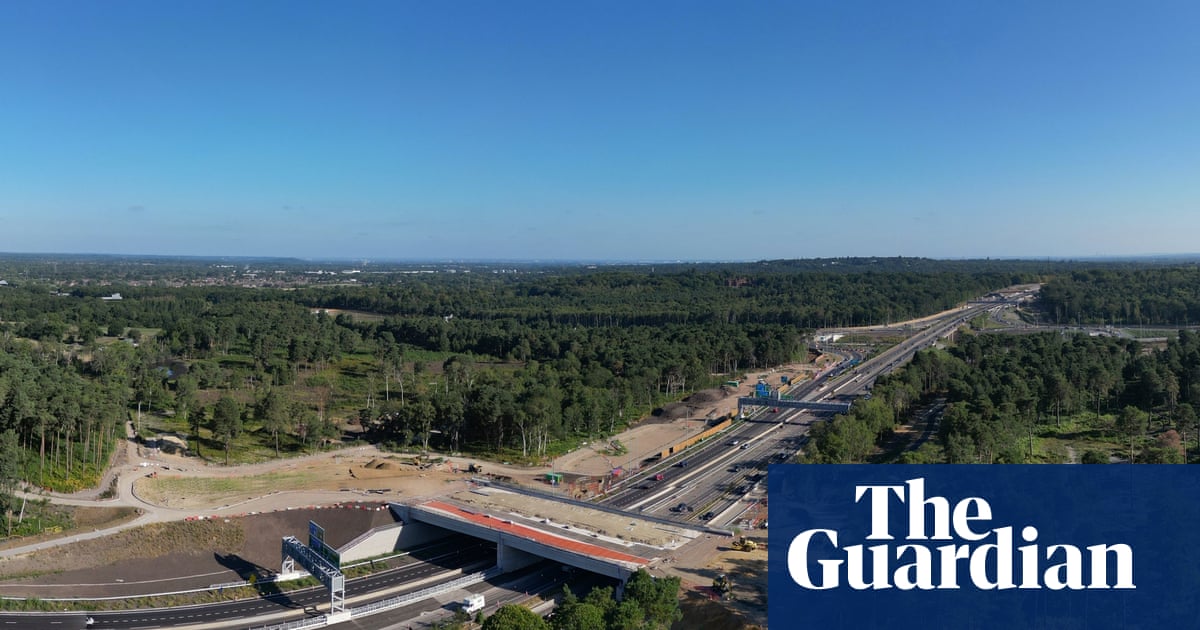
Cockrow Bridge, set to open in the coming weeks, is a narrow strip of land covered in heather and gorse, just wide enough for a lizard or a beetle to scuttle across. It stretches over the M25 near Wisley Common in Surrey, one of Britain’s most important heathland habitats. The bridge sits six metres above the motorway, high enough to avoid fumes from thousands of cars and trucks thundering past at 70mph every day. It’s Britain’s first purpose-built wildlife crossing over a motorway, designed by Surrey Wildlife Trust and funded by Highways England and the government’s Green Recovery Challenge Fund.
James Herd, director of reserves management at the Surrey Wildlife Trust, remembers when heathland around Wisley Common buzzed with life. “I’d take the dog around the common in spring and summer, and every few hundred metres I’d hear the rustle of a lizard in the undergrowth — and I’d see adders,” he says. But over the past decade, Herd has watched the wildlife dwindle. He blames habitat fragmentation caused by roads and development. “We’ve lost so many of the small animals that used to thrive here. The bridges they need to move between patches of heathland just aren’t there.” Cockrow Bridge is meant to fix that. Small tunnels and ledges under the motorway already exist, but none are wide enough for reptiles and insects to use safely. This bridge gives them a continuous path.
Why wildlife bridges matter
Motorways like the M25 slice through landscapes like a knife through cake. They block animals from reaching food, mates or new habitats, and force them to risk life on fast roads. Roads are a top cause of wildlife decline in Britain. A 2022 report by Wildlife Trusts found that traffic kills an estimated 100,000 hedgehogs a year in the UK. Birds of prey, bats and even otters die trying to cross busy roads. The new bridge isn’t just for lizards and insects — it’s a test case for whether wider green bridges could work on other motorways.
Surrey Council and Highways England tested designs for two years. The winning plan uses native plants to blend the bridge into the heathland. Sensors along the route will show how often animals use it. If it works, similar bridges could appear on the A3, A30 or other busy roads near nature sites. “We’re not just building a bridge,” says Herd. “We’re stitching back together a habitat that’s been cut apart.”
Cost and future plans
The £1.2 million Cockrow Bridge is cheap compared to most road projects but expensive for wildlife work. Most wildlife crossings in Europe are over railways or smaller roads, not motorways. Britain has only a handful of animal underpasses and none like this. The money came from Highways England’s £2 million wildlife fund and a £600,000 grant from the government’s Green Recovery Challenge Fund. The rest was raised by the Surrey Wildlife Trust.
Other countries have built bigger green bridges. The Netherlands has dozens over its motorways, some wide enough for deer and wild boar. In Germany, a bridge over the A44 near Cologne is famous for letting wolves and lynxes cross safely. But Britain has been slower to act. Campaigners say that needs to change. “We’ve got some of the busiest roads in Europe,” says Kate Humble, TV presenter and wildlife campaigner. “If we want to save our hedgehogs, toads and rare lizards, we’ve got to make it easier for them to get around.”
What happens next
Within weeks, motion-activated cameras will watch Cockrow Bridge day and night. The first animals to use it will likely be slow worms or common lizards, which already live on both sides of the motorway. Adders, Britain’s only venomous snake, are rarer but could follow. Insects like bumblebees and butterflies may use the plants on the bridge as feeding stops. If the bridge works, Surrey Wildlife Trust wants to build more, especially near Sites of Special Scientific Interest. Highways England says it’s studying other sites where wildlife crossings could help.
But bridges alone won’t save Britain’s wildlife. Experts say roads need to slow down near key habitats, and new roads must include wildlife routes from the start. Herd says: “We’ve got to think about wildlife when we build roads, not bolt it on afterwards.” For now, Cockrow Bridge is a small but important step. It won’t bring back the adders or lizards he remembers from 17 years ago. But it might help stop the slide.
What You Need to Know
- Source: The Guardian
- Published: May 12, 2026 at 09:00 UTC
- Category: Environment
- Topics: #guardian · #climate · #environment · #cockrow-bridge · #surrey · #wisley-common
Read the Full Story
This is a curated summary. For the complete article, original data, quotes and full analysis:
All reporting rights belong to the respective author(s) at The Guardian. GlobalBR News summarizes publicly available content to help readers discover the most relevant global news.
Curated by GlobalBR News · May 12, 2026
Related Articles
🇧🇷 Resumo em Português
O Brasil, que já enfrenta desafios monumentais com a perda de biodiversidade, pode aprender com uma inovação que chega do outro lado do Atlântico: o Reino Unido inaugurou a primeira “ponte verde” sobre uma autoestrada, projetada para permitir que lagartos, insetos e outros animais atravessem com segurança, longe dos riscos dos veículos. A estrutura, que será inaugurada em breve, representa um avanço na tentativa de conciliar desenvolvimento humano e conservação da natureza, um dilema cada vez mais urgente em países densamente povoados e com infraestrutura em expansão.
No Brasil, onde rodovias como a BR-163 cortam a Amazônia e a BR-230, conhecida como Transamazônica, fragmentam ecossistemas críticos, soluções como essa poderiam ser replicadas para minimizar o impacto sobre espécies ameaçadas. A perda de habitats por conta de estradas é um problema global, mas ganha contornos ainda mais críticos em nações tropicais, onde a biodiversidade é excepcionalmente rica — e particularmente vulnerável. Além disso, a iniciativa britânica reforça a importância de integrar políticas de transporte e meio ambiente, um debate que ganha força no Brasil com projetos como o Corredor Ecológico de Biodiversidade, que busca conectar fragmentos florestais.
Se o modelo der certo no Reino Unido, a próxima fronteira pode ser a pressão internacional para que países como o Brasil adotem soluções similares em suas grandes vias, transformando as “pontes verdes” em um padrão global de infraestrutura sustentável.
The Guardian
Read full article at The Guardian →This post is a curated summary. All rights belong to the original author(s) and The Guardian.
Was this article helpful?

Discussion