US Army merges 7th Infantry Division and 1st MDTF to form new Multi-Domain Command-Pacific for future Pacific warfare.
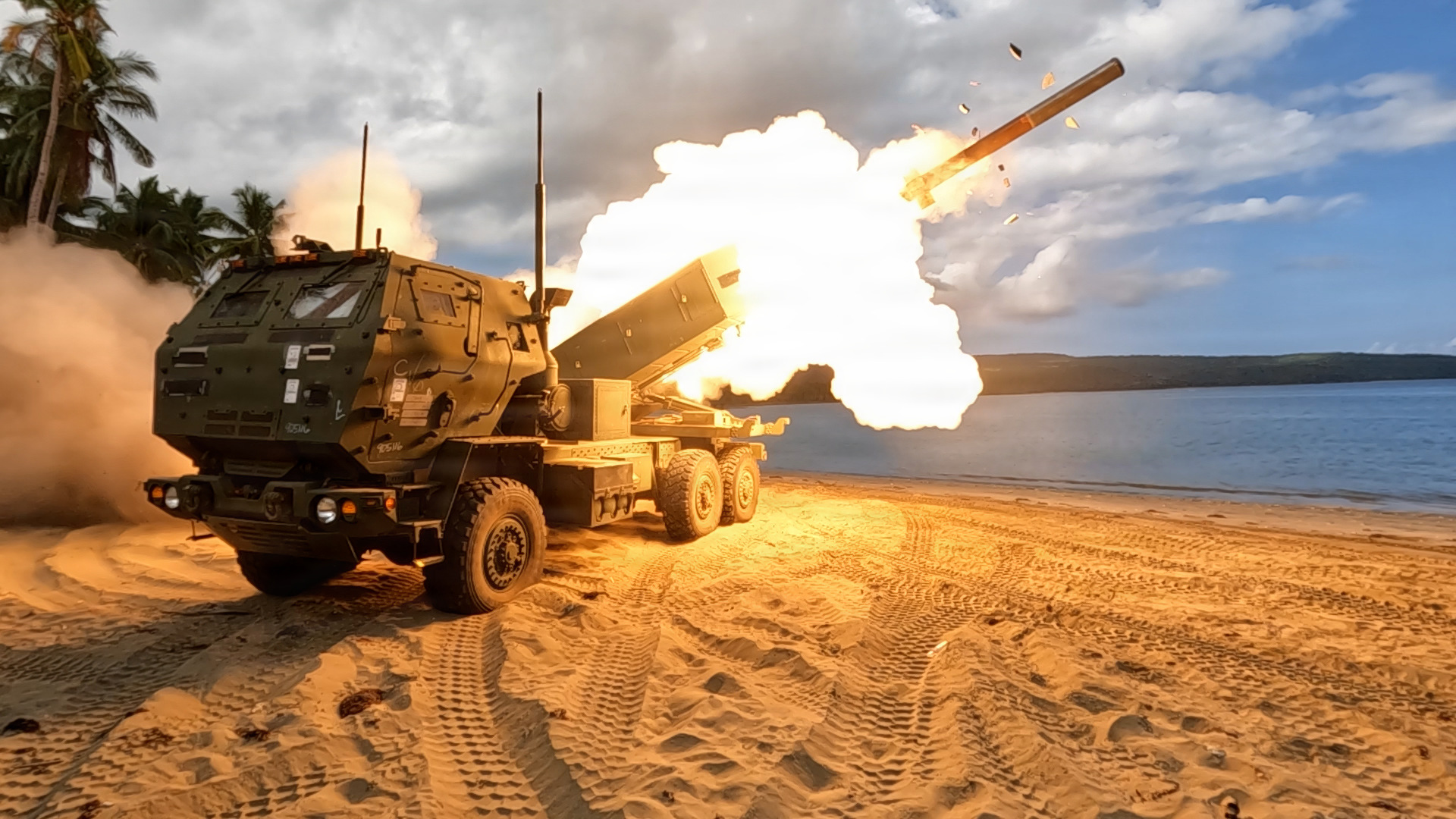
- Army creates Multi-Domain Command-Pacific combining two existing units in Hawaii
- New two-star command merges 7th Infantry Division and 1st Multi-Domain Task Force
- Headquarters remains at Joint Base Lewis-McChord in Washington
The U.S. Army activated the Multi-Domain Command-Pacific (MDC-PAC) on Tuesday, merging the 7th Infantry Division and the 1st Multi-Domain Task Force (1st MDTF) to better prepare for future conflicts. The new two-star command, headquartered at Joint Base Lewis-McChord in Washington, was announced during the 2026 Land Forces of the Pacific Symposium and Exposition in Hawaii.
Army leaders stated the consolidation reflects a shift from traditional formation practices. Lt. Gen. Matthew McFarlane, commanding general of I Corps and Joint Base Lewis-McChord, emphasized the move breaks from past methods where formations were created only after equipment was fully developed. “We made the formations to test and integrate new capabilities simultaneously,” McFarlane told reporters in Honolulu.
The 7th Infantry Division, historically based at Joint Base Lewis-McChord, has long served as a key Army component in the Pacific region. The 1st MDTF, activated in 2017, specializes in long-range precision fires, air and missile defense, and cyber operations. By combining these units, the Army aims to enhance multi-domain operations—integrating land, sea, air, space, and cyberspace capabilities into a cohesive fighting force.
New Command to Support Pacific Deterrence Strategy
The establishment of MDC-PAC aligns with the Pentagon’s broader strategy to counter growing military threats from China and North Korea in the Indo-Pacific. The command will focus on testing new technologies, tactics, and organizational structures in real-world scenarios rather than waiting for complete system fielding. This approach allows the Army to adapt more quickly to emerging threats and operational demands.
McFarlane highlighted that the merger enables faster experimentation with equipment and doctrine. “We’re not waiting for the perfect piece of gear,” he said. “We’re building the force that will use it.” The command’s creation follows recent Army efforts to restructure its formations for high-intensity conflicts, including the activation of multi-domain task forces in Europe and the Pacific.
Implications for Future Army Operations
Military analysts suggest the merger could serve as a model for future Army restructuring. By collapsing separate echelons—division headquarters and specialized task forces—the Army reduces overhead while increasing operational agility. The move also simplifies command relationships in a region where the U.S. is prioritizing deterrence and rapid response.
The Pacific Command, led by Admiral Samuel Paparo, has increasingly emphasized integrated deterrence, combining diplomatic, informational, military, and economic tools. The new MDC-PAC will report through U.S. Army Pacific under General Charles Flynn, who oversees Army forces in the region.
What happens next remains unclear. Army officials say the command will begin operational testing this year, with full integration expected by 2027. The focus will be on refining multi-domain operations, integrating artificial intelligence tools, and improving inter-service coordination with the Navy, Air Force, and Marine Corps.
What You Need to Know
- Source: Defense News
- Published: May 15, 2026 at 22:25 UTC
- Category: War
- Topics: #defense · #military · #pentagon · #war · #conflict · #army
Read the Full Story
This is a curated summary. For the complete article, original data, quotes and full analysis:
All reporting rights belong to the respective author(s) at Defense News. GlobalBR News summarizes publicly available content to help readers discover the most relevant global news.
Curated by GlobalBR News · May 15, 2026
Related Articles
🇧🇷 Resumo em Português
A reorganização do Exército dos EUA no Pacífico, com a fusão da 7ª Divisão de Infantaria e da 1ª Força-Tarefa Multi-Domínio, sinaliza uma nova era na estratégia militar americana para conter a crescente influência da China na região — um movimento que ressoa diretamente no Brasil, dado o crescente interesse de Brasília em ampliar sua presença militar no Atlântico Sul e em parcerias com nações do Indo-Pacífico.
A criação do Comando Multi-Domínio do Pacífico (MDPC) reflete a prioridade estratégica dos EUA em integrar forças convencionais, cibernéticas e de inteligência para operar em ambientes cada vez mais complexos, onde conflitos híbridos e disputas territoriais ganham força. Para o Brasil, que mantém laços históricos com Washington, mas também busca diversificar suas alianças, a medida reforça a necessidade de reavaliar sua própria postura de defesa, especialmente diante da expansão chinesa na América Latina e no Atlântico, onde a China já possui acordos logísticos e portuários estratégicos.
Com a presença militar americana na região se intensificando, o Brasil pode se ver pressionado a definir com mais clareza sua posição em um cenário global cada vez mais polarizado.
🇪🇸 Resumen en Español
La reorganización del Ejército de EE.UU. en el Pacífico, con la fusión de la 7ª División de Infantería y la 1ª Fuerza de Tarea Multidominio, marca un giro estratégico para contrarrestar la creciente influencia de China en la región. La creación del nuevo Mando Multidominio-Pacífico, bajo un general de dos estrellas, busca integrar capacidades terrestres, aéreas y cibernéticas en una estructura más ágil y letal.
Este movimiento responde a la necesidad de Washington de adaptarse a un escenario donde la rivalidad geopolítica exige respuestas rápidas y flexibles. Para los lectores hispanohablantes, especialmente en América Latina, la noticia refleja el reajuste de prioridades de EE.UU. tras décadas de foco en Oriente Medio, ahora centrado en Asia-Pacífico, donde la tensión con Pekín por Taiwán y el Mar de China Meridional no deja de escalar. La medida podría alterar el equilibrio regional, obligando a potencias como México o Brasil a replantearse su postura ante un conflicto que, aunque lejano, redefine las reglas del juego militar global.
Defense News
Read full article at Defense News →This post is a curated summary. All rights belong to the original author(s) and Defense News.
Was this article helpful?


Discussion