Reform UK took down the Ukraine flag from a council building, calling it a step toward ending 'woke' policies.
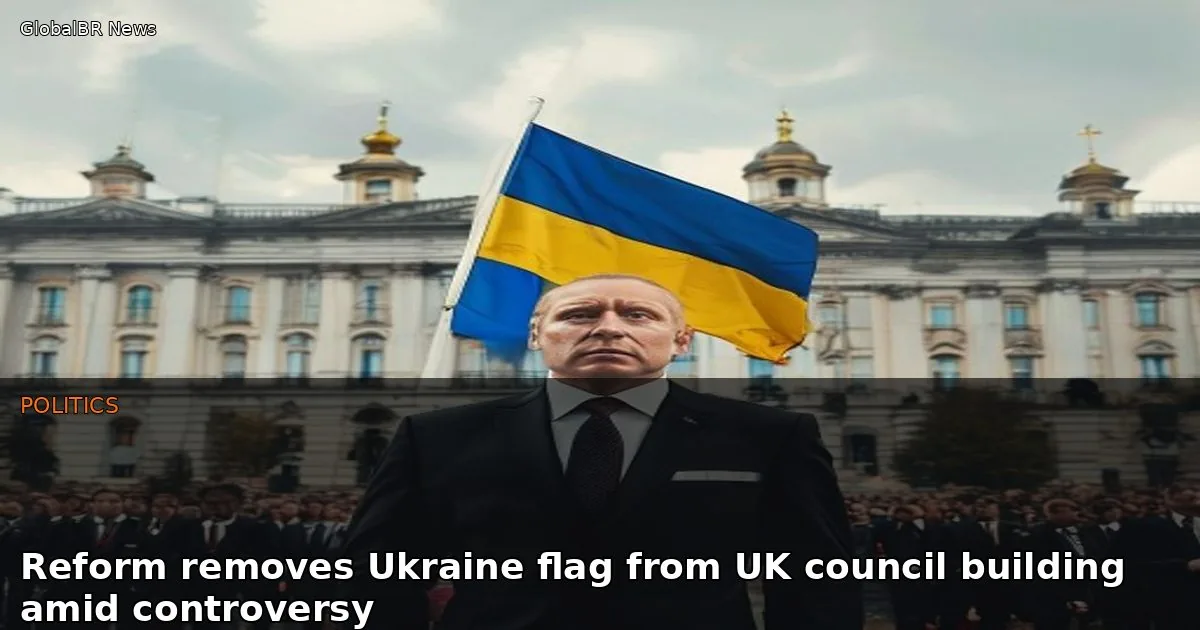
- Reform UK removed the Ukrainian flag from a council HQ this week
- The party called the move a push against 'woke' policies
- Conservatives labeled the action performative and meaningless
📰 Continuing coverage: Reform UK takes Wakefield Council leadership amid local reactions
Reform UK, the right-wing political party led by Nigel Farage, removed the Ukrainian flag from a council building in Wellingborough, Northamptonshire this week. The party claimed the move was part of its pledge to end what it describes as ‘woke’ policies in local government. The flag had been displayed outside the council’s headquarters for months as a show of support for Ukraine during the ongoing war with Russia. Reform argued the gesture was symbolic of broader issues, including council spending and what it calls unnecessary political displays in public spaces. The council confirmed the flag was taken down but did not immediately respond to requests for comment on whether this was at Reform’s request or part of routine maintenance. A spokesperson for the local council said only that they were aware of the change and were looking into it. The Ukrainian flag had been raised in many UK towns and cities since Russia’s full-scale invasion in 2022, often as a sign of solidarity with Ukraine. It became a common sight in public buildings, schools, and community centers across the country, reflecting widespread public support for the country’s resistance against Russian aggression. ## The political reaction was immediate. Reform’s leader, Nigel Farage, framed the removal as part of a wider campaign against what he calls ‘excessive political correctness’ in local governance. He told reporters the flag was a ‘pointless gesture’ that had no real impact on the war but cost ratepayers money to display. Farage has made similar calls in other areas, including opposition to what he describes as ‘divisive’ diversity initiatives in schools. The Conservatives, who have been trying to distance themselves from Reform’s growing influence, quickly dismissed the move as performative. A Conservative Party spokesperson called it a ‘shameless stunt’ designed to score political points rather than address real issues. The criticism highlights the growing divide between the two parties on issues of national identity and public symbolism. Labour, which currently controls the council in Wellingborough, has not yet issued a formal response but has previously supported the display of the Ukrainian flag as a mark of solidarity. The debate over the flag’s removal fits into a larger conversation about how far local councils should go in displaying political or international symbols. Some argue such displays are harmless and reflect community values, while others see them as unnecessary distractions or even divisive. ## The move comes as Reform UK gains ground in local elections, particularly in areas where the party has targeted the Conservatives. Farage has been vocal about reducing what he calls ‘bureaucratic wokeism’ in local government, a theme that resonates with parts of the electorate frustrated by issues like gender-neutral language policies or controversial library book selections. Critics, however, say Reform’s focus on symbolic gestures distracts from more pressing local concerns like housing, education, and healthcare. The party has not provided specific evidence that the Ukrainian flag display was costing the council significant money, a claim that local officials have not verified. Still, the incident has reignited debates about the role of public symbols in local governance and whether such displays should be mandatory or optional. For now, the flag is gone from Wellingborough’s council HQ, and the debate over its removal is likely to continue. This isn’t the first time a local council has faced pressure over its displays. In 2023, a council in Lincolnshire removed a Pride flag after complaints from residents, sparking national outrage and legal challenges. Similar debates have played out in other European countries, where right-wing parties have pushed back against what they see as the over-politicization of public spaces. What happens next in Wellingborough remains unclear. The council may restore the flag, keep it down, or replace it with another symbol entirely. For Reform UK, the move is likely to be used as a campaign talking point ahead of the next general election, where the party hopes to further erode Conservative support. Whether voters see it as a meaningful policy change or just another political stunt could determine how much impact it has on the broader political landscape.
What You Need to Know
- Source: BBC News
- Published: May 15, 2026 at 16:52 UTC
- Category: Politics
- Topics: #bbc · #politics · #war · #ukraine · #russia
Read the Full Story
This is a curated summary. For the complete article, original data, quotes and full analysis:
All reporting rights belong to the respective author(s) at BBC News. GlobalBR News summarizes publicly available content to help readers discover the most relevant global news.
Curated by GlobalBR News · May 15, 2026
Related Articles
- Starmer’s leadership under pressure as Labour MPs question authority
- UK Labour’s Wes Streeting confirms leadership bid if race starts
🇧🇷 Resumo em Português
O Reino Unido, que há décadas se apresenta como refúgio de causas globais, agora vê suas próprias divisões internas ecoarem em um gesto simbólico: a decisão de um conselho local de retirar a bandeira da Ucrânia de um prédio público gerou mais do que polêmica, expôs as fissuras entre solidariedade internacional e políticas domésticas. Em meio à guerra contra a Rússia, que já dura mais de dois anos, a medida da prefeitura de Thanet, no sudeste inglês, reacendeu o debate sobre o limite entre simbolismo e ação concreta, especialmente quando o partido de extrema direita Reform UK, antes conhecido como Brexit Party, pressionou pela remoção.
No Brasil, país acostumado a equilibrar relações diplomáticas com crises internas, a notícia ressoa como um alerta sobre os riscos de politizar símbolos que representam sofrimento alheio em meio a conflitos distantes. Enquanto a Ucrânia pede apoio global, a decisão britânica levanta questões sobre como governos locais, muitas vezes pressionados por grupos ideológicos, podem minar a coesão em torno de causas humanitárias. Para o leitor brasileiro, acostumado a ver bandeiras de países em guerra hasteadas em prédios públicos durante crises — como a da Palestina ou da Síria —, o episódio serve de espelho: até que ponto gestos visuais ajudam ou atrapalham a mobilização em favor da paz?
A polêmica promete ganhar novos contornos quando o conselho de Thanet revisitar o caso em outubro, após uma onda de protestos de moradores e organizações ucranianas no exílio, que veem na bandeira um elo simbólico com a resistência contra a invasão russa.
🇪🇸 Resumen en Español
La polémica se ha instalado en el Reino Unido tras la decisión de Renew UK de retirar la bandera de Ucrania de un edificio municipal, desatando un intenso debate sobre el simbolismo político y las prioridades de las instituciones locales.
El cambio, adoptado por un ayuntamiento gobernado por este partido de extrema derecha, ha reavivido las tensiones en torno a la neutralidad institucional y al papel de las autoridades locales en conflictos internacionales. Mientras sus defensores alegan ahorro de recursos y rechazo a “gestos vacíos”, críticos denuncian un mensaje de indiferencia hacia la guerra en Ucrania, justo cuando el país europeo sigue reclamando apoyo occidental. La medida, que refleja la línea dura de Renew UK frente a la inmigración y la ayuda internacional, amenaza con erosionar la confianza en las administraciones locales, especialmente entre las comunidades ucranianas residentes en el país.
BBC News
Read full article at BBC News →This post is a curated summary. All rights belong to the original author(s) and BBC News.
Was this article helpful?

Discussion