US Navy risks running out of money by July, top admiral warns Congress of training cuts without new funds.
- Navy could face budget shortfall by July, warns top admiral
- Adm. Caudle cites rising Middle East operations costs
- No supplemental funding request submitted to Congress yet
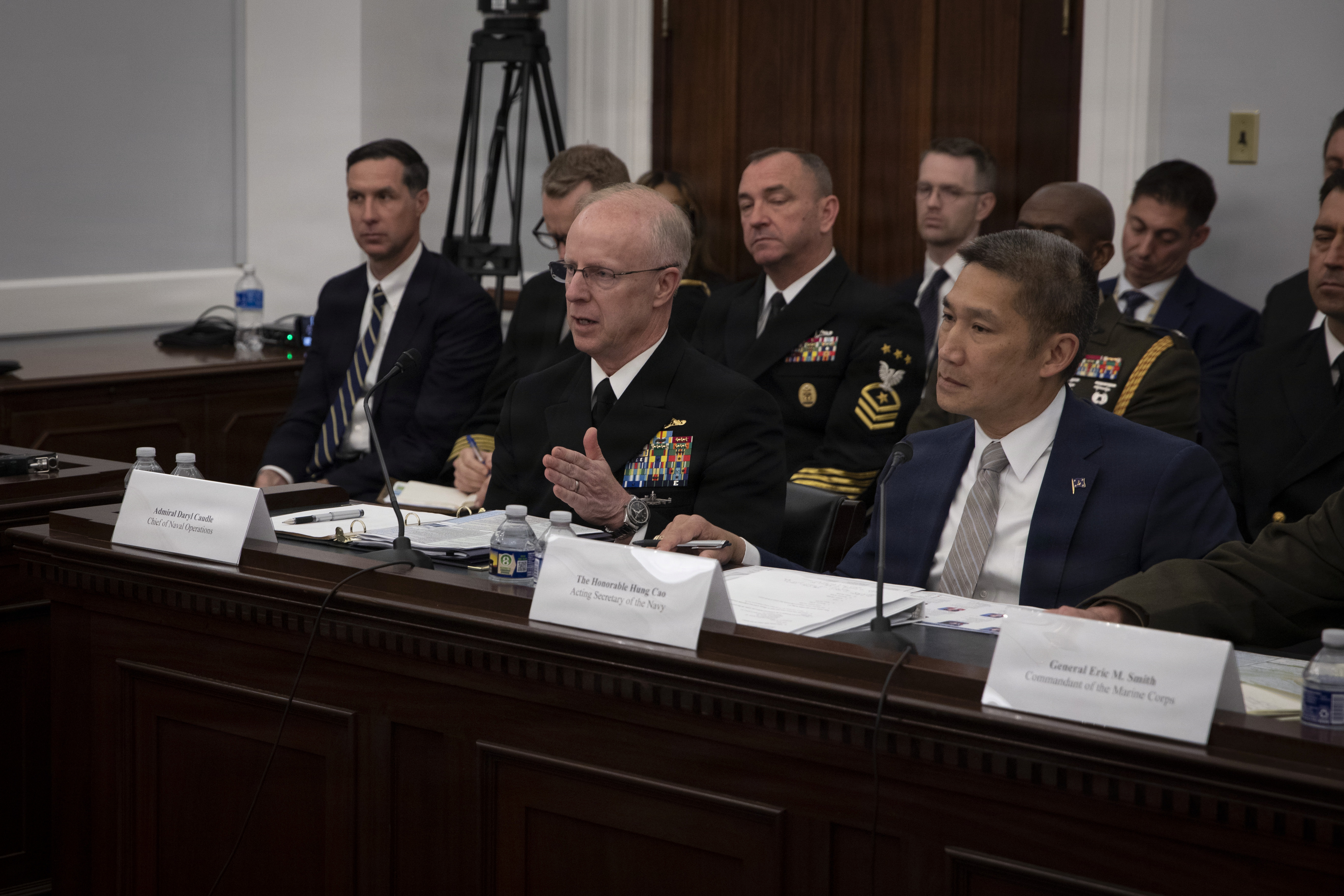
The U.S. Navy faces a critical financial shortfall within two months, forcing potential cuts to training and operational readiness, the service’s highest-ranking officer told House lawmakers on Tuesday. Chief of Naval Operations Adm. Daryl Caudle warned the House Appropriations Subcommittee on Defense that without immediate supplemental funding, the Navy would have to scale back essential activities starting in July. “I will have to start making decisions to change training, operations, certification events, those type of things we do to generate our force, in the July timeframe,” Caudle testified.
Caudle’s warning underscores the Navy’s growing financial strain amid sustained military operations in the Middle East, where U.S. naval forces have been actively deployed. The current budget crunch stems from higher-than-expected operational costs, compounded by delays in congressional approval for additional funding. The Trump administration has not yet submitted a supplemental budget request to address the shortfall, leaving the Navy in limbo. Without action, Caudle said the service would be forced to prioritize spending, potentially delaying critical training cycles and certification exercises that maintain fleet readiness.
Rising operational costs strain Navy budgets
The Navy’s budgetary challenges reflect broader pressures on the U.S. military budget, as global security demands continue to rise. The Middle East remains a focal point for U.S. naval operations, with ships deployed to counter threats from Iran-backed groups and maintain maritime security. These sustained missions have accelerated the depletion of existing funds, according to defense officials. The Navy has already reallocated internal resources to cover immediate shortfalls but warns that further cuts would degrade operational capabilities.
Lawmakers pressed Caudle on contingency plans if supplemental funding does not materialize. The admiral acknowledged that while the Navy could delay non-essential spending, prolonged funding gaps would force deeper reductions in training and maintenance. “We’re going to have to make some tough choices,” Caudle said, emphasizing that readiness would suffer if the budget remains unresolved. The Navy has historically relied on supplemental appropriations during fiscal crises, but this year’s delay adds urgency to the situation.
Congress must act quickly to avoid readiness gaps
The House Appropriations Subcommittee on Defense is reviewing the Navy’s fiscal needs, but no timeline has been set for a vote on supplemental funding. Defense analysts note that delays in passing emergency budgets have historically led to operational disruptions, including canceled training exercises and delayed ship deployments. The Navy’s fiscal year 2025 budget request, submitted earlier this year, does not account for the unexpected rise in Middle East operations, leaving a funding gap that must be filled externally.
Without supplemental funding, the Navy risks violating readiness standards set by the Department of Defense, which mandates minimum training and certification requirements for deployed units. Caudle warned that failure to meet these standards could reduce the Navy’s combat effectiveness and increase risks during missions. The stakes are high, as the Middle East remains a volatile region with ongoing threats to U.S. interests. The Navy’s ability to sustain operations depends on Congress acting before the July deadline to prevent irreversible damage to fleet preparedness.
What You Need to Know
- Source: Defense News
- Published: May 13, 2026 at 20:34 UTC
- Category: War
- Topics: #defense · #military · #pentagon · #war · #conflict · #navy
Read the Full Story
This is a curated summary. For the complete article, original data, quotes and full analysis:
All reporting rights belong to the respective author(s) at Defense News. GlobalBR News summarizes publicly available content to help readers discover the most relevant global news.
Curated by GlobalBR News · May 13, 2026
Related Articles
🇧🇷 Resumo em Português
O almirante da Marinha dos EUA alerta que a maior potência naval do mundo pode ficar sem dinheiro já em julho, colocando em risco treinamentos e operações críticas — um cenário que soa como pesadelo estratégico para Washington e seus aliados, incluindo o Brasil. A crise fiscal não apenas expõe fragilidades orçamentárias, mas também levanta questões sobre a capacidade dos Estados Unidos de manter sua presença global, especialmente em um momento de tensões crescentes com China e Rússia.
O alerta do oficial-chefe da Marinha americana chega em um contexto de disputas políticas no Congresso, onde projetos de lei de gastos enfrentam impasses por falta de consenso entre democratas e republicanos. Sem um pedido suplementar de orçamento enviado ainda, a possibilidade de um shutdown parcial das forças armadas americanas não apenas afetaria a prontidão operacional da frota, mas também poderia ter reflexos diretos em nações que dependem da estabilidade marítima garantida pela Guarda Costeira e pela Marinha dos EUA — como é o caso do Brasil, que compartilha interesses no Atlântico Sul e em rotas comerciais vitais. A situação coloca em xeque a confiabilidade dos compromissos de segurança dos EUA, mesmo em regiões como a América Latina, onde a cooperação é fundamental para conter ameaças como narcotráfico e pirataria.
Se o impasse não for resolvido rapidamente, a Marinha americana poderá ser forçada a reduzir missões, congelar contratações e até dispensar marinheiros — um golpe duplo para a defesa global e para a credibilidade de Washington no hemisfério.
🇪🇸 Resumen en Español
La Armada de Estados Unidos podría quedarse sin fondos en julio, un aviso que enciende las alarmas sobre su capacidad para mantener operaciones críticas.
El jefe de operaciones navales ha alertado al Congreso sobre la urgencia de aprobar un presupuesto complementario, pues los recursos actuales se agotarían en pocas semanas. Esta situación amenaza con paralizar entrenamientos esenciales y reducir la operatividad de los buques, justo cuando las tensiones geopolíticas —desde el Indo-Pacífico hasta el mar Rojo— exigen mayor presencia militar. Para los hispanohablantes, especialmente en Europa y América Latina, el riesgo no es solo financiero: una Armada debilitada podría alterar el equilibrio de poder global, afectando rutas comerciales y la estabilidad regional. La demora en la aprobación de fondos refleja, además, la creciente polarización en Washington, donde los debates presupuestarios chocan con prioridades estratégicas.
Defense News
Read full article at Defense News →This post is a curated summary. All rights belong to the original author(s) and Defense News.
Was this article helpful?


Discussion