Astrophotographer Graeme Dury captures Lyrid meteors near the Milky Way from Scotland’s Isle of Skye.
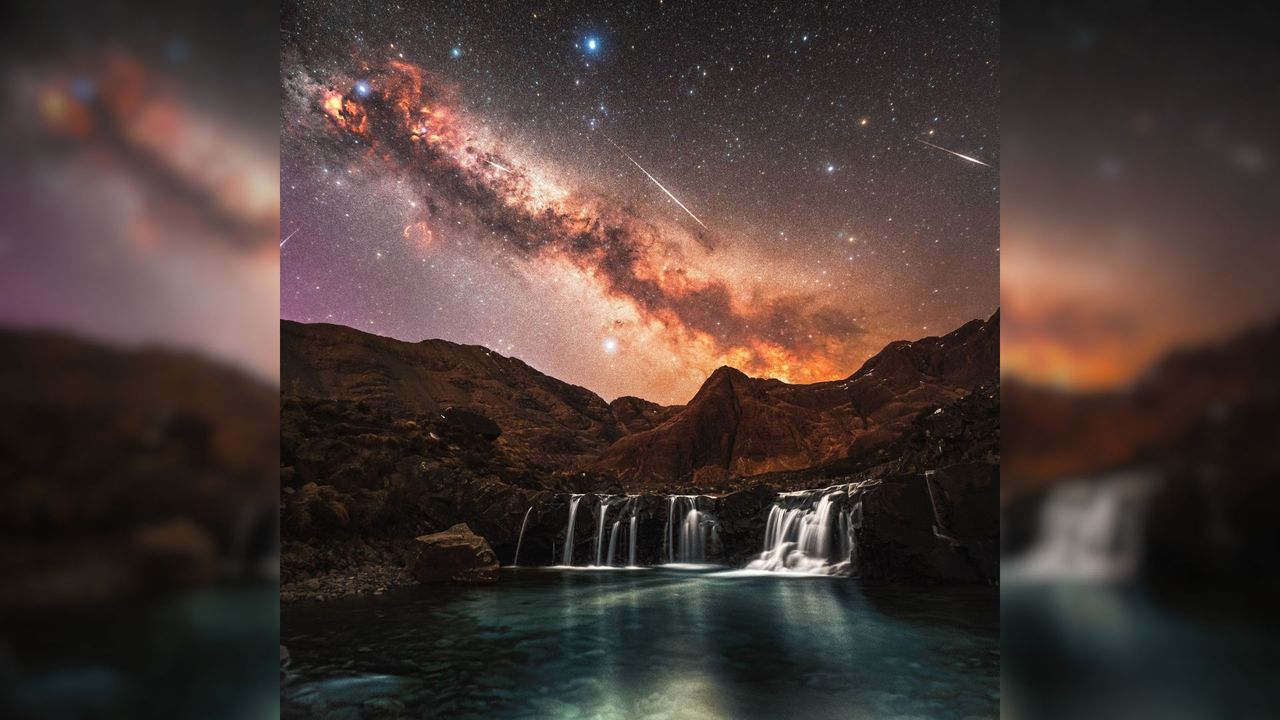
- Astrophotographer Graeme Dury captures Lyrid meteors beside Milky Way
- Image taken from remote Isle of Skye in Scotland
- Lyrid meteor shower peaks annually April 16–26
📰 Continuing coverage: Astrophotographer captures remarkable view of galactic ‘Eyes’ with backyard telescope
Astrophotographer Graeme Dury has captured a stunning image of the Lyrid meteor shower streaking across the night sky beside the Milky Way from the remote Scottish Isle of Skye. The photo, taken during the annual Lyrid meteor shower, showcases the celestial event at its peak, which occurs each year between April 16 and 26.
What are the Lyrid meteors?
The Lyrids are one of the oldest known meteor showers, with records dating back to 687 BCE in ancient China. They occur when Earth passes through the debris trail of Comet Thatcher https://en.wikipedia.org/wiki/C/1861_G1_Thatcher, which orbits the sun every 415 years. As these particles enter Earth’s atmosphere at high speeds, they burn up, creating bright streaks in the sky. The meteors appear to radiate from the constellation Lyra, near the bright star Vega, which is why they are named the Lyrids.
Dury’s image, taken from the Isle of Skye, not only captures the Lyrid meteors but also highlights the Milky Way’s glowing band of stars and dust. The photo includes an annotated version that identifies key celestial objects, such as the Summer Triangle asterism and prominent nebulas like the North America Nebula and the Ring Nebula.
Ideal conditions for stargazing
The Isle of Skye, known for its minimal light pollution, provided the perfect backdrop for this celestial display. Remote locations like this are increasingly sought after by astrophotographers and stargazers seeking clear, dark skies. The Lyrid meteor shower typically produces 10 to 20 meteors per hour at its peak, though occasional outbursts can result in higher rates.
Meteor showers like the Lyrids offer a rare opportunity for both amateur and professional astronomers to observe and photograph these fleeting events. The timing of Dury’s capture aligns with the shower’s peak, which occurred on the night of April 21–22 this year. Clear skies and a new moon provided optimal viewing conditions, enhancing the visibility of the meteors and the Milky Way.
How to photograph meteor showers
Dury’s image serves as an inspiration for aspiring astrophotographers looking to capture similar shots. The process requires patience, the right equipment, and an understanding of the night sky. A DSLR camera with a wide-angle lens, a sturdy tripod, and a remote shutter release are essential tools. Photographers should also scout locations in advance to ensure minimal light interference and a clear view of the horizon.
For those interested in observing the Lyrids, the best time to watch is typically after midnight and before dawn, when the radiant point in the constellation Lyra is highest in the sky. While meteors can appear anywhere in the sky, they will seem to originate from Lyra, making it easier to spot them. The Lyrids are known for their fast and bright meteors, some of which leave persistent trails that can linger for several seconds.
Sky watchers in the Northern Hemisphere have the best view of the Lyrids, though they can also be seen from the Southern Hemisphere at lower rates. The next major meteor shower, the Eta Aquarids, is set to peak in early May, offering another opportunity for celestial enthusiasts to enjoy the night sky.
For astrophotographers like Dury, capturing such images is a blend of skill, timing, and luck. The ability to freeze a moment in the cosmos, where the fleeting beauty of a meteor intersects with the timeless expanse of the Milky Way, remains one of the most rewarding experiences in the field.
What You Need to Know
- Source: Space.com
- Published: May 11, 2026 at 19:00 UTC
- Category: Science
- Topics: #space · #astronomy · #nasa · #astrophotographer · #lyrid · #milky-way-dury
Read the Full Story
This is a curated summary. For the complete article, original data, quotes and full analysis:
All reporting rights belong to the respective author(s) at Space.com. GlobalBR News summarizes publicly available content to help readers discover the most relevant global news.
Curated by GlobalBR News · May 11, 2026
🇧🇷 Resumo em Português
Um show de luzes no céu escocês chamou a atenção do mundo: o astrofotógrafo Graeme Dury registrou, de forma espetacular, a chuva de meteoros Líridas dançando ao lado da Via Láctea, nas isoladas terras da Ilha de Skye, na Escócia. A imagem, que viralizou nas redes sociais, não só encanta pela beleza cósmica, como também reacende o fascínio da humanidade pelas maravilhas do universo.
No Brasil, onde a observação astronômica ganha cada vez mais adeptos — seja em cidades com céus menos poluídos ou em eventos como a Semana Mundial do Espaço —, a cena escocesa serve como inspiração para os apaixonados por astrofotografia e ciência. O fenômeno das Líridas, que ocorre anualmente em abril, tem importância histórica: é uma das chuvas de meteoros mais antigas registradas, com relatos que remontam a mais de 2.700 anos. Para os brasileiros, que muitas vezes enfrentam desafios como a poluição luminosa, a imagem reforça a necessidade de preservar locais ideais para contemplação celeste e pesquisa científica.
A façanha de Dury convida não só a admirar, mas a buscar experiências semelhantes: no próximo ano, quem sabe, não teremos nossos próprios registros de chuvas de meteoros em lugares como o sertão nordestino ou a Amazônia?
🇪🇸 Resumen en Español
Un espectáculo celeste único ha iluminado las noches de Escocia, donde el astrofotógrafo Graeme Dury logró capturar el deslumbrante espectáculo de la lluvia de meteoros Líridas junto a la Vía Láctea desde la remota Isla de Skye. La imagen, que combina la fugacidad de las estrellas fugaces con la majestuosidad de nuestra galaxia, ha dejado al mundo boquiabierto.
Este fenómeno no solo es un regalo visual para los amantes de la astronomía, sino que también recuerda la importancia de preservar los cielos oscuros, cada vez más amenazados por la contaminación lumínica. Para los hispanohablantes, la fotografía de Dury sirve como un recordatorio de la belleza que aún guarda el universo y de la necesidad de proteger estos espacios naturales, donde la ciencia y el asombro se entrelazan para inspirar nuevas generaciones.
Space.com
Read full article at Space.com →This post is a curated summary. All rights belong to the original author(s) and Space.com.
Was this article helpful?
Discussion