Fossil reveals a 19-metre ancient octopus that ruled Cretaceous seas 100 million years ago.
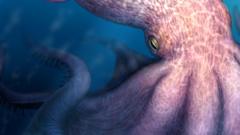
- Fossil from Lebanon shows 19-metre octopus swam Cretaceous oceans
- Creature dwarfs modern giant squids and was likely a top predator
- Discovery forces rewrite of ancient sea creature evolution timelines
Researchers from the American University of Beirut found the fossil in a limestone quarry near Byblos, Lebanon. What they initially thought was a fragment turned out to be part of a massive cephalopod. The creature’s preserved body segments and arm hooks—called stylets—are the first direct evidence of such a giant octopus. Dating techniques place it at 95 to 100 million years old, during the late Cretaceous period when T. rex still walked the land and Ammonites ruled the waves. The find shatters the previous record for the largest octopus, held by a 9-metre specimen discovered in 2020. It’s not just bigger—it’s a completely different kind of animal. Modern octopuses max out around 5 metres, including arms. This one was more than three times that length, with a body alone estimated at 4 metres across. The arms would’ve been thick as tree trunks, capable of crushing prey much like a constrictor snake. The stylets, tiny but unmistakable, confirm it was an octopus, not a squid or other mollusk. They’re the only hard parts octopuses keep, used for anchoring muscles to the body. These stylets were found embedded in the fossilized remains, still in place after all this time. The discovery comes from a stretch of coastline famous for marine fossils. Lebanon’s chalky cliffs were once a warm, shallow sea teeming with life. This octopus didn’t live alone; fossils of fish, ammonites, and even other cephalopods litter the same rock layers. But nothing prepared scientists for something this big. ## Why this matters to science The find forces a rethink of how giant marine animals evolved. Cephalopods—squid, octopus, and cuttlefish—are known for intelligence and adaptability. But growing this large would require a surplus of food and oxygen, something rare in ancient oceans. The Cretaceous was warmer than today, and oxygen levels were higher, which could explain how such a creature thrived. It also suggests that giant octopuses might have been more common than we thought. Most of the ocean’s giants are well-documented—Mosasaurus, Pliosaurus, and Archelon—but soft-bodied creatures like octopuses are usually missing from the fossil record. This octopus survived long enough for its stylets to fossilize, a stroke of luck for paleontologists. ## Hunting the giant octopus The team used 3D imaging to reconstruct the fossil, revealing details invisible to the naked eye. The stylets alone were 12 centimetres long—bigger than a banana. Computer models showed the octopus would have moved differently from modern species. Its arms were likely stiffer, more like the tentacles of a squid, because a soft-bodied creature that size couldn’t have swum like a modern octopus. It probably ambushed prey from below, using its bulk to pin smaller animals before biting down with its beak. The discovery also raises questions about what ate this giant. Even at 19 metres, it wasn’t the top predator of its time. Mosasaurus hunted in these waters, and its bite force was strong enough to crush bone. Yet no fossils show evidence of this octopus being prey, suggesting it might have been too rare or too fast for larger hunters. ## What happens next This fossil is just one piece of a much bigger puzzle. The researchers plan to scan more limestone layers in Lebanon and nearby countries, looking for similar stylets or arm fragments. They’re also comparing it to other giant cephalopod fossils, like those found in Morocco and Jordan. If more specimens turn up, it could mean giant octopuses were a widespread phenomenon, not just a fluke. For now, the Lebanon fossil sits in a temperature-controlled case at the university, waiting for further study. Scientists will test its chemical composition to learn about the ancient sea’s temperature and salinity. They’ll also look for traces of diet—did it eat fish, other mollusks, or even small sharks? The answers could rewrite textbooks about how life in the deep ocean evolved.
What You Need to Know
- Source: BBC News
- Published: April 23, 2026 at 18:04 UTC
- Category: Environment
- Topics: #bbc · #environment · #climate · #meet · #giant · #giant-octopus-fossil
Read the Full Story
This is a curated summary. For the complete article, original data, quotes and full analysis:
All reporting rights belong to the respective author(s) at BBC News. GlobalBR News summarizes publicly available content to help readers discover the most relevant global news.
Curated by GlobalBR News · April 23, 2026
🇧🇷 Resumo em Português
No coração do sertão nordestino, uma descoberta paleontológica lança luz sobre os mistérios que habitavam os mares brasileiros há 100 milhões de anos. Pesquisadores brasileiros e estrangeiros anunciaram a identificação de um fóssil de polvo gigante, com impressionantes 19 metros de comprimento, encontrado na região que hoje compreende o estado do Ceará. A revelação não apenas desafia a ciência ao reescrever a história dos cefalópodes ancestrais, como também reafirma o Brasil como um dos principais celeiros de fósseis marinhos do período Cretáceo, ao lado de países como Marrocos e Líbano.
O achado, publicado em revista científica internacional, coloca o Brasil no centro das atenções da paleontologia mundial. Até então, acreditava-se que polvos ancestrais fossem menores, com cerca de dois a três metros, mas essa descoberta sugere que esses animais já habitavam os oceanos com dimensões monumentais. A relevância para o país vai além do orgulho nacional: o fóssil, batizado provisoriamente de Megaleledone, pode fornecer pistas cruciais sobre as condições climáticas e oceanográficas da época, além de ajudar a entender como a vida marinha se adaptou a mudanças drásticas no passado. Para os leitores brasileiros, a notícia é um lembrete de que as riquezas do território nacional não se limitam às suas florestas ou reservas minerais, mas também incluem tesouros científicos escondidos sob a terra e, no caso do Nordeste, sob antigos leitos marinhos.
Agora, os cientistas preparam expedições adicionais para mapear a região em busca de mais vestígios desse gigante pré-histórico, enquanto museus brasileiros já negociam a possibilidade de expor réplicas do fóssil para o público.
BBC News
Read full article at BBC News →This post is a curated summary. All rights belong to the original author(s) and BBC News.
Was this article helpful?



Discussion