Discover the top 5 longest walls on Earth, including one massive fortress wall that flies under the radar.
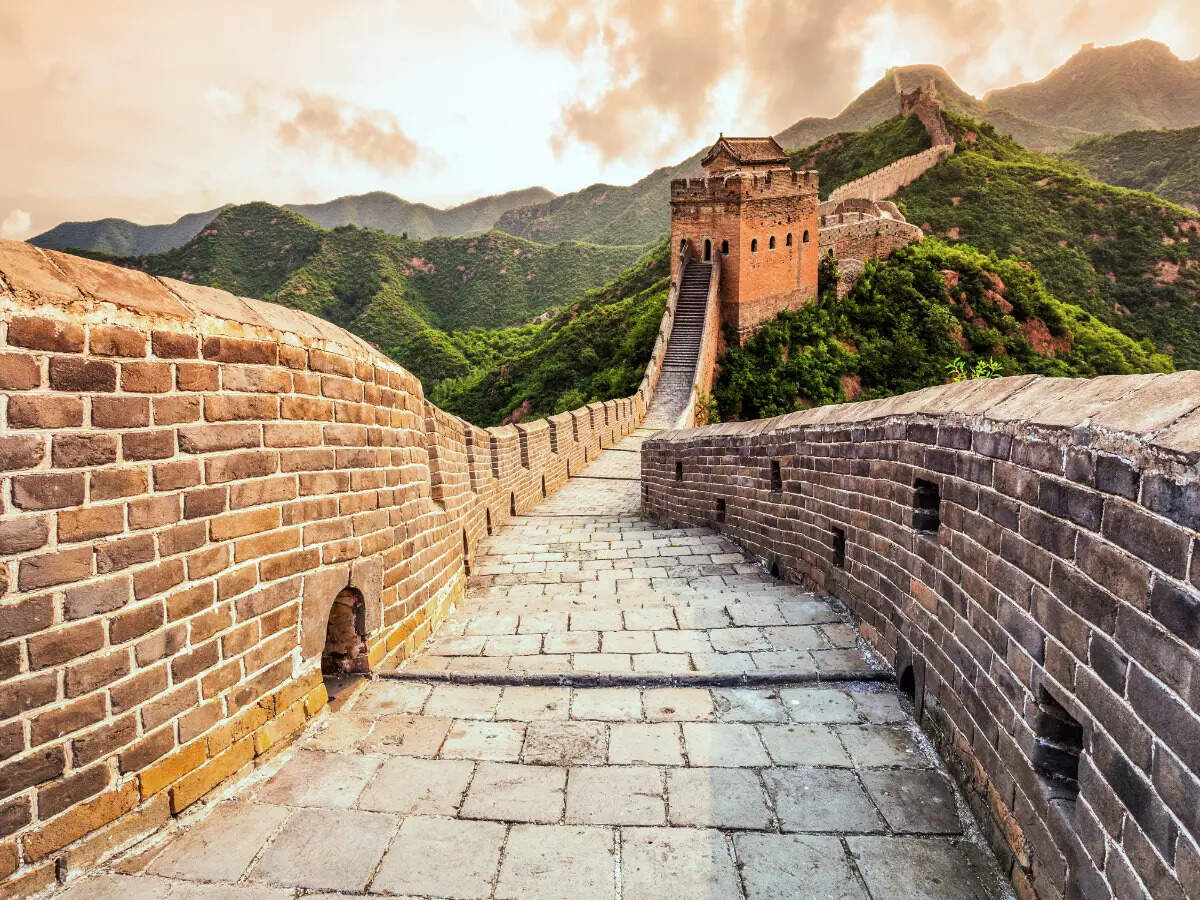
- China's Great Wall stretches over 21,000 km with modern satellite measurements.
- The second-longest wall is Central Asia's massive Kyz Kala fortress wall.
- Ancient walls served as military defenses, not just symbols of power.
The Great Wall of China isn’t just the most famous wall in the world — it’s also the longest. New surveys using satellite imaging confirm its total length tops 21,000 kilometers, weaving through mountains, deserts, and grasslands. That’s enough to stretch from New York to Los Angeles and back, twice. The wall wasn’t built as one continuous structure but as a series of fortifications added over 2,000 years by different dynasties, each expanding or repairing sections to keep out invaders like the Mongols. The earliest parts date to the 7th century BCE, but the most famous sections we see today were built during the Ming Dynasty between the 14th and 17th centuries. What many don’t realize is that modern technology rewrote the record books. Until the 1980s, Chinese historians estimated the Great Wall was about 6,000 km long. It was only when satellites mapped every brick and ruin that the true scale became clear. Today, UNESCO recognizes the Great Wall as one of the most impressive architectural feats in history, though parts of it are crumbling and at risk of disappearing forever. Conservation efforts are now racing to preserve what’s left, especially near Beijing where tourism and erosion threaten the most visited sections.
The second-longest wall you’ve probably never seen
But the Great Wall isn’t alone at the top. The second-longest defensive wall on Earth is the ancient fortress wall of Kyz Kala, stretching over 40 km in what’s now Turkmenistan. Built in the 5th century by the Sassanian Empire, this mudbrick wall was part of a network of fortifications meant to protect against nomadic raids from Central Asia. Unlike the Great Wall, which was built in stages, Kyz Kala was constructed as a single massive project, showing how advanced ancient engineering was. The wall is nearly 10 meters high in places and up to 20 meters thick at its base, designed to stop cavalry charges without relying on steep slopes. Today, it’s one of the few intact sections of the once-vast Sassanian defense system, though much of it is buried under sand. Archaeologists believe more ruins are hidden beneath the Karakum Desert, waiting to be uncovered. The wall’s remote location means it sees almost no visitors, making it a hidden gem for history buffs willing to make the trip.
Europe’s forgotten giant wall
Further west, Europe’s longest wall is the Antonine Wall in Scotland, built by the Romans in 142 CE. Stretching 63 km across the narrowest part of Scotland, it marked the northern boundary of the Roman Empire for just eight years before being abandoned. Made of turf and wood, not stone, it was designed to control movement rather than block invasions. The Romans built forts every few kilometers along the wall, with soldiers patrolling the frontier and taxing local tribes for passage. Unlike Hadrian’s Wall to the south, which is more famous, the Antonine Wall was a temporary experiment in expansion. Today, only grassy mounds remain in the Scottish countryside, but it’s still one of the most important Roman sites in Britain. Archaeologists recently found traces of the original wooden palisades beneath the turf, giving new clues about how the wall was built and defended. The site is now a UNESCO World Heritage Site, though most tourists still flock to Hadrian’s Wall instead.
The longest wall in the Americas sits in the Amazon
In South America, the longest wall isn’t in Peru or Mexico — it’s in the Amazon rainforest. The Wall of Peru, also called the Gran Saposoa, is a 60 km-long earthen embankment built by the ancient Casma culture between 900 and 1400 CE. The wall is up to 4 meters high and 10 meters wide, with a ditch running along its outer edge. Unlike defensive walls in Europe or Asia, this one wasn’t built to keep out armies. Instead, it likely marked the boundary of a sacred or agricultural zone, possibly to control water flow during the rainy season. The wall’s purpose remains a mystery, but its sheer size suggests it was a major project for the Casma people, who also built nearby pyramids and irrigation systems. The site was only rediscovered in the 1930s, and today it’s one of the least-studied ancient structures in the Americas. Jungle vegetation has swallowed much of it, but drone surveys are now mapping its full extent for the first time in centuries.
The longest wall in Africa was built to protect a kingdom
Africa’s longest wall is the Walls of Benin, a series of earthen ramparts and moats built by the Kingdom of Benin in what’s now southern Nigeria. The outer wall alone stretches 16 km in a rectangle around the old city, but the full defensive system covers over 6,500 km of earthworks — more than the Great Wall of China in total length. Built between the 12th and 15th centuries, the walls were up to 14 meters high and 20 meters thick in places, with a deep ditch running along the outer edge. The walls weren’t just for defense; they also controlled trade and showed the kingdom’s power. According to 16th-century Portuguese traders, the walls were so massive that they blocked the view of the city from outside. Most of the walls were destroyed in 1897 when British forces sacked the city during the Punitive Expedition. Today, only fragments remain, but they’re still considered one of the most impressive feats of pre-colonial African engineering. Archaeologists are now using ground-penetrating radar to map the buried sections, hoping to uncover more of the city’s lost history.
What’s next for these ancient walls? Conservationists are working to stabilize the most at-risk sections, especially the Great Wall of China and the Walls of Benin. In Turkmenistan, the government is trying to protect Kyz Kala from erosion and looting, while in Scotland, new funding is going toward better signage and visitor centers at the Antonine Wall. The Amazon’s Wall of Peru remains largely untouched, but researchers hope to secure UNESCO status to protect it from deforestation. These walls aren’t just relics — they’re windows into how ancient societies defended themselves, managed resources, and left marks on the land that still shape the world today.
What You Need to Know
- Source: Times of India
- Published: May 17, 2026 at 10:15 UTC
- Category: World
- Topics: #india · #asia · #world-news · #war · #conflict · #earth
Read the Full Story
This is a curated summary. For the complete article, original data, quotes and full analysis:
All reporting rights belong to the respective author(s) at Times of India. GlobalBR News summarizes publicly available content to help readers discover the most relevant global news.
Curated by GlobalBR News · May 17, 2026
Related Articles
- 🎉 250 Articles in World!
- WHO declares Ebola emergency as Congo outbreak spreads to Uganda
- WHO declares Ebola emergency as Congo and Uganda outbreaks surge
🇧🇷 Resumo em Português
Em meio à vastidão de monumentos que desafiam o tempo, uma muralha até então desconhecida da maioria ganha destaque ao figurar entre as cinco maiores do mundo, superando estruturas lendárias. De pé há séculos como testemunha de batalhas e impérios, a Muralha de Kumbhalgarh, na Índia, com seus impressionantes 36 quilômetros de extensão, rouba a segunda posição no ranking das maiores paredes defensivas do planeta, ficando atrás apenas da lendária Grande Muralha da China, que se estende por mais de 21 mil quilômetros.
A descoberta de Kumbhalgarh, construída no século XV para proteger um antigo reino do Rajastão, não é apenas uma curiosidade histórica, mas um lembrete da engenhosidade humana em tempos de conflito. Para o Brasil, onde o debate sobre preservação patrimonial e turismo histórico ganha força, o caso chama atenção para a necessidade de valorizar estruturas semelhantes em solo nacional, como as fortificações do período colonial espalhadas pelo Nordeste. Além disso, o ranking reforça a importância de investimentos em turismo cultural, capaz de aliar educação e geração de renda, seguindo o modelo de destinos como a Índia, que já explora Kumbhalgarh como atração turística.
Agora, a pergunta que fica é: quantas outras muralhas desconhecidas ainda escondem-se pelo mundo, esperando para serem redescobertas e transformadas em patrimônio global?
🇪🇸 Resumen en Español
La humanidad ha levantado monumentos a la ingeniería defensiva que desafían el tiempo, y entre ellos destacan las murallas, esas cicatrices de piedra que aún hoy narran batallas pasadas y estrategias de poder. La Gran Muralla China, con sus más de 21.000 kilómetros, sigue siendo la reina indiscutible, pero no está sola en este podio de gigantes de la antigüedad: un segundo puesto reservado para una fortaleza tan imponente como desconocida para muchos hispanohablantes.
La Muralla de Diyarbakır, en el sureste de Turquía, con sus casi 6 kilómetros de longitud y sus 5 metros de altura, es una joya arquitectónica que pocos asocian con las grandes obras defensivas del mundo. Construida en el siglo III por los romanos y ampliada por sasánidas y otomanos, esta fortaleza de basalto negro —Patrimonio de la Humanidad— simboliza la encrucijada entre Europa y Asia, un testimonio de conflictos que resonaron desde las estepas euroasiáticas hasta el Mediterráneo. Para los lectores hispanohablantes, su mera existencia evoca paralelos con la Muralla de Ávila o las fortificaciones árabes de la península ibérica, recordándonos que la historia de la defensa no conoce fronteras, sino rutas de conquistas, resistencias y mestizajes culturales que aún hoy definen nuestra memoria colectiva.
Times of India
Read full article at Times of India →This post is a curated summary. All rights belong to the original author(s) and Times of India.
Was this article helpful?



Discussion