Berlin’s CDU party can’t agree on how to stop rising antisemitism after graffiti called for violence against Jews.
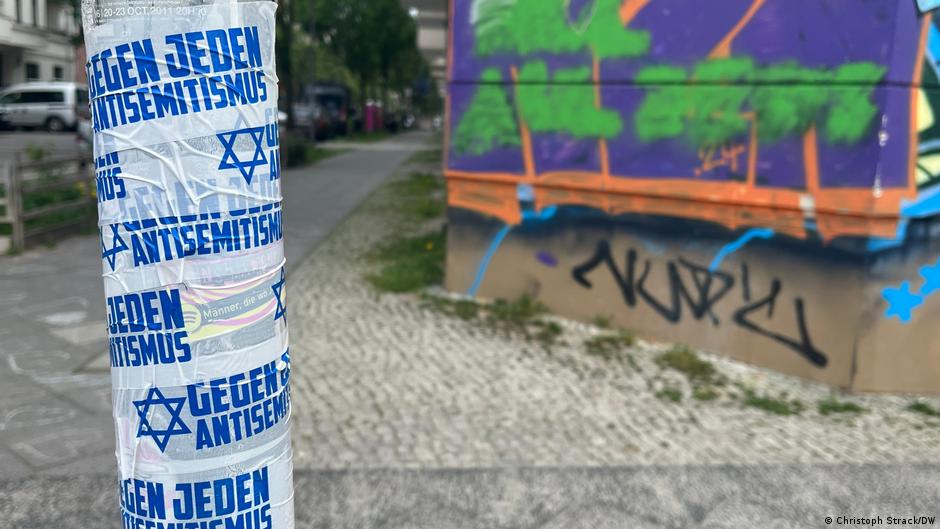
- Berlin saw antisemitic graffiti in April calling for violence against Jews
- CDU leader Friedrich Merz’s party struggles to agree on a clear plan
- Locals and police quickly covered up and condemned the hate message
A single line of spray-painted English words on a Berlin building has forced Germany’s political establishment to face a question it’s avoided for years: how to actually stop antisemitism from spreading in the capital. On April 11, someone scrawled ‘Kill all the Jews’ across a wall in the Prenzlauer Berg district. The message stayed up long enough to shock passersby before city workers coated it over. Even now, faint traces remain, a stubborn reminder of how hate can linger when no one’s looking. Berlin’s mayor Kai Wegner called it a ‘shameful act’ and ordered police to step up patrols near Jewish sites. Within hours, residents covered the sidewalk with chalk messages like ‘No place for hate’ and ‘Togetherness’. The outpouring wasn’t just symbolic. It showed how quickly Berlin’s civil society reacts when hate speech appears in public space. But the political response from the ruling CDU has been slower and vaguer. Party leader and chancellor Friedrich Merz issued a statement calling for ‘a clear stance against antisemitism’, a phrase critics say lacks any real plan or funding. Interior Ministry officials privately admit they’re still debating whether to classify some antisemitic acts as terrorism, a move that would give police broader powers to investigate and prosecute. The CDU’s internal divide mirrors the broader German debate. Some conservatives want stricter immigration controls targeting far-right agitators. Others argue the focus should be on education, especially in schools where far-right ideas are spreading among teenagers. The graffiti incident isn’t an isolated case. Berlin police logged 1,247 antisemitic crimes in 2025, up 18% from 2024. Most involved verbal abuse or insults, but physical attacks also rose by 12%. Jewish community leaders say the numbers understate the problem because many victims don’t file reports. ‘People are scared to walk home wearing a Star of David,’ said Josef Schuster, president of Germany’s Central Council of Jews. ‘This isn’t just graffiti. It’s a symptom of something much bigger.’ The city’s Jewish population hasn’t grown significantly in decades, but antisemitic incidents have. Experts point to three main drivers: the rise of far-right groups, online radicalization, and a cultural shift where some young people see antisemitism as a form of rebellion. Berlin’s district government, led by a coalition of Greens and Social Democrats, has proposed banning far-right symbols at protests and increasing funding for security at synagogues. But critics say these steps are reactive, not preventive. ‘We’re always cleaning up after the fact,’ said Lena Gorelick, a local activist who helped organize the vigil. ‘What we need is a real strategy that stops hate before it starts.’ The CDU’s struggle to define its approach reflects a deeper problem in German politics. Antisemitism isn’t just a far-right issue anymore. It’s showing up in left-wing circles, among immigrants, and even in mainstream debates about Israel’s war in Gaza. This makes it harder for parties to take a unified stance without alienating parts of their voter base. Yet the graffiti in Prenzlauer Berg has forced a reckoning. Berlin’s police now have a dedicated unit investigating antisemitic crimes, and the state government is considering mandatory Holocaust education for all public school teachers. But whether these measures will make a difference remains unclear. For now, the faint remnants of the hate message on that Berlin wall serve as a daily reminder of how far Germany still has to go.
What You Need to Know
- Source: Deutsche Welle
- Published: May 10, 2026 at 05:56 UTC
- Category: World
- Topics: #europe · #world-news · #antisemitism · #germany · #german-chancellor-friedrich
Read the Full Story
This is a curated summary. For the complete article, original data, quotes and full analysis:
All reporting rights belong to the respective author(s) at Deutsche Welle. GlobalBR News summarizes publicly available content to help readers discover the most relevant global news.
Curated by GlobalBR News · May 10, 2026
Related Articles
- 🎉 250 Articles in World!
- WHO declares Ebola emergency as Congo outbreak spreads to Uganda
- WHO declares Ebola outbreak in DR Congo a global emergency
🇧🇷 Resumo em Português
A onda de violência simbólica em Berlim, onde pichações antissemitas ganham as ruas, expôs uma crise de estratégia na principal legenda de oposição alemã, a CDU. Enquanto grafites recentes incitam abertamente a violência contra judeus, a sigla, dividida entre alas conservadoras e moderadas, ainda não encontrou um consenso sobre como combater o ódio crescente, que também ecoa entre moradores e nas forças policiais.
O problema não é apenas europeu, mas global, e afeta diretamente o Brasil, que abriga a maior população de descendentes de judeus fora de Israel. A escalada no exterior serve como alerta para a necessidade de políticas públicas que monitorem e previnam a disseminação de discursos de ódio em território nacional, especialmente em um momento de polarização política. A falta de uma resposta unificada pela CDU reflete a dificuldade de governos em lidar com o antissemitismo sem ceder a polarizações ideológicas, um desafio que o Brasil precisa enfrentar com urgência.
A próxima semana será crucial para a definição de ações concretas pela CDU, enquanto organizações judaicas na Alemanha pressionam por medidas duras — um debate que pode inspirar ou dividir ainda mais a sociedade.
🇪🇸 Resumen en Español
La Unión Demócrata Cristiana (CDU) de Berlín enfrenta una crisis de liderazgo al no lograr consensuar una estrategia clara contra el antisemitismo, en un contexto de creciente hostilidad que se ha traducido en pintadas violentas contra la comunidad judía. Mientras el partido debate internamente, las calles berlinesas y las autoridades locales exigen respuestas contundentes ante un problema que trasciende fronteras y amenaza la convivencia.
El auge del antisemitismo en Berlín —reflejado en grafitis que promueven la violencia y en encuestas que alertan sobre su normalización— subraya la urgencia de políticas efectivas, más allá del discurso. Para los hispanohablantes, este escenario recuerda la importancia de combatir el odio en todas sus formas, especialmente cuando resurge con fuerza en Europa, donde la memoria histórica debería actuar como freno. La incapacidad de la CDU para cerrar filas agrava la percepción de desprotección en una ciudad que, pese a su diversidad, ve cómo el miedo se instala entre sus vecinos judíos.
Deutsche Welle
Read full article at Deutsche Welle →This post is a curated summary. All rights belong to the original author(s) and Deutsche Welle.
Was this article helpful?


Discussion