Israeli strike kills six in Lebanon as U.S. extends ceasefire talks amid ongoing Hezbollah clashes.
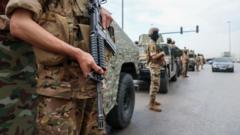
- Israeli strike in Lebanon kills six civilians
- U.S. extends ceasefire talks after month-long truce
- Hezbollah and Israel resume cross-border attacks
An Israeli airstrike struck southern Lebanon on Friday, killing six people and escalating tensions with Hezbollah, the militant group linked to Iran. The strike came hours after the U.S. announced a 48-hour extension to a fragile ceasefire agreement brokered last month. The renewed violence marks the deadliest escalation in the region since heavy fighting began in October, with both sides exchanging rocket and artillery fire across the border.
Lebanese officials confirmed the deaths in the strike near the town of Naqoura, close to the Israeli border. Civil defense teams recovered the bodies, including two women and a child, from the rubble of a residential building. Israel’s military did not immediately comment on the attack but stated it was targeting Hezbollah positions it claimed were used to launch rockets into northern Israel earlier in the week. The strike follows a pattern of tit-for-tat exchanges that have left dozens dead on both sides since fighting resumed after the October 7 Hamas attack on Israel.
U.S. pushes for extended truce as diplomats scramble
U.S. Secretary of State Antony Blinken confirmed the ceasefire extension late Thursday, calling it a critical step toward de-escalation. The temporary halt to hostilities had been set to expire Friday but was extended after urgent negotiations in Beirut and Jerusalem. Blinken urged both sides to use the pause to pursue a lasting agreement, though neither Israel nor Hezbollah have signaled willingness to halt operations indefinitely. Regional diplomats warn that further delays could push the conflict beyond control, risking spillover into neighboring Syria or Jordan.
Hezbollah, designated a terrorist organization by the U.S. and Israel, has vowed to continue its attacks until Israel ends its military campaign in Gaza and lifts a blockade on Lebanon’s ports. The group, which receives support from Iran, has launched thousands of rockets since October, targeting Israeli military installations and civilian areas. Israel has responded with airstrikes and artillery fire, destroying Hezbollah command centers and weapons depots. The cross-border violence has displaced over 100,000 civilians on both sides, according to UN reports.
Regional leaders warn of wider conflict
Arab League Secretary-General Ahmed Aboul Gheit condemned the escalation, calling for an immediate international intervention to prevent further destabilization. Egypt and Jordan, both engaged in mediation efforts, have proposed a broader security framework involving Lebanon’s government, though Hezbollah operates independently of the state. Meanwhile, Iran’s foreign minister reiterated support for Hezbollah, stating that any attack on the group would be met with a “firm response.” The U.S. has deployed additional naval assets to the Eastern Mediterranean to monitor the situation, while Russia has called for restraint from all parties.
The renewed fighting has drawn global concern, with the United Nations Security Council scheduled to convene an emergency session on Friday. UN High Commissioner for Human Rights Volker Türk urged both sides to protect civilians, highlighting reports of indiscriminate shelling in populated areas. The International Committee of the Red Cross has also warned of a humanitarian crisis, with hospitals and aid groups struggling to operate amid the violence.
Civilian casualties continue to rise as the conflict shows no signs of abating. Aid organizations report severe shortages of food, medicine, and fuel in southern Lebanon, where power grids have collapsed. In Israel, emergency services are on high alert, with sirens sounding daily in cities like Kiryat Shmona and Metula. The Israeli government has begun evacuating residents from border communities, while Hezbollah has reportedly mobilized reservists in southern Lebanon. The next 48 hours will be critical in determining whether the truce holds or if the violence spirals into a broader regional war.
What You Need to Know
- Source: BBC News
- Published: May 15, 2026 at 23:59 UTC
- Category: World
- Topics: #bbc · #world-news · #international · #war · #conflict · #diplomacy
Read the Full Story
This is a curated summary. For the complete article, original data, quotes and full analysis:
All reporting rights belong to the respective author(s) at BBC News. GlobalBR News summarizes publicly available content to help readers discover the most relevant global news.
Curated by GlobalBR News · May 15, 2026
Related Articles
- Zimbabwe’s diaspora reshapes real estate and farming investment trends
- 🎉 250 Articles in World!
- Eurovision 2024 faces scrutiny over Israel’s participation amid war
🇧🇷 Resumo em Português
Israel intensifica ataques ao Líbano enquanto EUA tentam estender cessar-fogo em meio à escalada mais violenta dos últimos meses. Seis pessoas morreram em um bombardeio israelense nesta semana, reacendendo tensões na fronteira com o Líbano e colocando em xeque os esforços diplomáticos liderados pelos Estados Unidos para conter a escalada. O ataque, que atingiu uma área civil, marca o pico mais recente de uma sequência de confrontos que já dura meses entre Israel e o grupo Hezbollah, aprofundando o temor de um conflito regional mais amplo.
O Brasil e os países lusófonos acompanham com apreensão o agravamento da situação, já que a estabilidade no Oriente Médio afeta diretamente a economia global, os preços de combustíveis e até mesmo a segurança alimentar em nações dependentes de importações. Além disso, há uma crescente comunidade brasileira no Líbano e em Israel, o que eleva a preocupação com a segurança de milhares de cidadãos lusófonos na região. A escalada também preocupa analistas brasileiros, que temem um possível impacto nas negociações internacionais sobre energia e comércio, áreas sensíveis para o país.
A comunidade internacional agora observa se os EUA conseguirão costurar um acordo duradouro ou se a violência se espalhará para além das fronteiras libaneses e israelenses.
🇪🇸 Resumen en Español
Un nuevo episodio de violencia sacude Oriente Medio tras el bombardeo israelí en Líbano que dejó seis muertos, justo cuando Washington intensifica sus gestiones para lograr un alto el fuego. La escalada, la más mortífera en meses, amenaza con desestabilizar una región ya de por sí inflamable.
El ataque, que se suma a los intercambios de fuego transfronterizos entre Israel y Hezbolá, llega en un momento crítico de las negociaciones lideradas por EE.UU., donde la presión diplomática choca con la realidad de un conflicto que no da tregua. Para los hispanohablantes, este episodio recuerda la fragilidad de la paz en una zona clave para la estabilidad global, donde cualquier chispa puede avivar un fuego de consecuencias impredecibles. La comunidad internacional, y especialmente los gobiernos de habla hispana con intereses en la región, deben prestar atención a cómo evoluciona esta crisis, que podría redefinir el tablero geopolítico en los próximos meses.
BBC News
Read full article at BBC News →This post is a curated summary. All rights belong to the original author(s) and BBC News.
Was this article helpful?



Discussion